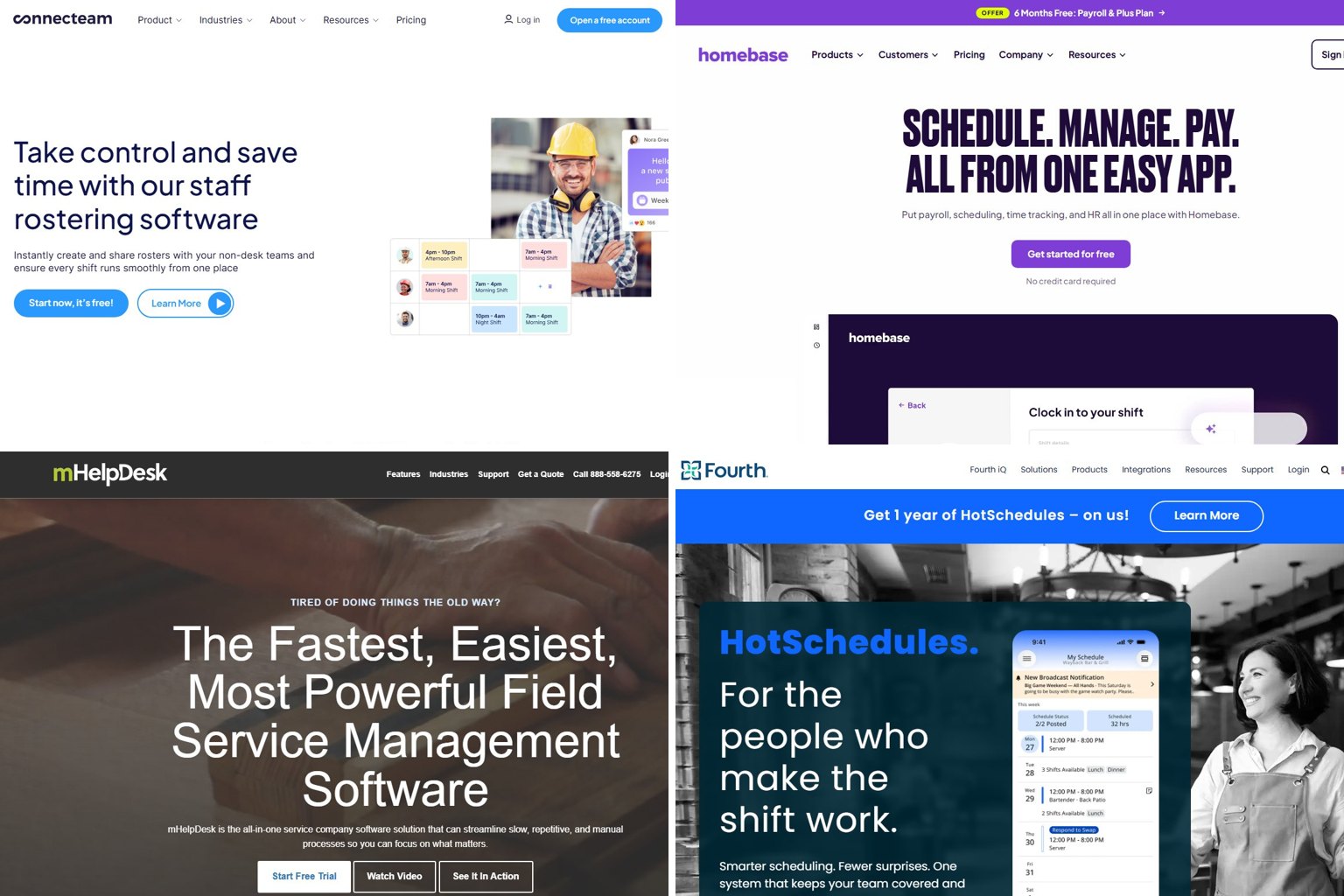
Eva’s State of Amazon Ads 2026 research puts the median $1M-$20M Amazon brand at $1.07 per click and a 28.4% ACoS. At those prices, a tool that wastes even a tenth of your budget costs you money every day. This guide compares 11 Amazon PPC software options on verified 2026 price, automation style and support. It also shows what you’d actually pay at $1,000, $5,000 and $20,000 a month of ad spend, and when Amazon’s own free tools are enough.
Key takeaways
- If you spend under about $1,000 a month on one marketplace, use Amazon’s free Campaign Manager and Ads Agent before you pay for software.
- For most sellers spending $1,000 to $10,000 a month, Teikametrics is the top pick.
- Percent-of-spend fees can triple a tool’s real monthly cost by the time you reach $20k of spend.
- AI agents are now a real option. Seller Labs and WisePPC let Claude, ChatGPT or another MCP client work on your account, with approval gates.
- Judge every tool on TACoS and total profit, not ACoS alone.
Editorial note: The Tech Blog publishes this guide independently. None of the 11 vendors, WisePPC included, owns or runs this site, and no vendor reviewed this guide before publication. Every tool was scored on the same six criteria below, and you can’t buy a place in the ranking.
Fact-checked
We checked these key facts against the sources named, on November 15, 2026:
- Eva’s 2026 median for $1M-$20M brands is 28.4% (source: eva.guru)
- At $1,000 of spend, Teikametrics’ monthly plan comes to 17.9% of your budget and Perpetua’s to 69.5% (source: help.teikametrics.com)
- Eva’s State of Amazon Ads 2026 research puts the median $1M-$20M Amazon brand at $1.07 per click and a 28.4% ACoS (source: eva.guru)
- Amazon CPCs rose from about $0.89 in 2023 to about $1.21 in early 2026, according to a 2026 CPC benchmark analysis (source: sellermetrics.app)
- It runs most of its internal systems on its own AWS infrastructure, and in 2019 its consumer business shut down its last Oracle database (source: siliconangle.com)
Quick answer: which Amazon PPC software should you use in 2026?
For most sellers spending $1,000 to $10,000 a month, Teikametrics is the top pick. Its prices are published, its AI sets bids to a target ACoS, and it covers Walmart as well. Under $1,000 a month, start with Amazon’s free tools. Above $10,000, Perpetua or Pacvue make more sense.
| Seller type | Pick | Pricing model |
|---|---|---|
| Under $1k/mo ad spend, one marketplace | Amazon Campaign Manager + Ads Agent | Free (you pay only for clicks) |
| $1k-$10k/mo, wants hands-off AI | Teikametrics | Tiered by ad spend |
| $1k-$10k/mo, wants full rule control | Scale Insights | Flat, by number of ASINs |
| Wants to run ads through its own AI agent | WisePPC | Base fee plus 1% of spend |
| Already uses a research suite | Helium 10 Ads (Platinum) | Flat suite subscription |
| $10k+/mo, brand team | Perpetua | Tiered, then usage-based |
| Agencies and multichannel (Walmart, Instacart) | Pacvue | Quote only |
You’ll find exact prices and the cost at your spend level in the pricing tables further down.
How the tools were ranked
The ranking comes from vendor pricing pages and help centres, 2026 third-party pricing guides (Hackceleration, RevenueGeeks, SellerSprite), the review platforms G2 and Capterra, and Amazon Ads’ own announcements. Like any Amazon advertising software, each tool was judged on how much of the work it takes off you and what that costs at real spend levels. Six criteria set the order, and the first two carried the most weight:
- Price clarity and value at typical spend levels. Tools that publish their prices and stay affordable at $1k-$10k scored higher.
- Automation depth. Bid optimisation, search-term harvesting, negatives, budget pacing and dayparting.
- Ad-type coverage. Sponsored Products, Sponsored Brands, Sponsored Display and, for bigger brands, Amazon DSP.
- Multichannel support for sellers who also advertise on Walmart and Instacart.
- Trial access and control. Approval gates, per-account permissions and change logs.
- Support and onboarding. Documented onboarding, account managers or managed-service options. This matters most for beginners and for anyone giving a tool write access to a five-figure budget.
What Amazon PPC software actually does (and what Amazon already does for free)
Amazon PPC management software takes over the repetitive parts of running campaigns. It adjusts bids, moves winning search terms into exact-match campaigns, adds negatives and stops budgets running out. Amazon’s own console does more of this for free every year. Paid tools still win on rule control, bulk changes across many SKUs, keyword discovery and multichannel reporting.
The 7 jobs PPC tools automate
- Search-term harvesting. The tool finds customer searches that convert in your auto and broad campaigns and promotes them to exact match.
- Negative keywords. Paying for clicks on searches that never turn into orders is the most common leak in a seller’s budget. Tools add a negative once a search term passes a set number of clicks with no orders.
- Bids against a target ACoS. The tool recalculates bids from your break-even ACoS, daily or hourly, so they stay in line with what each product can afford.
- Budget pacing. A budget that runs dry by noon leaves the afternoon’s sales on the table. Pacing rules spread spend across the day or raise the budget for campaigns that convert.
- Placements and dayparting. The tool adjusts top-of-search and product-page bid modifiers and cuts bids in hours that don’t convert.
- Reporting and change logs. Campaigns rarely break in one obvious way. A good change log records every edit, who or what made it, and which rule triggered it, so you can trace a sudden drop back to its cause.
- Keyword discovery and competitor targeting. Harvesting only finds terms you already pay for. Discovery finds the ones you don’t. Helium 10 covers this with Cerebro (reverse-ASIN lookups of a competitor’s ranking keywords) and Magnet (seed-keyword research). SellerApp bundles keyword research with its PPC tools. Jungle Scout Cobalt’s share-of-voice tool shows the top 20 brands ranking or advertising on each keyword, refreshed hourly, plus estimated PPC costs to overtake them. Pure bid tools such as Scale Insights and Ad Badger work mainly from your own search-term data.
Amazon’s free tools: Campaign Manager, Ads Agent, Unified Campaign Manager
Amazon Ads gives you three free layers. Campaign Manager is the Amazon Ads Console you reach from Amazon Seller Central, and it handles bid rules, budget rules and dynamic bidding. Amazon Ads Agent launched in November 2025 inside Amazon Marketing Cloud and Amazon DSP, and Canopy Management reports that its scope grew through 2026. The agent has no separate fee, but normal ad spend, DSP and AMC costs still apply. Unified Campaign Manager was announced at unBoxed 2025 and merges Amazon DSP and the Ads Console into one interface.
| Task | Amazon Campaign Manager / Ads Agent (free) | Paid tool | Worth paying for? |
|---|---|---|---|
| Bid adjustments | Dynamic bidding and basic bid rules | Target-ACoS bidding per keyword, hourly | Yes, above about $1k/mo |
| Search-term harvesting | Manual, from search term reports | Automatic promotion to exact match | Yes, it saves hours each week |
| Negative keywords | Manual | Rule-based (for example, 15 clicks, 0 orders) | Yes |
| Keyword discovery | Keyword suggestions in the console | Reverse-ASIN research, share of voice | Yes, for competitive categories |
| Budget pacing | Budget rules, schedule-based | Pacing plus intraday reallocation | Sometimes |
| Dayparting | Limited scheduling | Hour-by-hour bid modifiers | Only if your conversion rate varies by hour |
| Reporting | Standard reports, limited history | Long history, TACoS, profit view | Yes for multi-SKU brands |
| Walmart / Instacart | No | Pacvue, Perpetua, Teikametrics | Yes, if you sell there |
| Cost | $0 | $78 to $695+ per month, or quote only | Depends on spend |
Rules vs AI vs AI agents: what the difference means for you
Rule-based tools such as Scale Insights and Ad Badger do exactly what you tell them, for example “if ACoS is above 35% after 20 clicks, cut the bid 10%.” They suit experienced sellers who want control. AI tools such as Teikametrics and Perpetua take a goal like target ACoS and choose the bids themselves. They suit busy sellers who will trade some control for time. AI agents are the 2026 layer. You give plain-English instructions and the agent carries them out, through Amazon’s Ads Agent or through third-party MCP connections such as Seller Labs’ Amazon MCP and WisePPC. Agents can make the widest range of changes, so they need the tightest approval settings of the three.
How much Amazon PPC software really costs
The list price is only part of what you pay. Most tools use one of three pricing models, and two of them grow as your ad spend grows.
Flat fee vs percent of ad spend vs tiered
- Flat monthly fee. Helium 10 Ads (bundled in Platinum) and Scale Insights cost the same whatever you spend. Scale Insights prices by the number of ASINs you automate, from $78/mo for 5 ASINs up to $688/mo for 100. RevenueGeeks’ Scale Insights pricing page, updated July 2026, lists $98 for 10 ASINs, $178 for 20, $288 for 35, $388 for 50 and $548 for 75. Each marketplace counts separately, so one ASIN automated in the US and Canada uses two slots.
- Tiered by spend. Teikametrics’ billing help page lists Essentials at $149/mo billed annually (12 months upfront) or $179/mo billed monthly, for up to $10,000 of monthly ad spend. Above that you move to a custom quote with a 3% fee on the excess, according to Hackceleration’s June 2026 breakdown. G2 lists Perpetua Essentials at $695/month for up to $10k of spend, with higher tiers custom and usage-based.
- Percent of spend or usage-based. WisePPC’s pricing page lists Basic at $99/mo plus $0.01 for every $1 of Amazon PPC spend, which works out to 1%. Enterprise plans have custom usage rates and per-seat pricing. Capterra’s listing shows a $126/mo usage-based starting price, so check the vendor’s page at signup. Enterprise platforms such as Pacvue and Intentwise quote each client individually.
Work out the real cost first
Multiply your expected ad spend by any percentage fee and add it to the flat price. A $149 tool with a 3% fee on spend over $10k costs about $599 a month at $25k of spend.
Worked examples at three spend levels
The table below shows the monthly cost of the tool alone, not your clicks, on monthly billing unless noted. The $20k figure for Teikametrics is an estimate built from the published $10k threshold and the 3% excess fee.
| Tool | $1,000/mo spend | $5,000/mo spend | $20,000/mo spend | Billing notes | Price source |
|---|---|---|---|---|---|
| Amazon Campaign Manager + Ads Agent | $0 | $0 | $0 | DSP and AMC costs are separate | Amazon Ads; Canopy Management |
| Scale Insights (5 ASINs) | $78 | $78 | $78 | Annual is $748/yr (about $62/mo) | Scale Insights pricing via RevenueGeeks |
| Scale Insights (20 ASINs) | $178 | $178 | $178 | No fee tied to ad spend, per the vendor | Scale Insights pricing via RevenueGeeks |
| WisePPC Basic | $109 | $149 | $299 | $99 base plus 1% of PPC spend | WisePPC pricing page |
| Helium 10 Platinum (includes Ads) | $129 | $129 | $129 | About $99/mo annual; see fee note below | SellerSprite 2026 pricing guide |
| Teikametrics Essentials | $179 | $179 | about $479 | $149/mo annual; custom quote plus 3% above $10k | Teikametrics help centre; Hackceleration |
| Perpetua Essentials | $695 | $695 | Quote only | Essentials covers up to $10k of spend | G2 |
| Pacvue, Intentwise, Jungle Scout Cobalt | Quote only | Quote only | Quote only | Sales-led, typically annual contracts | Vendor sales teams |
The number that matters most is the fee as a share of your ad budget. At $1,000 of spend, Teikametrics’ monthly plan comes to 17.9% of your budget and Perpetua’s to 69.5%. At $5,000, Teikametrics falls to 3.6%, and at $20,000 it’s about 2.4%. That’s why AI tools aim at sellers in the middle and upper spend ranges. WisePPC goes the other way: it’s cheap at low spend, but the 1% fee means it costs more than Teikametrics’ monthly plan once you pass about $8,000 of spend.
One 2026 Helium 10 review says Helium 10 Ads in Platinum carries a 2% management fee on ad spend. Other 2026 pricing guides don’t mention one. If it applies to your account, Platinum would cost about $149 at $1k of spend, $229 at $5k and $529 at $20k. Check the checkout screen before you commit.
All-in-one suites have a hidden cost: you pay for product research, listing and inventory tools you may never open. If all you need is bid management, a standalone tool such as Scale Insights is usually cheaper than a suite.
How much Amazon itself charges per click in 2026
Amazon charges only for clicks, priced through an auction, and the ad tools inside the console are free. Ecombrainly’s January–August 2026 data puts the average Amazon ads CPC at $1.22, with an average advertising conversion rate of 11.1%. A 2026 CPC benchmark study puts typical Sponsored Products CPCs at $0.85 to $1.30, from about $0.45 in Books to over $2.00 in Beauty and Supplements. The full set of 2026 benchmarks sits in the trial section below.
Did you know?
Amazon CPCs rose from about $0.89 in 2023 to about $1.21 in early 2026, according to a 2026 CPC benchmark analysis. Amzdudes reports they regularly jump 40-80% above baseline during Prime Day and Black Friday–Cyber Monday.
Those seasonal spikes are where good software earns its fee. The better tools let you schedule bid caps for an event, raise budgets only for converting campaigns, and roll bids back automatically when the event ends.
The best Amazon PPC tools compared (2026)
Use the table below as a quick reference. The numbered reviews after it explain each pick and compare it with its closest alternative.
| Tool | Best for | Automation type | Ad types | Other marketplaces | Starting price | Percent-of-spend fee | Free trial |
|---|---|---|---|---|---|---|---|
| Teikametrics | $1k-$10k sellers wanting autopilot | AI (target ACoS) | SP, SB, SD | Walmart | $149/mo annual | 3% above $10k | Yes, on Essentials (per RevenueGeeks) |
| Scale Insights | Hands-on sellers wanting control | Rule-based | SP, SB, SD | None | $78/mo | None | 30 days, 1 ASIN |
| Helium 10 Ads | Helium 10 suite users | Rules + AI (Pacvue tech) | SP, SB, SD | Amazon focus | $129/mo | Disputed (one review says 2%) | Limited free plan |
| Perpetua | Brands at $10k+ | Goal-based AI | SP, SB, SD, DSP | Walmart, Instacart | $695/mo | Usage-based above $10k | Demo |
| Pacvue | Enterprise and agencies | Rules + AI | SP, SB, SD, DSP | Walmart, Instacart, many more | Quote only | Quote only | Demo |
| Intentwise | Agencies, AMC users | Rules + analytics | SP, SB, SD, DSP | Walmart | Quote only | Quote only | Demo |
| Jungle Scout Cobalt | $1M+ brands | Rules + analytics, share of voice | SP, SB, SD | Amazon focus | Quote only (per user) | Quote only | Demo |
| SellerApp | Sellers wanting managed help | Rules + AI | SP, SB, SD | Amazon focus | Quote only | Quote only | Free tier exists |
| Ad Badger | Sponsored Products learners | Rule-based bid bot | SP, SB | None | Quote only | Quote only | None listed |
| Seller Labs Ignite | Small sellers, AI-assistant users | Rules + MCP | SP, SB | None | Usage-based (tool calls) | No | 30 days |
| WisePPC | Sellers who want their own AI agent | BYO AI agent (MCP) with gated approvals | SP, SB, SD | None yet | $99/mo + 1% of spend | Yes (1%) | 30 days, no card |
1. Teikametrics (Flywheel)
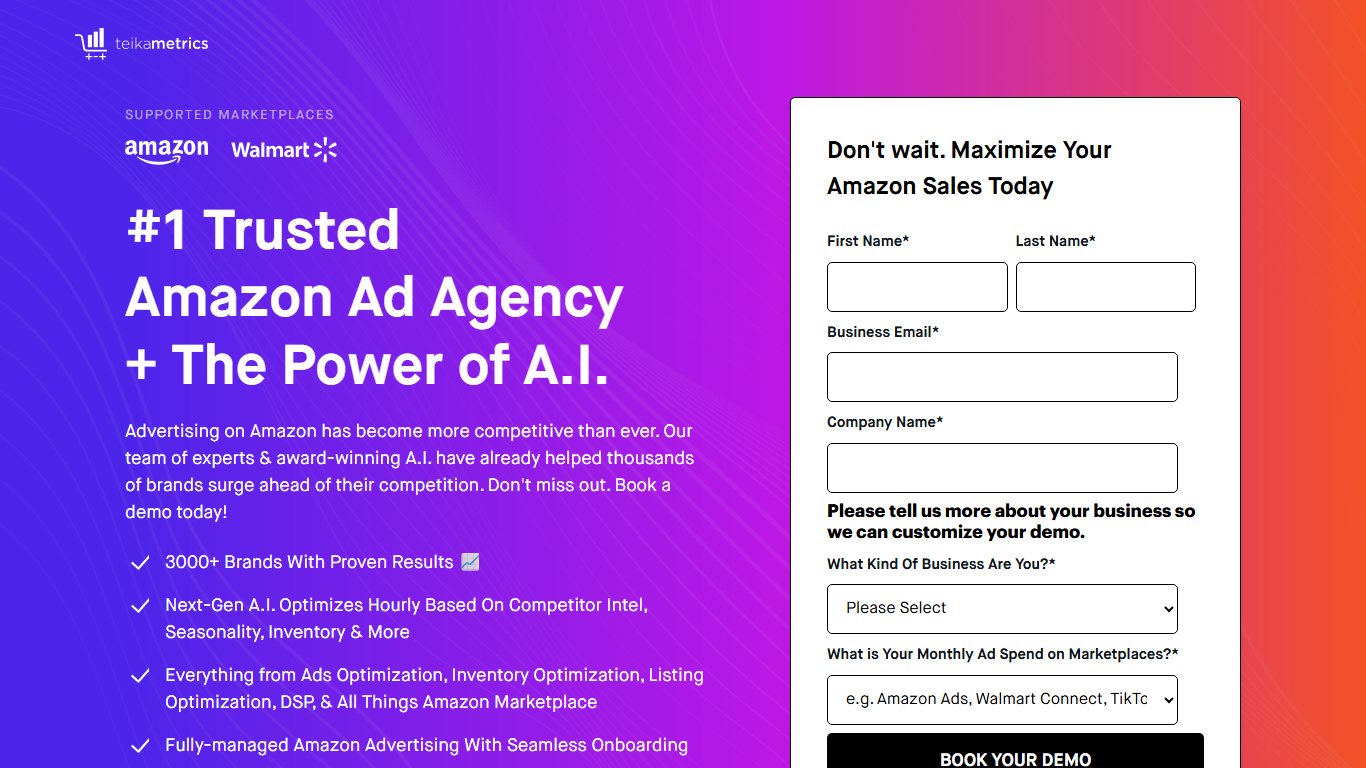
Teikametrics is the best Amazon PPC software for most sellers spending $1,000 to $10,000 a month. You set a target ACoS for each product, and the AI in its Flywheel platform handles bids, harvesting and negatives. It also runs Walmart Sponsored Products from the same dashboard, which helps multichannel sellers.
- Price: Tiered by spend (see the cost table above).
- Support: Teikametrics’ plan pages list dedicated onboarding on paid tiers. Its managed tiers add a dedicated account manager and strategic analyst, weekly performance updates and monthly check-in calls.
- Limitation: You get less keyword-level control than a rules tool gives you, and experienced sellers sometimes find the AI too cautious at launch.
- Vs Scale Insights: Teikametrics saves you time, and Scale Insights gives you control. Choose Teikametrics if you’d rather set a goal than write rules.
2. Scale Insights
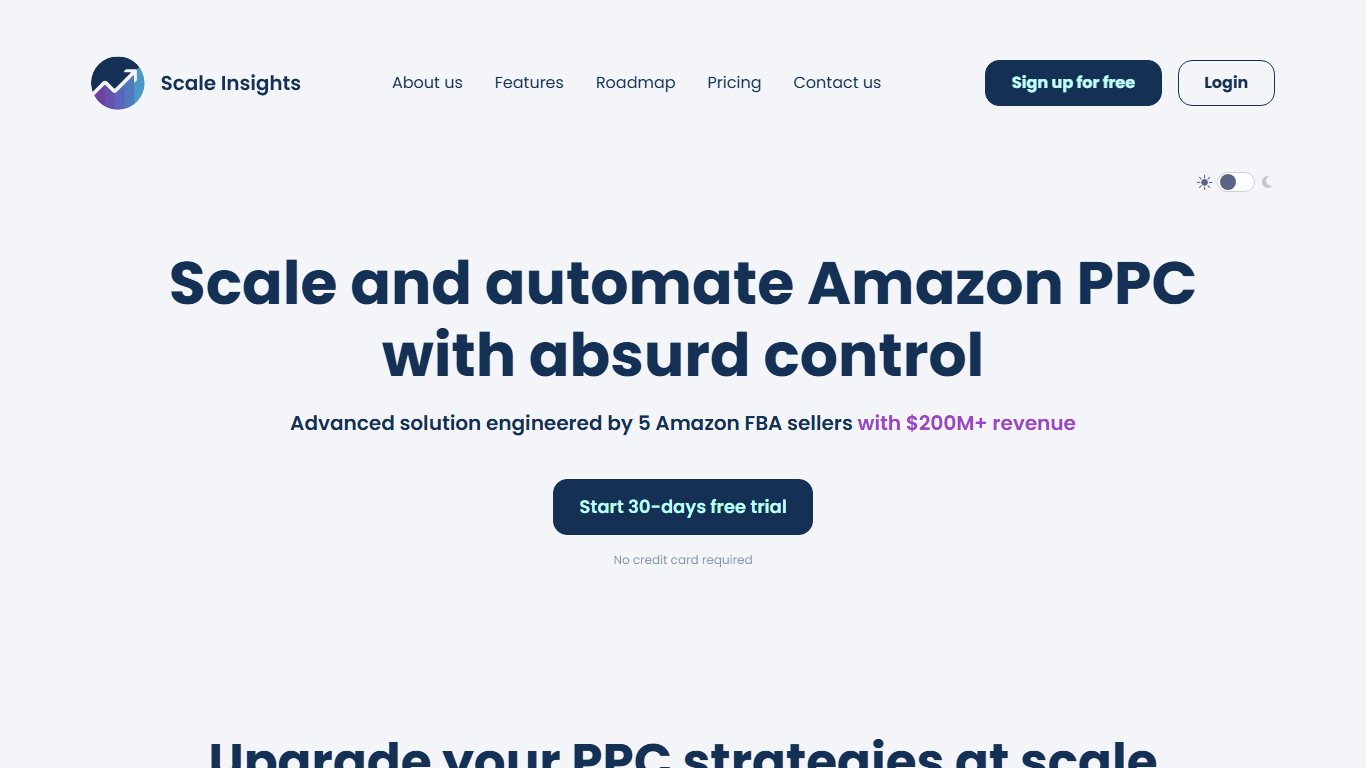
Scale Insights is the best-value standalone tool for sellers who want to run their own rules. Its rule-based automation covers bids, harvesting, negatives and dayparting, and its templates go deep enough for advanced users.
- Price: Flat, by automated ASIN count, with no fees tied to PPC spend (see the cost table).
- Trial: 30 days on one ASIN, with no credit card needed, according to the vendor.
- Limitation: It covers Amazon only, and the learning curve is steep. Badly built rules can do damage fast.
- Vs Ad Badger: Both are rules-first. Scale Insights publishes clear ASIN-based pricing and covers more ad types.
3. Helium 10 Ads (formerly Adtomic)
Helium 10 Ads is the obvious choice if you already pay for Helium 10’s research and listing tools, because the PPC module comes bundled. It runs on Pacvue technology, and it’s the strongest of the 11 for keyword discovery, since Cerebro and Magnet feed straight into campaign building.
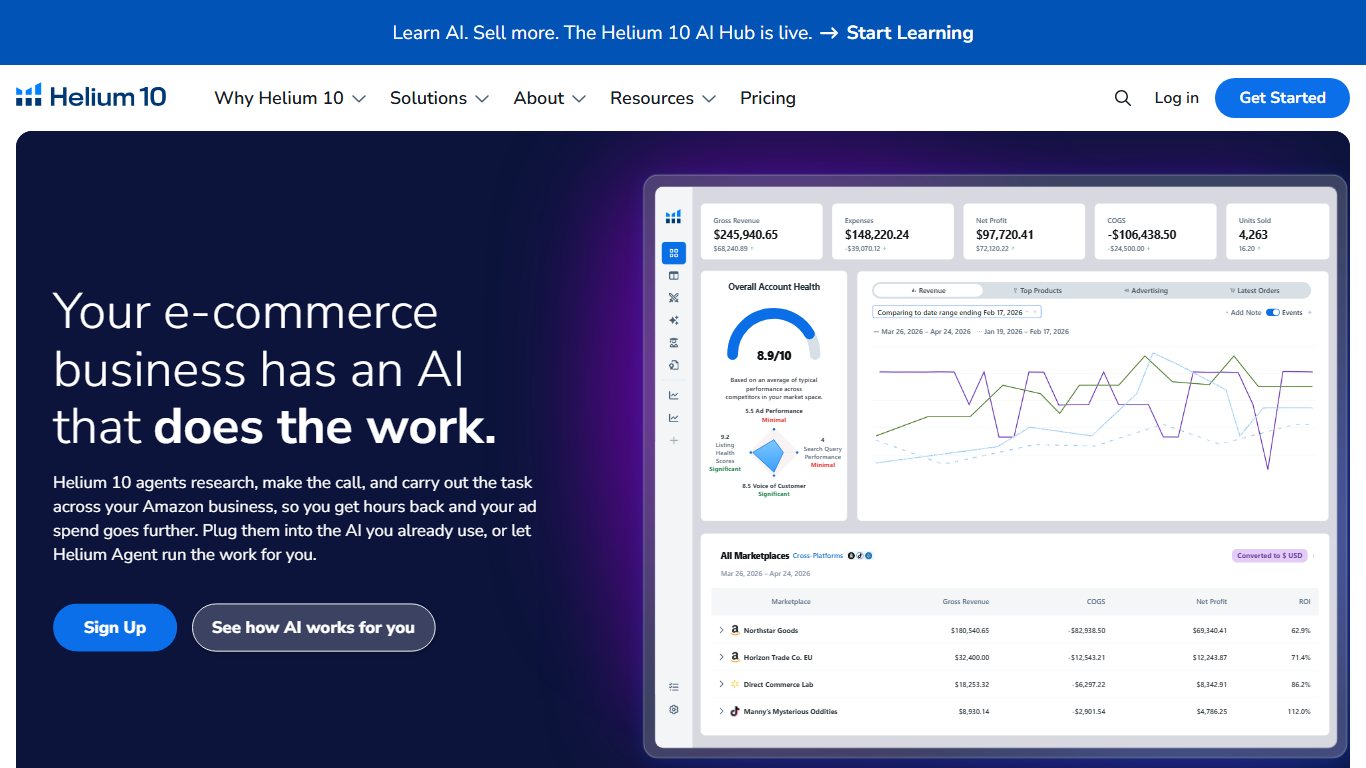
- Price: Platinum is $129/mo (about $99/mo annual), Diamond is $359/mo (about $279/mo annual), and Enterprise is custom. SellerSprite’s 2026 pricing guide says Starter has been discontinued, prices rose in April 2026, and a limited free plan exists.
- Limitation: You pay for a full suite, and sources disagree on whether there’s a 2% ad-spend fee.
- Value after the price rises: It’s still worth it if you use at least three of its tools. If you only need PPC, Scale Insights or Teikametrics costs about the same and does more for your ads.
4. Perpetua (absorbed Sellics)
Perpetua is a goal-based AI platform for brands spending $10,000 or more a month. It absorbed Sellics, so any older guide that recommends Sellics as a standalone tool is out of date. It covers Sponsored Products, Sponsored Brands, Sponsored Display and Amazon DSP, plus other retail media networks.
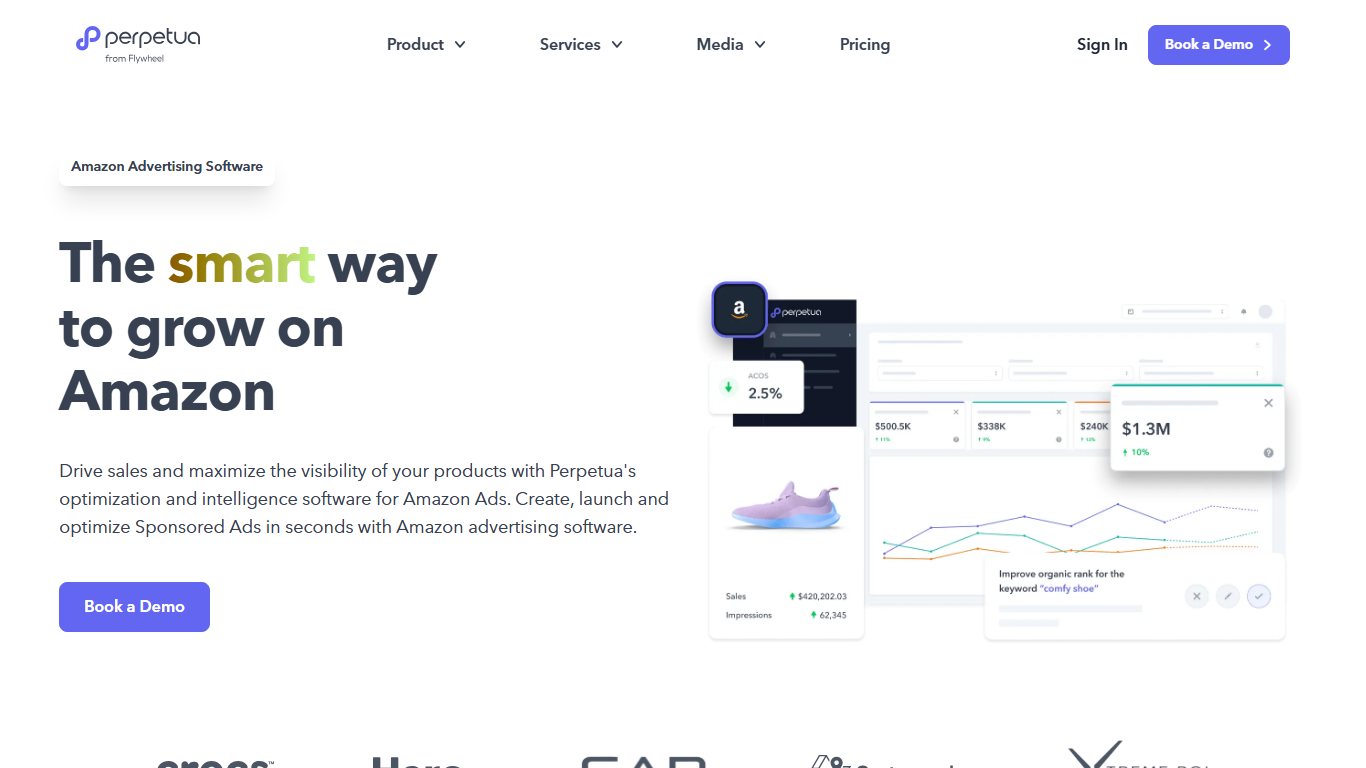
- Price: Essentials covers up to $10k of spend; higher tiers are custom and usage-based (see the cost table).
- Limitation: It’s expensive below $5k of spend, where the fee takes a large share of your budget.
- Vs Teikametrics: Perpetua has broader retail media and DSP coverage. Teikametrics is far cheaper for small catalogues.
5. Pacvue
Pacvue is the enterprise platform for agencies and brands that advertise across Amazon, Walmart, Instacart and other retailers. It combines rules, AI bidding, DSP management and commerce analytics, and its technology also powers Helium 10 Ads.
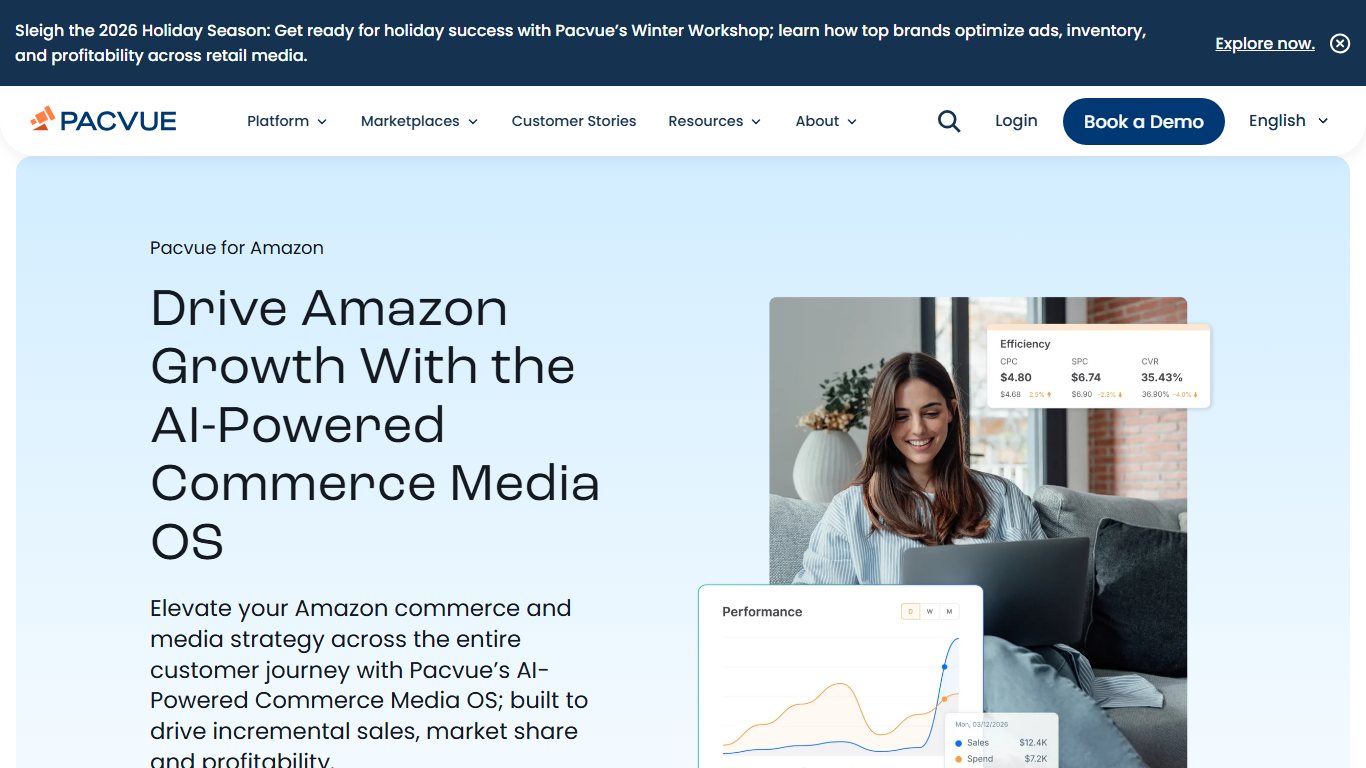
- Price: Quote only.
- Limitation: It’s more than simple accounts need. If bid adjustments are all you want, Scale Insights or Teikametrics will do the job for a fraction of the cost.
- Vs Intentwise: Pacvue is stronger on multichannel retail media. Intentwise is stronger on Amazon Marketing Cloud analytics.
6. Intentwise
Intentwise suits agencies and data-driven brands that want PPC automation plus Amazon Marketing Cloud reporting. It offers rule-based automation and recommendations, and it supports DSP.
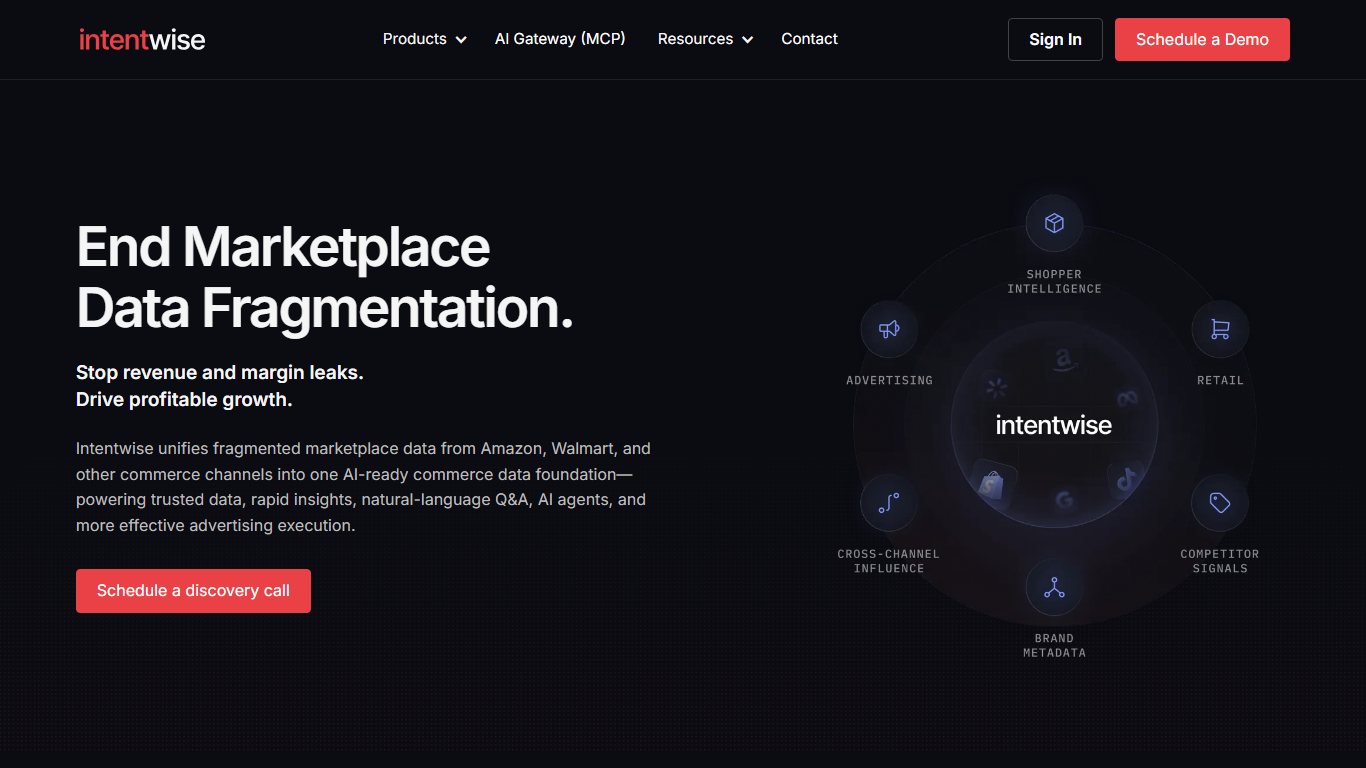
- Price: Quote only. Sales are demo-led and pricing is modular.
- Limitation: There’s no self-serve price card, and it’s built for analysts more than solo sellers.
- Vs Pacvue: It’s leaner and more focused on analytics, with fewer retail networks.
7. Jungle Scout Cobalt
Jungle Scout Cobalt is Jungle Scout’s enterprise platform for brands, and Cobalt 2.0 merged in the former Downstream ad automation. Jungle Scout’s standard plans are mostly for product research, so Cobalt is the PPC product to evaluate.
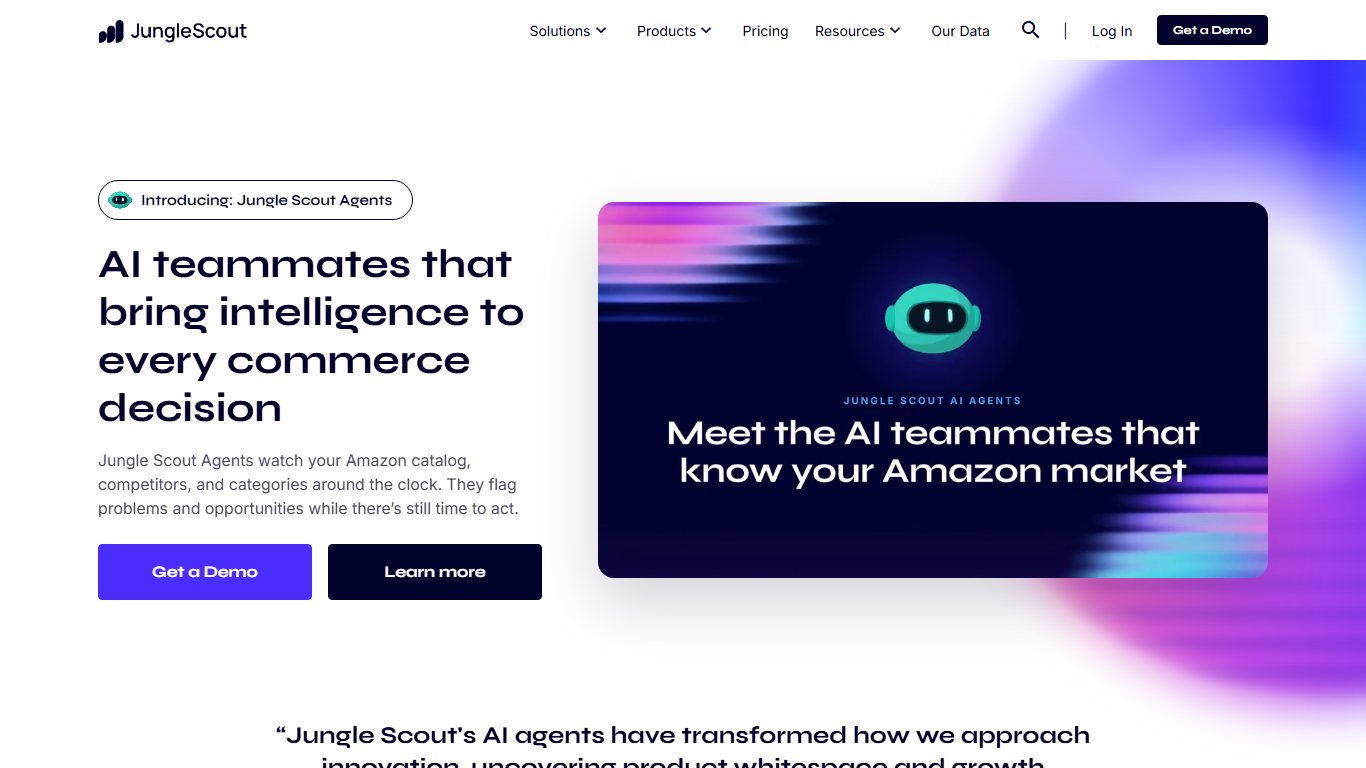
- Price: Quote only, custom and per user. Jungle Scout pitches it at brands above about $1M in annual Amazon revenue.
- Strength: Hourly share-of-voice data on the top 20 brands per keyword. Its Ad Accelerator adds dayparting and bid automation, and Jungle Scout also offers an MCP connection for AI tools such as Claude and ChatGPT.
- Limitation: It isn’t sold to small sellers.
- Vs Pacvue: Cobalt leads with market intelligence, Pacvue with retail media.
8. SellerApp
SellerApp combines PPC automation with keyword research, listing and analytics tools, plus managed-service options. It suits sellers who want software and hands-on help from the same company.
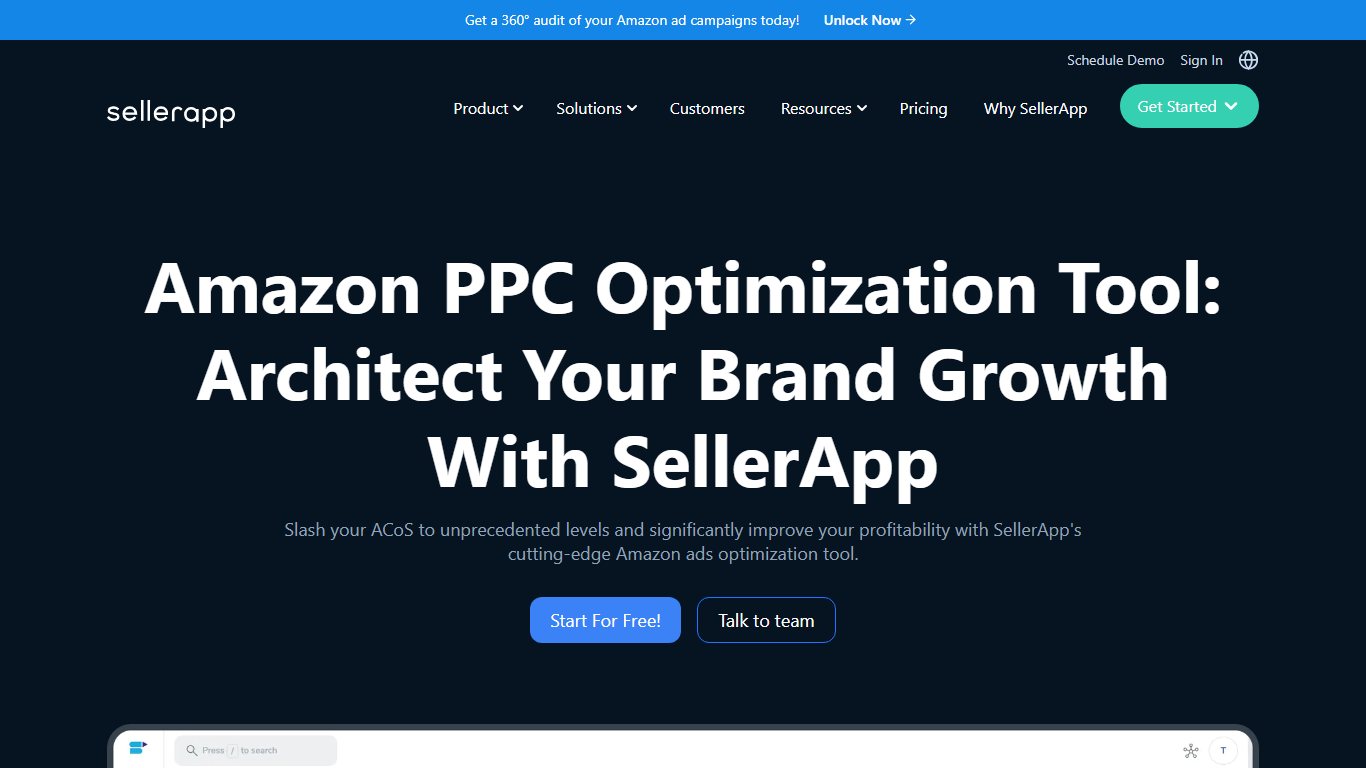
- Price: The DIY, Agency, Managed Services and Enterprise tiers are quote only. A freemium tier exists.
- Limitation: Sources quote different prices for it, so get your quote in writing.
- Vs Helium 10 Ads: Both are suites. SellerApp leans further toward managed services.
9. Ad Badger
Ad Badger is a rules-based Sponsored Products tool built around a bid bot, with strong educational content for sellers still learning PPC.
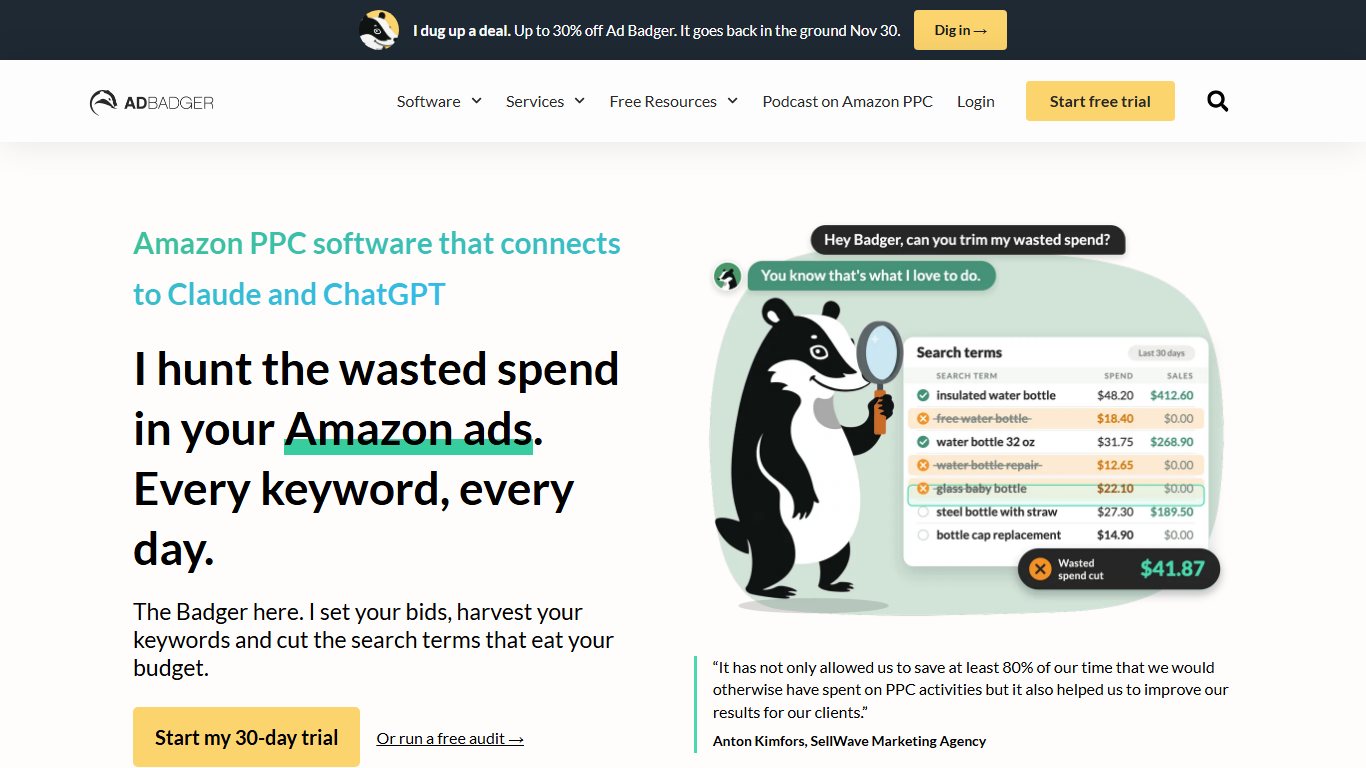
- Price: Quote only.
- Limitation: Review platforms list no free trial, and it covers fewer ad types than Scale Insights.
- Vs Scale Insights: Ad Badger is easier for beginners. Scale Insights goes deeper for power users.
10. Seller Labs Ignite
Ignite is Seller Labs’ PPC tool for small sellers, and in 2026 Seller Labs rebuilt its pricing around its Amazon MCP. It now charges by monthly tool calls instead of revenue. This is the “bring your own AI agent” model: your AI assistant reads and edits your account through Seller Labs.
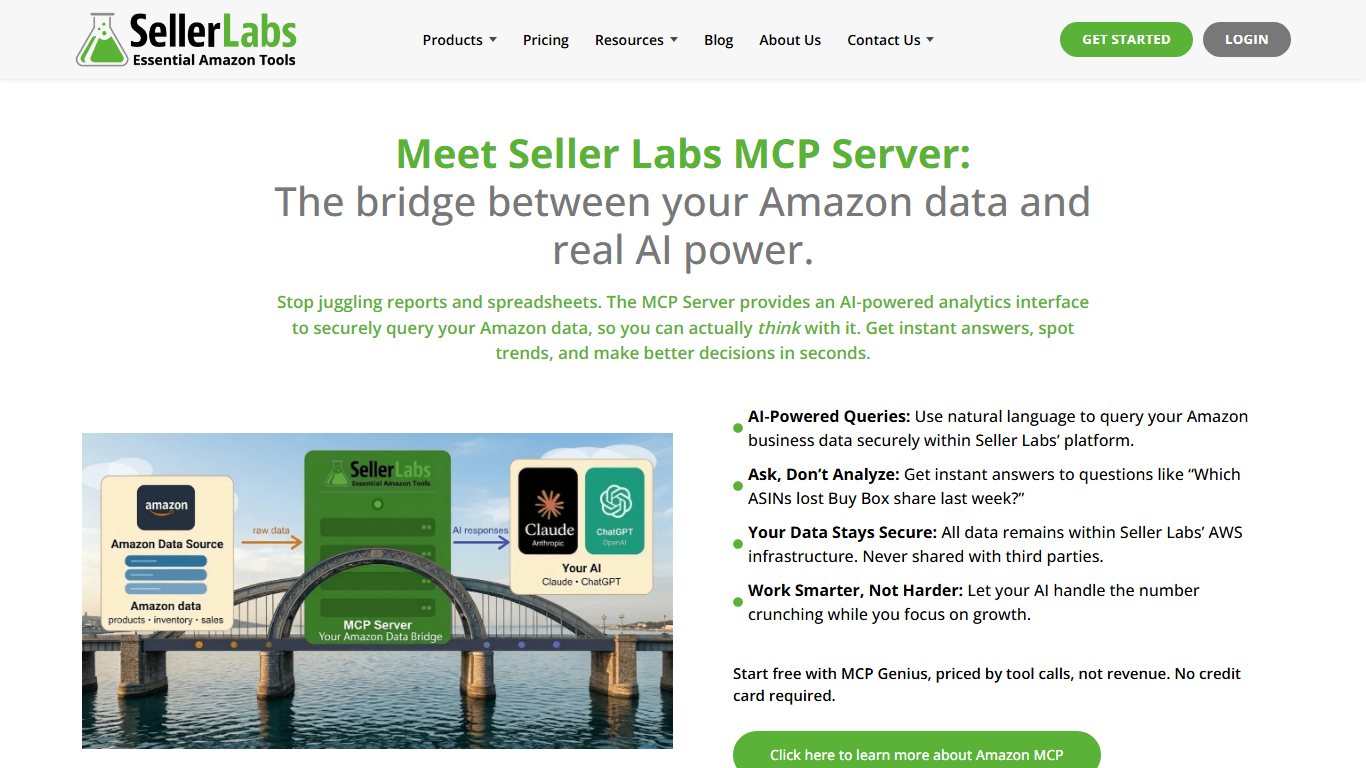
- Price: Usage-based, by monthly tool calls. Every plan comes with a 30-day free trial.
- Limitation: Seller Labs changed its plans in October 2026, so revenue-based prices quoted in older guides no longer apply.
- Vs WisePPC: Both use the agent model. Seller Labs bills by tool calls, while WisePPC charges a base fee plus 1% of spend and adds per-profile permission controls.
11. WisePPC
WisePPC is an Amazon Ads and Seller Central data layer that your own AI agent connects to, rather than a tool with a built-in agent. You can connect Claude, ChatGPT (through developer mode), Grok or another MCP client, then decide what each agent may change.
- How it works: You create a key in WisePPC, choose which Ads accounts and Seller Central marketplaces it can read, and add it to your agent as an MCP connection. Permissions are set per type of change and per Ads profile, using Off, Gated or Direct modes (explained in the security section below), as described in an October 2026 product update.
- Partner status: WisePPC says it’s an Amazon Ads Verified Partner for Sponsored Products, Sponsored Brands, Sponsored Display and Sponsored TV. That claim comes from its own site, so confirm it in the Amazon Ads Partner Directory.
- Price and trial: Base fee plus 1% of spend (see the cost table). The 30-day trial is for new accounts, needs no card, and converts to Basic when it ends.
- Limitation: It covers Amazon only for now, with Google Ads and Facebook Ads listed as coming later, and the 1% fee makes it pricier than flat-fee tools at high spend.
- Vs Scale Insights: Choose WisePPC if you want an AI assistant doing the work under approval rules. Choose Scale Insights if you want to write the rules yourself.
Names from older lists that didn’t make the cut
Older roundups also list Zon.Tools, AdLabs, PPC Entourage, PPC Scope, Sellozo, Prestozon, Adspert, Profit Whales, Advigator, BidX and Optmyzr. They’re left out for one of three reasons: some are agency-led services more than software, some are general PPC platforms built mainly for Google and Microsoft ads, and the rest offer less pricing clarity than the 11 above.
What changed in 2026: AI agents and the Amazon Ads MCP Server
In 2026 Amazon moved from dashboards to agents: you can now give instructions in plain English and an AI carries them out. That puts pressure on third-party tools to show what they add on top of Amazon’s free features.
The ad market behind all this is still growing, though more slowly. Amazon’s third quarter ended recently on September 30, and its Q3 2026 earnings release has not yet been published, so advertising revenue for the quarter is not yet confirmed. For sellers, more advertiser demand in the holiday quarter usually means higher CPCs, which is another reason to set up event bid caps before Black Friday.
Did you know?
Since February 2, 2026, the official Amazon Ads MCP Server has let AI agents create, update or delete campaigns and run reporting queries from natural-language prompts, according to Amazon Ads. It’s in open beta globally for Amazon Ads partners with active API credentials.
Ads Agent: free, but is it enough?
For a single-marketplace seller under about $1,000 a month, the free tools are usually enough. They stop being enough when you need hard limits (for example, “never bid above $1.40 on this keyword”), a profit view across many SKUs, or Walmart and Instacart in the same dashboard. Full-Funnel Campaigns push further toward Amazon-managed campaigns. Canopy Management reports they’ve been in US open beta since September 29, 2026, for advertisers who sell on Amazon. Keep a third-party view of your data so you can check what Amazon’s own automation is doing.
MCP Server: why your AI assistant can now touch your campaigns
You can’t point ChatGPT or Claude straight at your Amazon ads unless you hold Amazon Ads API credentials. The MCP Server is open only to API partners, so most sellers reach it through a tool that has already connected. The three main routes are:
| Route | How you connect | Approval controls | Pricing model |
|---|---|---|---|
| Seller Labs Amazon MCP (Ignite) | Your AI assistant connects through Seller Labs | Set inside Seller Labs | Monthly tool calls |
| WisePPC | Key created in WisePPC, added to Claude, ChatGPT or any MCP client | Off, Gated or Direct per change type and per Ads profile | $99/mo plus 1% of spend |
| Amazon Ads Agent | Built into Amazon’s own console | Amazon’s settings | No separate fee |
Whichever route you choose, keep these jobs for human review:
- Budget increases above a set ceiling
- Pausing or deleting campaigns
- Bid changes during Prime Day or Black Friday–Cyber Monday
- Any edit to your top revenue ASINs
Rebrands and dead names to ignore in old guides
| Old name | Current status (2026) |
|---|---|
| Helium 10 Adtomic | Replaced by Helium 10 Ads (Pacvue technology), February 2025 |
| Sellics | Absorbed into Perpetua |
| Jungle Scout Downstream | Folded into Jungle Scout Cobalt (Cobalt 2.0) |
| Seller Labs revenue-based tiers | Replaced by usage-based plans in 2026 |
Is your account safe? Permissions, approvals and revoking access
Connecting a PPC tool or AI agent gives it write access to your ad account, so one misconfigured rule can spend real money within hours. Treat the connection the way you’d treat handing someone your company card.
What you’re actually giving permission to
You connect by signing in with Login with Amazon and authorising the tool through the Amazon Ads API. That usually lets the tool read your reports and change campaigns, bids, budgets and keywords. Tools that show profit also ask for Seller Central data through a separate authorisation. Before you connect, look the vendor up in the Amazon Ads Partner Directory. An Amazon Ads Verified Partner listing there means Amazon has reviewed the API integration. A badge on the vendor’s own website isn’t proof.
Before you start
Export your campaign history and search-term reports from the Ads Console before you connect any tool. Some tools can only pull about 60 days of history for new clients, so AI bidding is weaker in the first weeks.
Set up approval gates before automation runs
Most tools offer three modes. Off blocks changes, gated sends each change to an approval queue, and direct applies changes automatically. WisePPC goes a step further and lets you set the mode separately for each Amazon Ads profile and each type of change. Whatever tool or agent you use, start everything on gated.
Gate the first two weeks
Set bids and budgets to “approve first” for the first 14 days, and read the change log before anything goes live. Switch to direct only for rules that behaved correctly.
How to disconnect a tool you stopped using
Revoke a PPC tool's access
- Export your data and change history from the tool.
- Cancel the subscription on the tool’s billing page.
- If you connected an AI agent, delete its API key in the tool and remove the connector from your assistant.
- In Seller Central, open Apps and Services, then Manage Your Apps, and remove the app.
- In your Amazon account settings, open Login with Amazon and remove the tool.
- In the Amazon Ads Console, check user management and remove any partner user the tool added.
- Check your campaigns the next day for leftover automation rules.
Run through this list once a quarter for every tool you’ve connected, including ones you only trialled. Forgotten connections with write access are the easiest risk to remove.
How to test a PPC tool in a 30-day free trial
A trial only proves something if you measure before and after on the same products. Pick one group of campaigns, leave everything else alone, and judge the result against pass/fail rules you set in advance.
Your baseline metrics
Write the baseline down first
Before the trial starts, record 30 days of ACoS, TACoS, CPC, ad spend and total sales. Without that baseline you can’t tell whether the tool helped.
- Pick 3-10 ASINs that have at least 30 days of steady sales.
- Record the baseline: ACoS, TACoS, CPC, ad spend, ad sales and total sales.
- Connect the tool in gated mode for those campaigns only.
- Every week, read the change log and count the bid changes, negatives added and keywords harvested or discovered.
- Note how quickly support answers one real question. That’s your best preview of onboarding quality.
- On day 30, compare the results with your baseline and with the benchmarks below.
- Pass the tool only if TACoS held steady or fell and total sales held steady or grew.
Benchmarks to compare against (CPC, ACoS, TACoS, ROAS)
ACoS is ad spend divided by ad sales. TACoS is ad spend divided by total sales, organic included. ROAS is ad sales divided by ad spend, the inverse of ACoS.
| Metric | 2026 figure | Period | Source |
|---|---|---|---|
| Median ACoS ($1M-$20M brands) | 28.4% | 90 days to Oct 24, 2026 | Eva, State of Amazon Ads 2026 |
| Median TACoS | 10.6% | 90 days to Oct 24, 2026 | Eva, State of Amazon Ads 2026 |
| Median ROAS | 3.53 | 90 days to Oct 24, 2026 | Eva, State of Amazon Ads 2026 |
| Median CPC | $1.07 | 90 days to Oct 24, 2026 | Eva, State of Amazon Ads 2026 |
| Sponsored Products share of spend | 77% | 90 days to Oct 24, 2026 | Eva, State of Amazon Ads 2026 |
| Average CPC (all sellers) | $1.22 | Jan–Aug 2026 | Ecombrainly |
| Average ad conversion rate | 11.1% | Jan–Aug 2026 | Ecombrainly |
| Peak-season CPC rise | 40-80% above baseline | Prime Day, BFCM 2026 | Amzdudes |
Red flags: low ACoS but falling sales
When ACoS improves but total sales drop, the tool has most likely cut bids on the keywords that drive your organic ranking. Here’s a worked example for a product with a 30% margin before ad costs:
| Before tool | After tool | |
|---|---|---|
| Ad spend | $3,500 | $1,100 |
| Ad sales | $10,000 | $5,000 |
| Total sales | $30,000 | $21,000 |
| ACoS | 35% | 22% |
| TACoS | 11.7% | 5.2% |
| Profit after ads | $5,500 | $5,200 |
ACoS looks far better, yet profit fell and total sales dropped 30%. Optimise for profit and TACoS instead. Set the tool’s target ACoS at or below your break-even ACoS, not as low as it will go.
Do you even need PPC software? A simple decision guide
You need software once manual management takes more than a few hours a week, or once your spend is high enough that the fee is a small share of the budget. Below that point, learning the console yourself is the better investment. Use this checklist to match your situation to the right kind of Amazon advertising software, or to none at all:
- Ad spend under $1,000/mo, under 10 SKUs, Amazon only: use the free Campaign Manager and Ads Agent.
- $1,000-$10,000/mo, or more than 20 SKUs: use Teikametrics if you want autopilot, or Scale Insights if you want control.
- You already work in Claude or ChatGPT every day: test WisePPC or Seller Labs on gated permissions.
- Selling on Walmart or Instacart too: use Teikametrics (Walmart), Perpetua or Pacvue.
- No time and no PPC skill: a freelancer, an agency or a managed tier (Teikametrics, SellerApp) beats bare software. Agencies usually charge a percentage of spend, though, so software wins on cost once you can run it yourself.
- Strong PPC skill, many SKUs: use rule-based software. An agency adds cost without adding much skill.
Even if you plan to buy a tool, learn the console first. You’ll set up any tool far better once you understand search-term reports, match types and placements.
FAQ
How much does Amazon charge for PPC?
Amazon charges only when a shopper clicks, at a price set by auction. The benchmark table above has the 2026 averages. To sell, you also need a Seller Central account. The Professional plan is $39.99 a month.
What is the best Amazon PPC software for beginners?
Teikametrics, because you set one goal (target ACoS), its AI does the rest, and paid tiers include onboarding. If you’d rather learn rules, Ad Badger is the gentle option, and Scale Insights’ 30-day, one-ASIN trial is a low-risk start.
Is Amazon PPC software worth it for small sellers?
Usually not below $1,000 a month of spend, where even a mid-priced tool takes a large share of your ad budget (see the worked examples). Use Amazon’s free tools until your spend or SKU count makes manual work painful.
Can I connect ChatGPT or Claude to my Amazon ads?
Yes, through a connected tool such as Seller Labs’ Amazon MCP or WisePPC, because Amazon’s MCP Server is limited to API partners. Start on gated permissions.
Which PPC tools help with Amazon keyword research?
Helium 10 is the strongest, with Cerebro for reverse-ASIN research and Magnet for seed keywords. SellerApp bundles keyword research with its PPC tools, and Jungle Scout Cobalt adds share-of-voice data. Rules-only tools like Scale Insights mostly harvest from your own search-term reports.
What tools can I use to sell on Amazon?
Most sellers combine four kinds: product research (Helium 10, Jungle Scout), PPC management (the tools above), profit analytics, and repricing or inventory tools. Amazon’s own Seller Central, Ads Console and Amazon Attribution are free places to start.
Which ERP software is used by Amazon?
Amazon doesn’t publicly name a single ERP. It runs most of its internal systems on its own AWS infrastructure, and in 2019 its consumer business shut down its last Oracle database. Sellers commonly connect ERPs such as Oracle NetSuite, SAP Business One or Odoo to Seller Central through Amazon’s Selling Partner API.
Can you make $10,000 a month selling on Amazon?
Yes, but $10,000 of profit takes far more than $10,000 in sales. At a 20% net margin you’d need about $50,000 of monthly sales. At the median 10.6% TACoS, that means around $5,300 of ad spend, which is exactly the range where PPC software pays for itself.
Is Helium 10 Adtomic still available?
No. It’s now Helium 10 Ads, included in the Platinum plan (see the rebrand table).
What is the difference between rule-based and AI PPC tools?
Rule-based tools carry out conditions you write. AI tools pick bids to hit a goal you set. The comparison section above explains where AI agents fit.
Does Amazon have a free PPC automation tool?
Yes. Campaign Manager and Ads Agent cost nothing beyond your clicks and any DSP or AMC use.
What is Amazon Ads Agent?
It’s Amazon’s AI assistant for advertisers. It launched in November 2025 inside Amazon Marketing Cloud and Amazon DSP, expanded through 2026, and works alongside Unified Campaign Manager.
What is a good ACoS on Amazon in 2026?
Eva’s 2026 median for $1M-$20M brands is 28.4%. For your account, a good ACoS is anything below your break-even ACoS, which equals your profit margin before ad costs.
What is TACoS and why does it matter more than ACoS?
TACoS is ad spend divided by total sales, organic included. It shows whether your ads are growing the whole business or just buying ad sales. The 2026 median is 10.6%. A steady or falling TACoS while sales grow is the healthiest sign a tool is working.
Your next step
Write down last month’s ACoS, TACoS, CPC, spend and total sales. Then use the worked-examples table to price your top two candidate tools at your actual spend. If either fee comes to more than about 10% of your monthly ad budget, stay on Amazon’s free tools for now and run the numbers again when your spend grows.