Freshservice cut its entry price from $29 to $19 per agent per month in August 2026. That same summer, Gartner moved Freshworks up to Leader in its first ITSM Platforms Magic Quadrant in years. This guide ranks the 12 ITSM tools worth shortlisting in late 2026. It covers list prices checked in November 2026, what 10 agents actually cost per year, how each tool connects to Microsoft 365 and Slack, and which tools hold FedRAMP authorization for US government work.
Last updated: November 16, 2026. All prices checked November 2026.
Key takeaways
- Freshservice is the best fit for most mid-size IT teams. It’s a 2026 Gartner Leader with published prices from $19 per agent per month.
- ServiceNow and BMC Helix ITSM are built for large, regulated enterprises. Both are quote-only and both hold FedRAMP authorizations for US government clouds.
- Free tiers are real but limited. Jira Service Management Free stops at 3 agents, though Atlassian lists change management and asset management among its features.
- AI copilot add-ons can raise your per-agent bill by roughly 29% to 43%. Rule-based automation is usually included at no extra cost.
- Start evaluating 9 to 12 months before your current contract renews.
What are ITSM tools?
An ITSM tool is the software an IT team uses to take in, track and fix every request and problem users bring them. It also manages the changes, devices and knowledge behind that work. Think of it as a help desk with a memory, a rulebook and an inventory attached.
IT service management (ITSM) is how an IT department delivers its services: fixing outages, handling requests, rolling out changes safely and tracking what it owns. An ITSM tool turns that into software. It logs each issue as a ticket, sends it to the right person, times it against a service level agreement (SLA) and records how it was solved, so the next person can fix it faster.
What an ITSM tool actually does
An ITSM tool handles nine core jobs: incidents, service requests, problems, changes, assets and the CMDB, the knowledge base, the self-service portal, SLAs and reporting. Most teams only run four or five of these properly in year one, and that’s fine.
Here’s what each one means in everyday terms:
| Job | What it means | Everyday example |
|---|---|---|
| Incident management | Restoring a broken service fast | “Outlook won’t open” ticket, fixed and closed |
| Service requests | Standard asks with a set process | New laptop, software licence, shared mailbox access |
| Problem management | Finding the root cause behind repeat incidents | Twenty VPN tickets traced to one expired certificate |
| Change management | Planning and approving changes so nothing breaks | Approving a firewall rule change before a weekend |
| Assets and CMDB | Knowing what you own and how it connects | Which laptops run an unpatched Windows build |
| Knowledge base | Written fixes for agents and users | “How to reset your MFA app” article |
| Self-service portal | Where users log and track their own tickets | A web page instead of emailing the IT person |
| SLA management | Response and fix time targets, with alerts | P1 incidents answered within 15 minutes |
| Reporting | Volumes, trends and SLA performance | Monthly report showing ticket backlog by category |
ITSM vs help desk software
Help desk software tracks tickets. ITSM software tracks tickets and also manages the changes, problems and assets behind them. A shared inbox with tags is a help desk. Once you need approvals for changes, a list of who owns which laptop, or root-cause tracking for repeat issues, you need ITSM.
That’s why this list leaves out ProProfs Help Desk and Spiceworks, which were on older versions of this page. They’re ticketing tools rather than full ITSM platforms. If all you need is a ticket queue and canned replies, a dedicated help desk software comparison is the better place to start. Zendesk stays on this list because many companies already pay for it and stretch it to internal IT.
One more naming note. Zoho Desk is Zoho’s customer support product. Zoho Corporation’s ITSM product is ManageEngine ServiceDesk Plus.
The features you’ll actually use in year one
In year one, you’ll rely on incidents, requests, a portal, a basic knowledge base and SLA alerts. Change management and a full CMDB usually come later, once the basics run cleanly.
Most teams under about 25 agents need asset tracking rather than a CMDB: a list of devices, owners and software. A CMDB adds relationships (“this app runs on these three servers”). Those links pay off when an outage affects many systems, and when auditors ask what a change could break. If nobody on your team will keep those relationships current, a CMDB goes stale within months.
How these ITSM tools were ranked
The ranking draws on published pricing, vendor documentation, Gartner’s 2026 research, the FedRAMP Marketplace and buyer reviews on sites such as Gartner Peer Insights. Five criteria were weighted:
| Criterion | Weight | What it covers |
|---|---|---|
| ITSM coverage | 30% | Incident, request, problem, change, assets, knowledge, SLAs |
| Cost and price transparency | 25% | Published prices, free tiers, add-on costs |
| Ease of setup and admin | 20% | Time to go live without consultants, integrations |
| Analyst and peer standing | 15% | 2026 Gartner position, review sentiment |
| AI and roadmap | 10% | Built-in AI, what it costs, product direction |
A tool with heavy enterprise depth but no published prices can still rank high, as ServiceNow does. It loses points on transparency, not on capability.
The best ITSM tools in 2026, compared
Freshservice is the top pick for most teams. ServiceNow leads for large enterprises, and Jira Service Management leads for teams already on Atlassian. The table below covers all 12 tools, and the numbered reviews follow.
ITSM tools compared (prices checked November 2026)
| Tool | Best for | Starting price (per agent/month) | Free plan | Deployment | Gartner 2026 ITSM MQ position |
|---|---|---|---|---|---|
| Freshservice | Mid-size teams | $19 (annual) | Trial only | Cloud | Leader |
| ServiceNow ITSM | Large enterprises | Quote only (est. $100+) | No | Cloud | Leader |
| Jira Service Management | Atlassian and dev-heavy teams | About $21.50 (monthly) | Yes, 3 agents | Cloud | Leader (Atlassian) |
| HaloITSM | Mid-market, ITIL-minded teams | About £66, ≈$87 est. (annual) | No | Cloud or on-premises | Challenger (reported) |
| ManageEngine ServiceDesk Plus | Budget and on-premises | About $10 to $13 per technician | Yes, free edition | Cloud or on-premises | Challenger |
| BMC Helix ITSM | Regulated enterprises | Quote only | No | Cloud or on-premises | Leader |
| SysAid | Mid-size teams wanting AI | Quote only | No | Cloud or on-premises | No announced placement |
| TOPdesk | Europe, education, public sector | Quote only | No | Cloud | No announced placement |
| InvGate Service Management | Small to mid teams | About $1,499/year for up to 5 agents | No | Cloud or on-premises | No announced placement |
| SolarWinds Service Desk | SolarWinds customers | $39 per technician (annual) | No | Cloud | No announced placement |
| Ivanti Neurons for ITSM | Ivanti estates, on-premises | Quote only | No | Cloud or on-premises | Not a Leader (Niche Player reported) |
| Zendesk | Companies already on Zendesk | $55 Suite Team (annual) | No | Cloud | No announced placement |
1. Freshservice
Freshservice, from Freshworks, is the best all-round ITSM tool for teams of roughly 10 to 150 agents. It covers the full set of ITIL processes with a clean interface you can set up without a consultant.
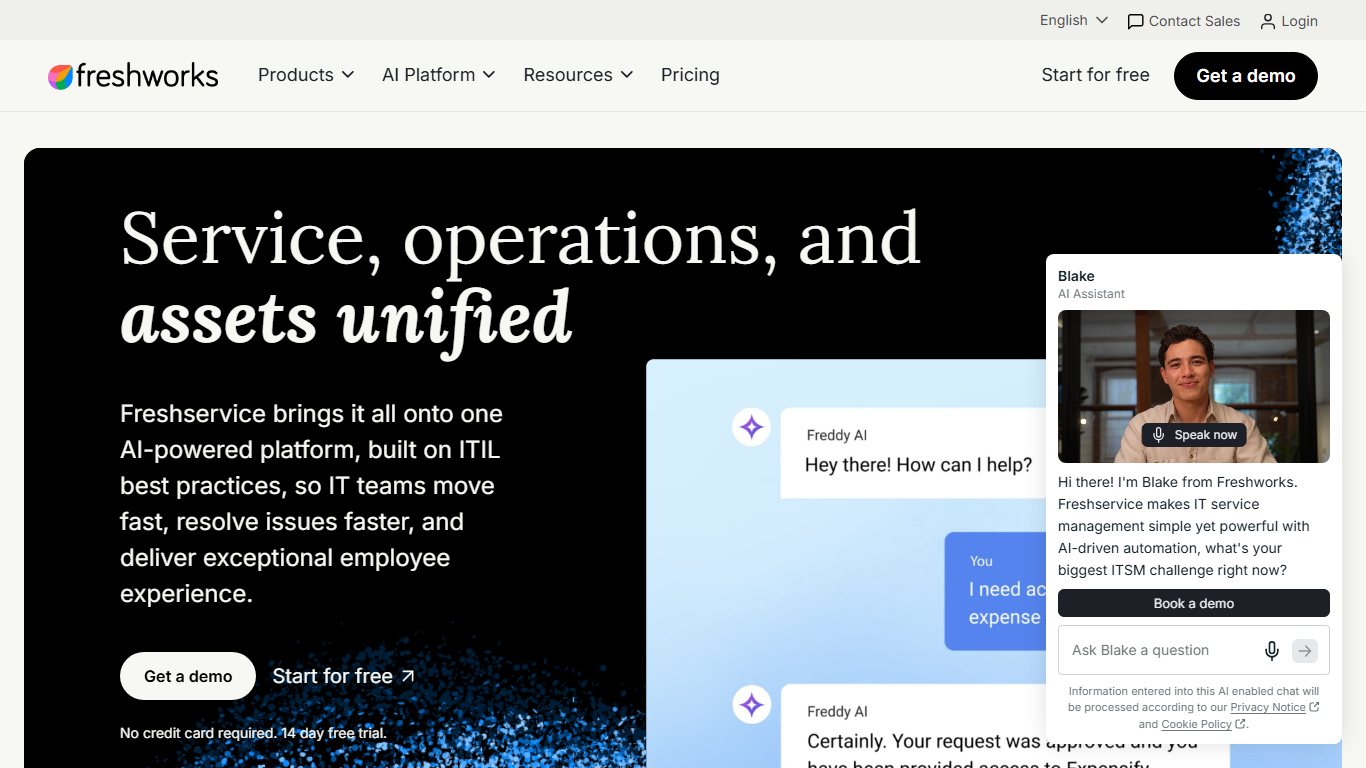
Price (checked November 2026): Starter $19, Growth $49 and Pro $99 per agent per month, billed annually. Enterprise is quote only. Freddy AI Copilot costs $29 per agent per month extra and is sold only on Pro and Enterprise.
Gartner 2026: Leader in the Magic Quadrant for IT Service Management Platforms, up from Challenger.
Strengths: Fast setup, a strong service catalog, a built-in asset tool on paid tiers, and room to extend into HR and facilities requests. Its free Microsoft Teams app works on every plan, and a Microsoft Intune integration pulls managed devices into the asset list. Migrations typically take 4 to 6 weeks.
Drawbacks: The features most teams want, such as fuller change and asset workflows, sit above Starter. Adding Copilot to Pro takes you to about $128 per agent per month.
Versus HaloITSM: Freshservice is easier to learn and cheaper at entry level. Halo gives you more configuration in one all-inclusive price.
Did you know?
According to CostBench’s price tracking, Freshservice cut Starter from $29 to $19 and Growth from $59 to $49 per agent per month in August 2026. That came within weeks of Freshworks moving up to Leader in Gartner’s ITSM Platforms Magic Quadrant.
2. ServiceNow ITSM
ServiceNow ITSM is the most complete platform on the list. It’s the default for large enterprises that want one system for IT, HR, security operations and customer service.
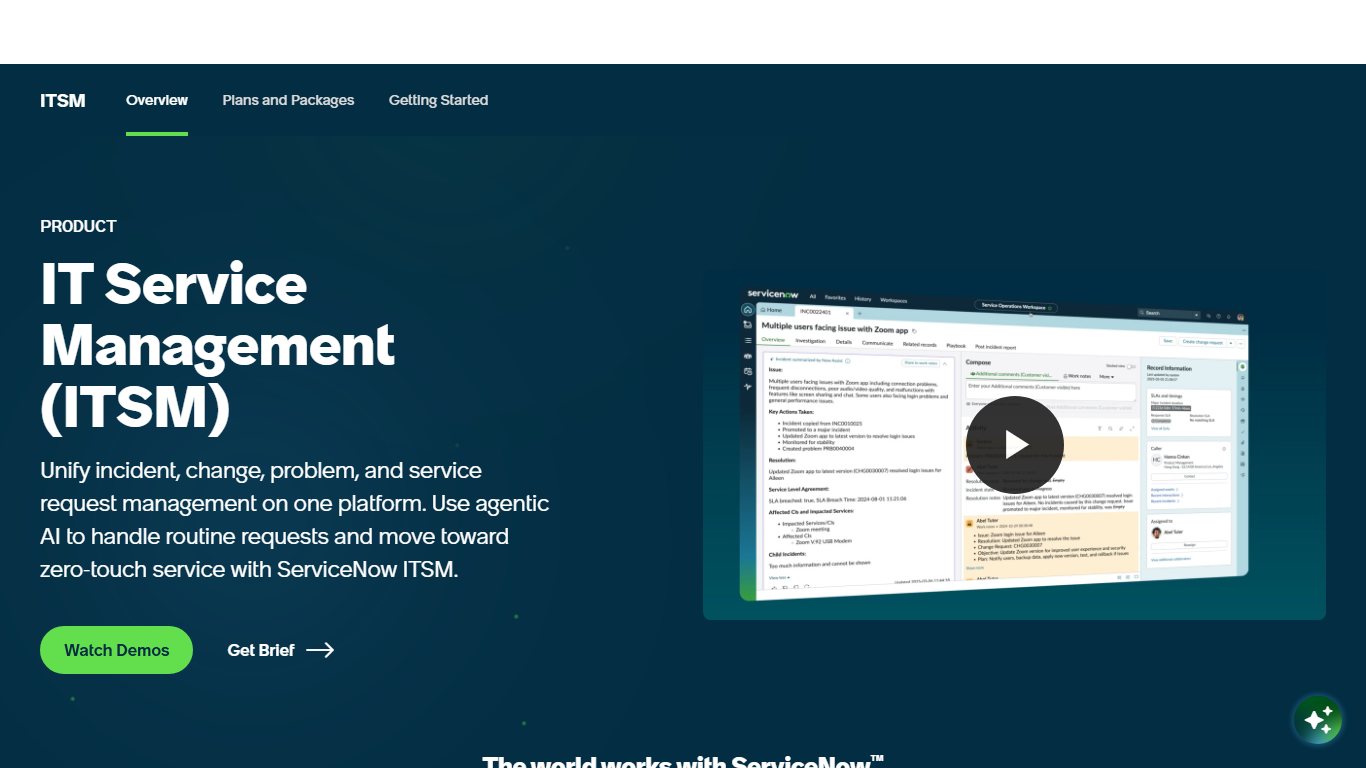
Price: Quote only. It’s sold in Standard, Professional and Enterprise packages. Third-party estimates put it at $100+ per fulfiller per month, before Now Assist generative AI and implementation partner fees.
Gartner 2026: Leader in the ITSM Platforms MQ. ServiceNow also says it’s a Leader in the separate 2026 MQ for AI Applications in ITSM.
Strengths: Deep CMDB and discovery, mature change management, huge workflow flexibility, a FedRAMP-authorized government cloud and a large partner ecosystem.
Drawbacks: Cost, complexity and the need for skilled admins. Under about 100 agents, ServiceNow is usually overkill: you’d pay for depth you won’t configure.
Versus BMC Helix ITSM: Both suit regulated enterprises. ServiceNow has the broader platform and ecosystem. BMC Helix is the stronger choice if you need on-premises deployment or already run BMC tooling.
3. Jira Service Management
Jira Service Management (JSM) is Atlassian’s ITSM tool. It’s the natural pick when your developers already live in Jira, because incidents, changes and dev issues link directly.
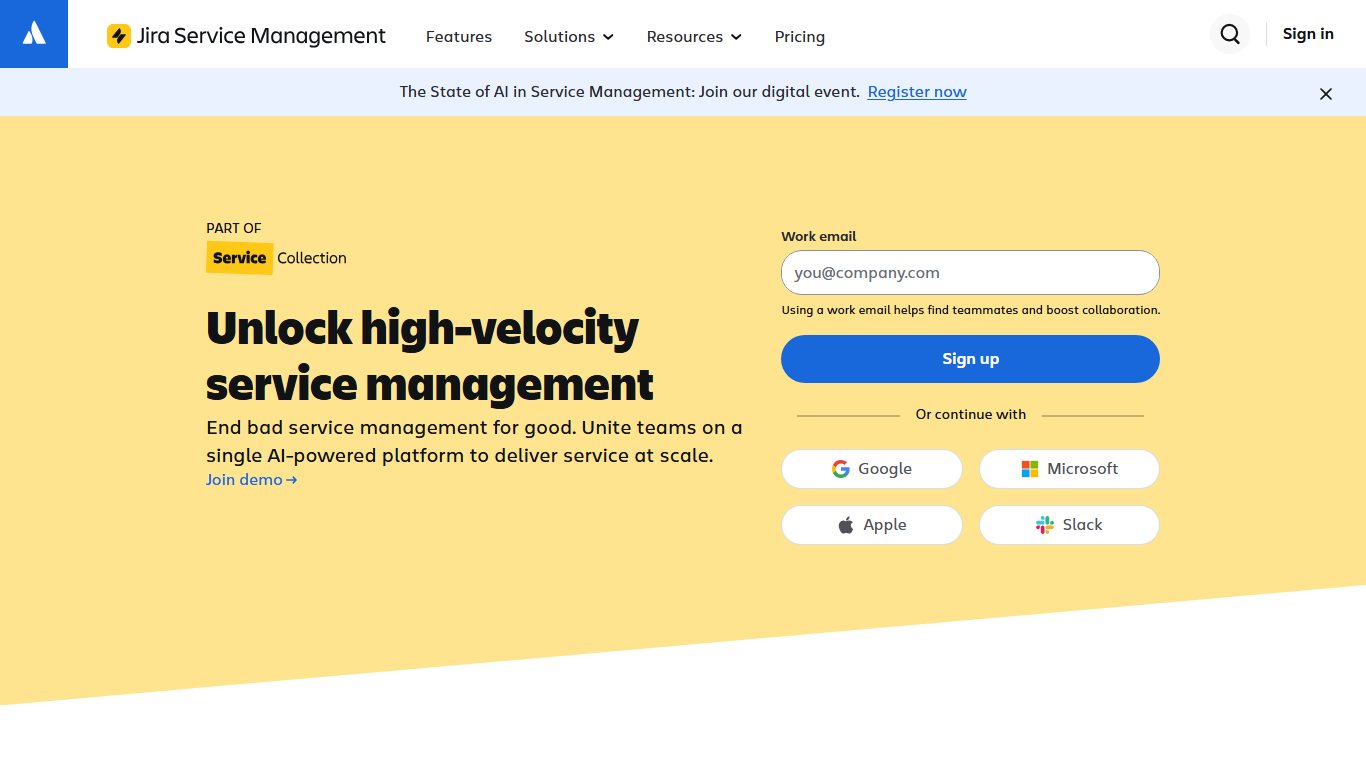
Price (as listed October to November 2026): Free for up to 3 agents with unlimited customers. Standard is about $21.50 and Premium about $55.28 per agent per month on monthly billing. Enterprise is quote only. Annual billing uses fixed agent tiers, so your per-agent cost depends on team size.
Gartner 2026: Atlassian is a Leader in the ITSM Platforms MQ.
Strengths: Low entry price, a real free tier, excellent dev and ops collaboration, built-in alerting and on-call, and a huge app marketplace.
Drawbacks: Change management, the uptime SLA and the virtual service agent sit in Premium. Atlassian also stopped selling Data Center licences to new customers on March 30, 2026, and Data Center reaches end of life on March 28, 2029. In practice, JSM is now a cloud product.
Versus Freshservice: JSM is cheaper for basic ticketing and better for engineering-led teams. Freshservice feels more like a classic IT service desk out of the box.
Price the plan you'll actually need
Starting tiers rarely cover the processes you’ll want by year two. In JSM, change management sits in Premium. In Freshservice, the AI copilot is only sold on Pro and Enterprise. Quote the tier that matches your 18-month plan.
4. HaloITSM
HaloITSM, from UK-based Halo, is a highly configurable ITIL-aligned platform. It sells one all-inclusive plan instead of splitting features into tiers.
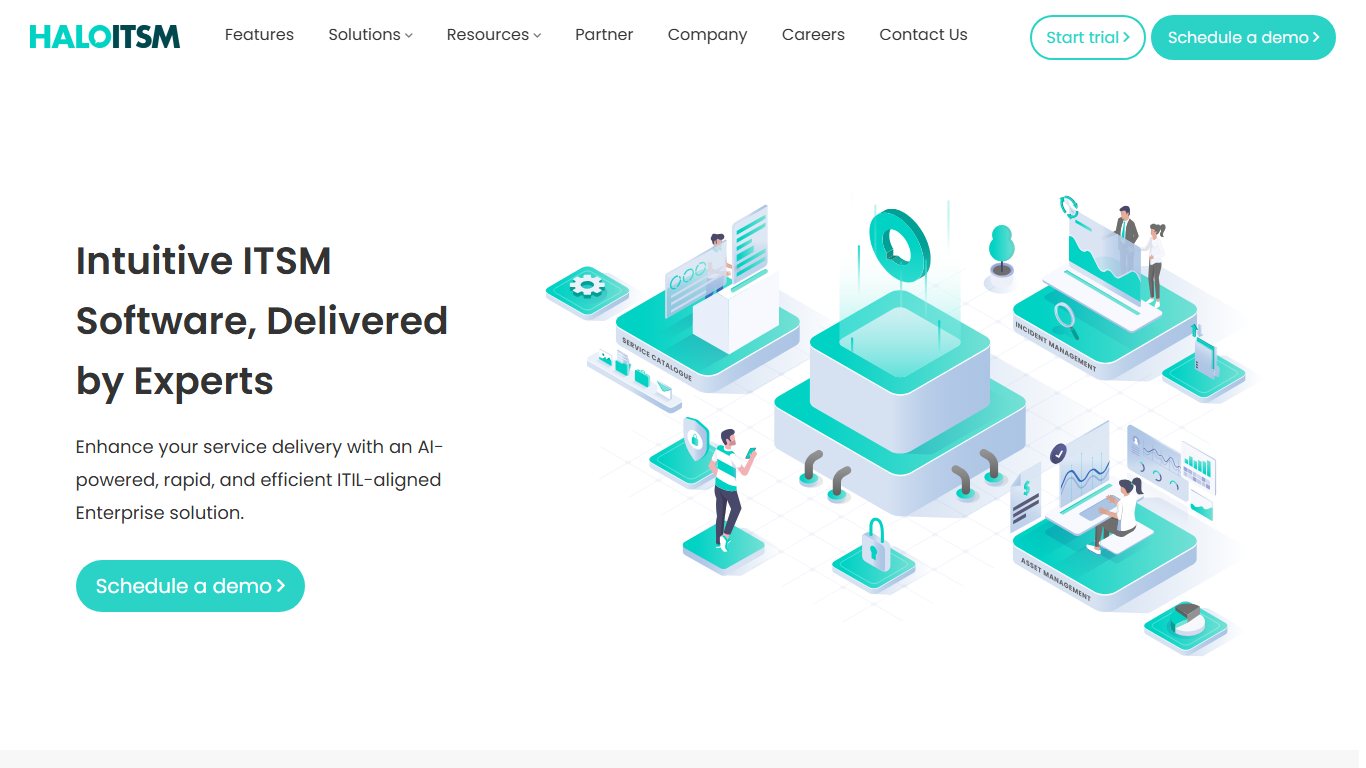
Price (reported June to September 2026): About £66 per agent per month billed annually (£792 per agent per year) on Halo’s public calculator. At the OFX rate of about $1.32 per pound on November 13, 2026, that’s roughly $87 per agent per month, or about $1,050 per agent per year. Treat the dollar figures as an estimate, not a list price. Halo quotes US buyers on request, and reviewer reports on G2 and Capterra put US quotes at about $49 to $70 per agent per month, with lower rates for bigger teams. End users and portal users are free. There’s no permanent free plan.
Gartner 2026: A new entrant as a Challenger in the ITSM Platforms MQ, according to analysis by itsm.tools.
Strengths: Change, problem, assets and SLAs come in the same price. Halo also makes HaloPSA, a natural fit for managed service providers (MSPs).
Drawbacks: The admin console has a learning curve. The public price is in pounds sterling, so ask whether your contract will be priced and invoiced in US dollars before you sign, or exchange-rate swings can move your renewal.
Versus Freshservice and JSM at about 20 agents: This is a common shortlist. At the converted calculator price, Halo costs more per seat than Freshservice Growth ($49) but less than Freshservice Pro plus Copilot (about $128), with fewer upsells. JSM wins only if Jira is already central to your engineering work.
5. ManageEngine ServiceDesk Plus
ManageEngine ServiceDesk Plus is the budget ITSM pick from ManageEngine, a division of Zoho Corporation. It’s one of the few strong tools still sold for on-premises deployment.
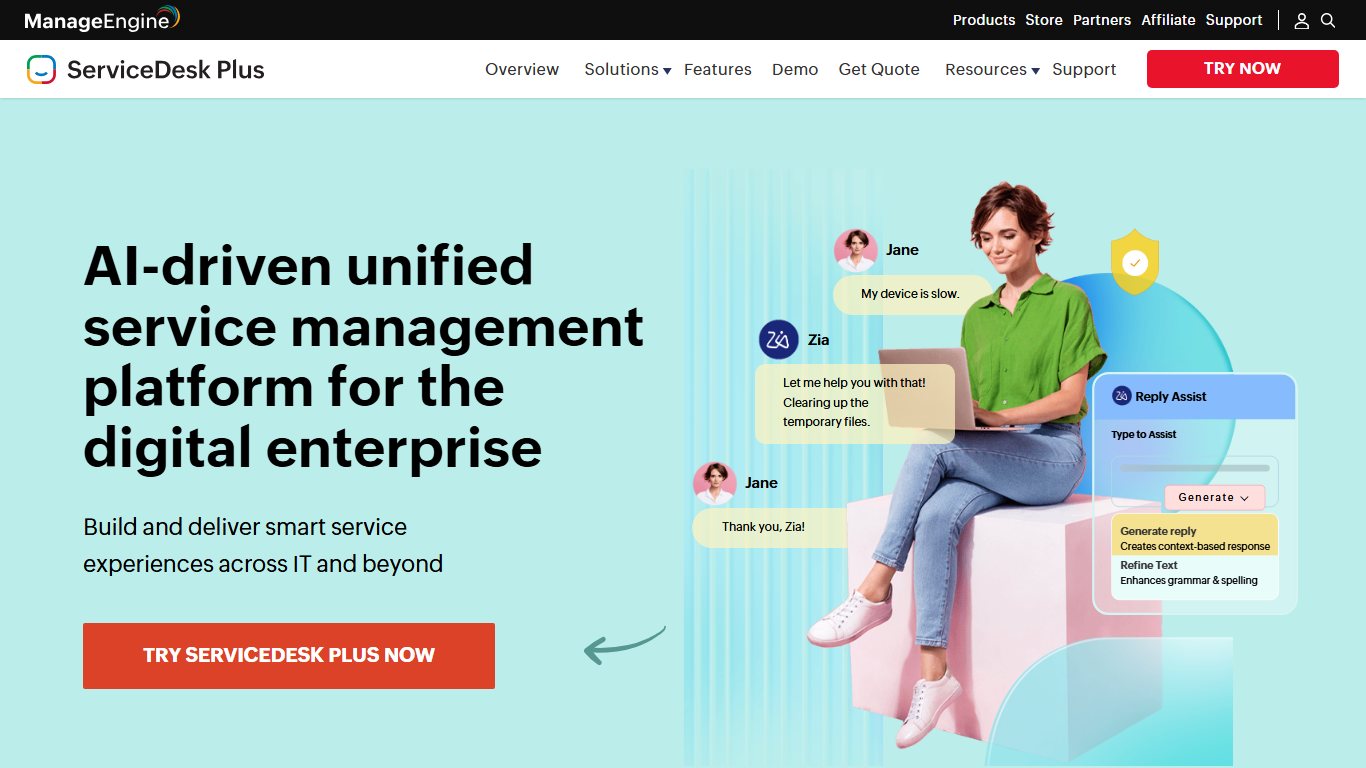
Price: A free edition exists. Sources report it covers either 2 or 5 technicians, so check ManageEngine’s edition page for the current limit. Paid plans are reported from about $10 to $13 per technician per month, with Standard, Professional and Enterprise editions.
Gartner 2026: Challenger in the ITSM Platforms MQ, according to ManageEngine.
Strengths: Low cost, solid ITIL coverage, on-premises or cloud, and tight links with other ManageEngine tools for endpoints and Active Directory. It can import Microsoft Intune devices and run Intune actions (restart, sync, wipe, retire) from the asset record.
Drawbacks: The interface feels dated next to Freshservice, and pricing depends on edition, technician count and add-ons, which makes quotes hard to compare.
Versus SolarWinds Service Desk: ManageEngine costs much less per technician and offers on-premises. SolarWinds is cloud-only, with a more modern feel.
6. BMC Helix ITSM
BMC Helix ITSM is the successor to BMC Remedy. It’s an enterprise platform for large, often regulated organizations. BMC Software now runs Helix as a separate business focused on service management and observability.
Price: Quote only.
Gartner 2026: Leader in the ITSM Platforms MQ. BMC Helix is also one of the nine vendors in the AI Applications in ITSM MQ.
Strengths: Cloud or on-premises deployment, FedRAMP Moderate authorization on AWS, DISA Impact Level 4 on AWS GovCloud, mature change and CMDB, and BMC HelixGPT for AI-assisted agents.
Drawbacks: Long implementations and partner-heavy rollouts. It’s not a sensible choice under a few hundred agents.
Versus ServiceNow: BMC Helix is the main enterprise alternative when ServiceNow’s renewal quote climbs, or when on-premises is a hard requirement.
7. SysAid
SysAid is a mid-market ITSM tool that has pushed hard into generative AI for agents and end users.
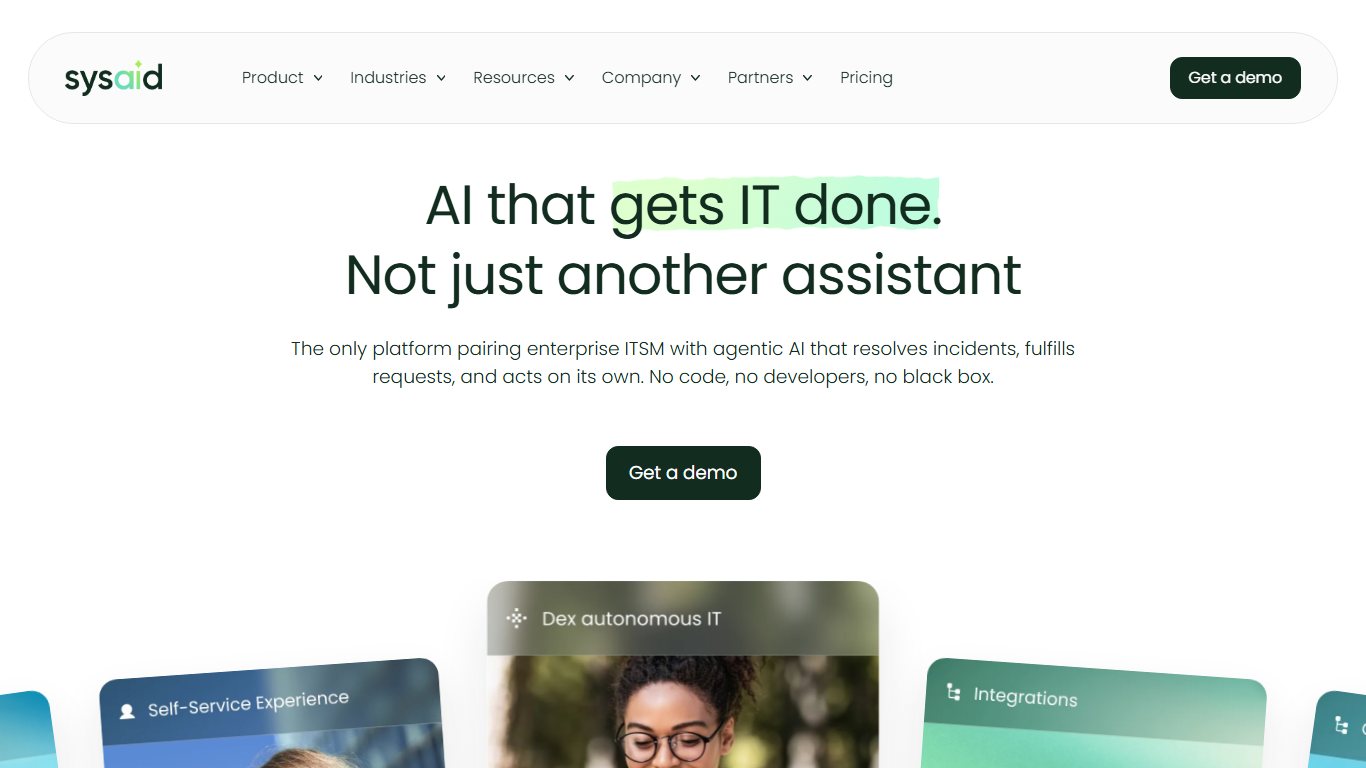
Price: Quote only. Third-party trackers report around $89 per agent per month for its mid-tier plan, and pricing can factor in managed asset counts as well as agent seats.
Strengths: Built-in asset management, a broad automation library and AI features aimed at deflecting routine requests.
Drawbacks: No published price list, so comparing it means sitting through a sales process.
Versus TOPdesk: SysAid leads on AI and asset depth. TOPdesk leads on simplicity and facilities management.
8. TOPdesk
TOPdesk is a Dutch ITSM and enterprise service management tool from Delft. It’s popular with European schools, universities, councils and hospitals, and suits IT and facilities teams working from one tool.
Price: Quote only. Plans come in Essential, Engaged and Excellent tiers. Third-party reported prices vary widely, so get a written quote.
Strengths: An approachable interface, strong facilities and property features, and good European data residency options.
Drawbacks: Less AI depth than the Leaders, and a smaller US presence and partner network.
Versus InvGate: Both appeal to teams that want ITIL without enterprise complexity. TOPdesk is stronger for facilities work, and InvGate is stronger on asset discovery.
9. InvGate Service Management
InvGate Service Management (formerly InvGate Service Desk) is a no-code ITSM tool for small and mid-size IT teams. It pairs with InvGate Asset Management.
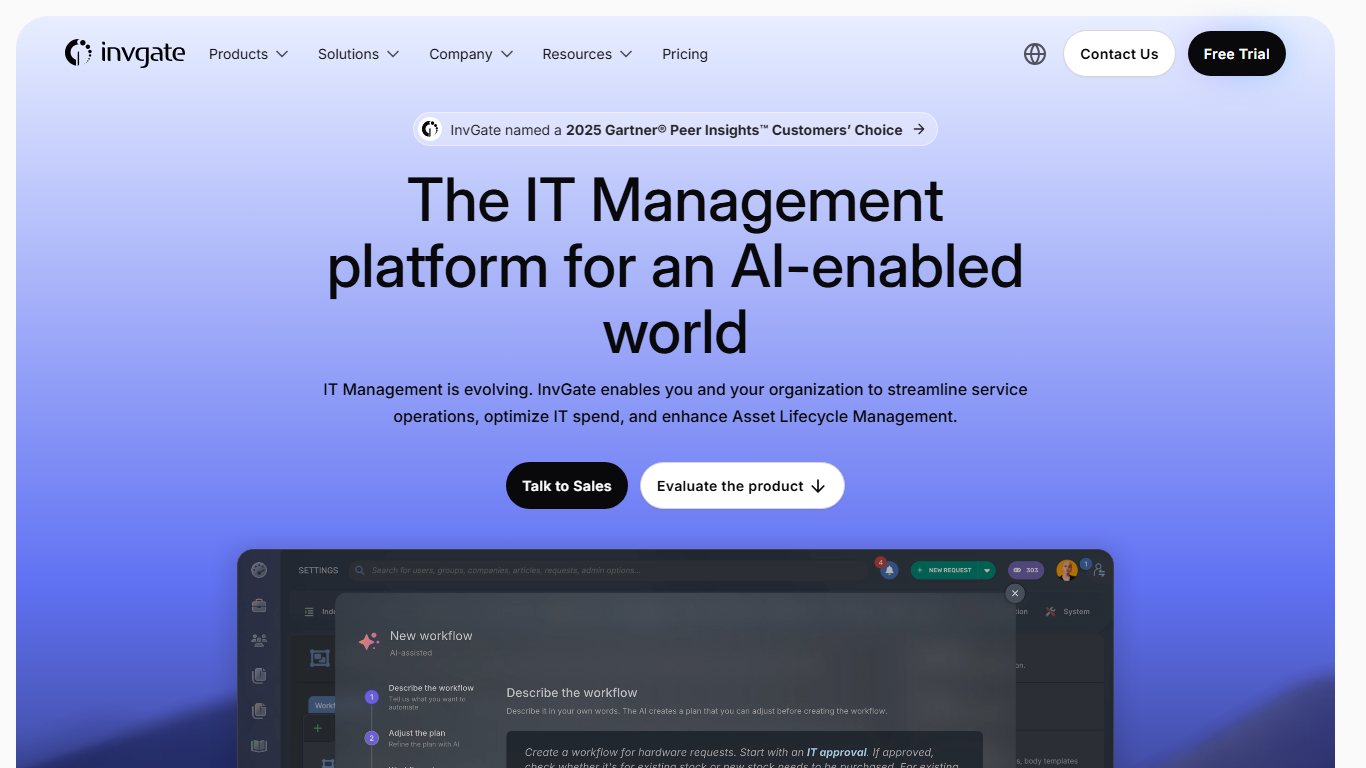
Price: Third-party sources report Starter at about $1,499 per year for up to 5 agents, and Pro at about $500 per agent per year for 5 to 50 agents. Enterprise is custom, reported from about $12,000 per year. Sources conflict on Pro, so get a written quote.
Strengths: Quick setup, good workflow builders and strong asset discovery through the companion product.
Drawbacks: Less reporting depth than the Leaders, and the asset features depend on buying a second product.
Versus Freshservice: InvGate can cost less for small teams. Freshservice has the larger ecosystem and the stronger analyst standing.
10. SolarWinds Service Desk
SolarWinds Service Desk (formerly Samanage) is a cloud ITSM tool. It makes the most sense for teams already using SolarWinds monitoring.
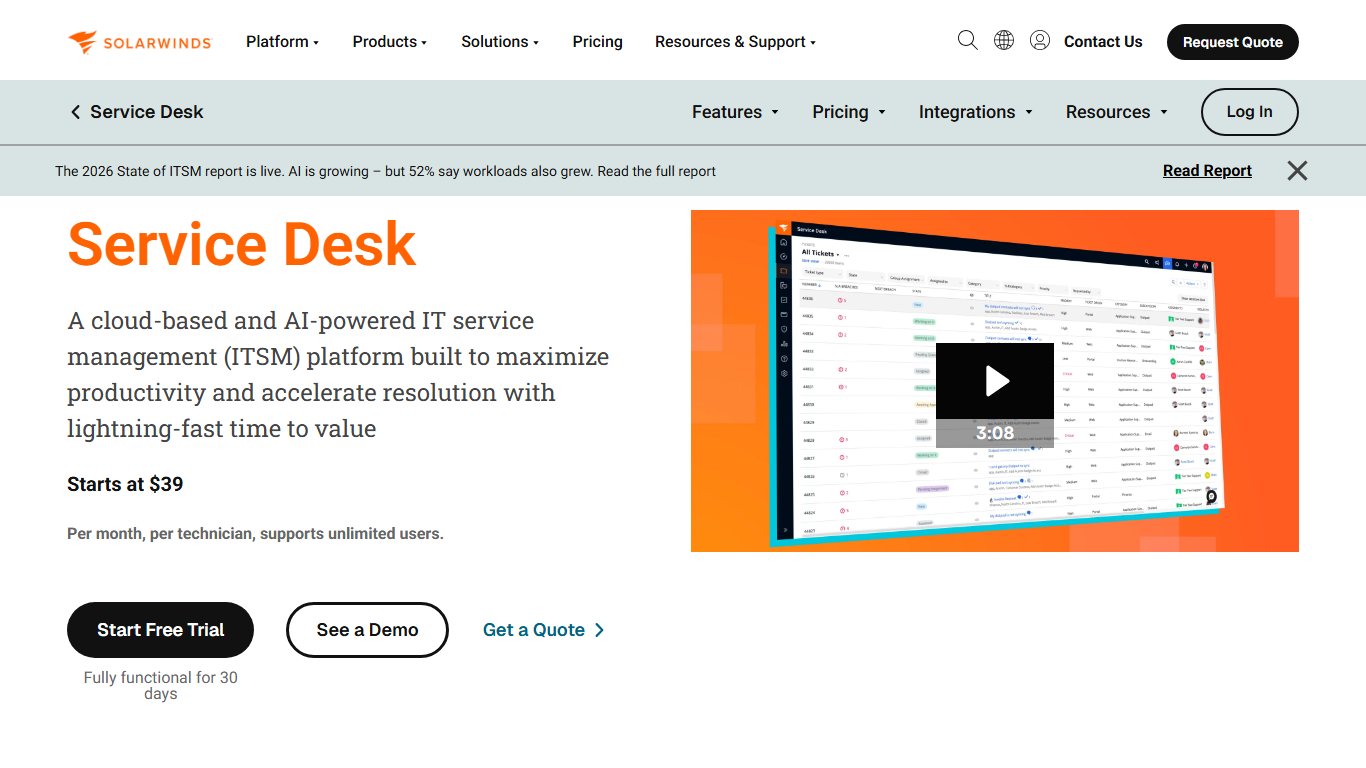
Price (checked November 2026): Essentials $39 per technician per month, billed annually. Advanced is listed at $79 by some trackers and $99 by others. On August 10, 2026, the top Premier plan rose from $99 to $124 per technician per month.
Strengths: A clean interface, built-in asset and risk features, and alerts from SolarWinds monitoring that turn into tickets.
Drawbacks: No on-premises option, and the August 2026 Premier increase of about 25% is a reminder to lock in renewal terms.
Versus ManageEngine ServiceDesk Plus: SolarWinds is more polished. ManageEngine is cheaper and offers on-premises.
11. Ivanti Neurons for ITSM
Ivanti Neurons for ITSM is a configurable enterprise platform that absorbed the former Cherwell and Heat products. It’s mostly relevant if you already run Ivanti endpoint or security tools, or need a FedRAMP option outside the big two.
Price: Quote only.
Gartner 2026: No longer a Leader. Gartner’s report includes Ivanti, and analysis by itsm.tools says it moved to Niche Player. Ivanti hasn’t published its placement, so check the report itself.
Strengths: Cloud or on-premises, deep configuration, links with Ivanti endpoint management, and a FedRAMP Moderate (Class C) listing on the FedRAMP Marketplace.
Drawbacks: Its market standing has slipped, and former Cherwell customers have already been through one forced migration. Ivanti also says its AI capabilities aren’t available in the FedRAMP environment.
Versus BMC Helix ITSM: Both serve on-premises enterprises. BMC Helix holds the stronger 2026 analyst position.
12. Zendesk
Zendesk is a customer service platform that many companies also use for internal IT tickets. It’s not a full ITIL tool.
Price (checked November 2026): Suite Team $55 and Suite Professional $115 per agent per month, billed annually. Enterprise is sales-led. Support Team (ticketing only) is $19. The Copilot AI add-on is $50 per agent per month. Suite Growth is no longer on the main price list.
Strengths: The best omnichannel ticketing on the list, and zero new tools if customer support already uses it.
Drawbacks: No native change management or CMDB. It costs more than Freshservice for weaker ITSM coverage.
Versus Freshservice: For a fresh start on internal IT, Freshservice is the better buy. Zendesk only makes sense when you’re reusing an existing contract.
Also worth knowing
A few more names come up on shortlists. Xurrent (formerly 4me) suits organizations that share service management across multiple providers. TeamDynamix is a new 2026 Gartner Challenger that’s popular in higher education and government. EasyVista and OpenText (OpenText Service Management) are established enterprise alternatives, strong in Europe. Salesforce Agentforce IT Service brings ITSM onto the Salesforce platform, and Salesforce appears in Gartner’s 2026 AI Applications in ITSM report.
Integrations and automation compared
All the main ITSM tools connect to Microsoft Teams, single sign-on providers and device management, but how deep each connection goes differs. Freshservice and ManageEngine have the most useful Microsoft Intune links at their price. ServiceNow goes deepest, at a cost. JSM’s single sign-on needs a paid Atlassian add-on.
The integrations that save the most time in practice are chat (users raise tickets where they already work), SSO (one login, automatic offboarding), and device data from your MDM, so tickets show which laptop someone uses without manual lookups.
| Tool | Teams and Slack | SSO (Entra ID, Okta) | Intune and device data | Monitoring alerts | No-code workflow builder |
|---|---|---|---|---|---|
| Freshservice | Free Teams app on all plans; Slack app with approvals | SAML SSO | Native Intune integration syncs devices and compliance | Alert management with monitoring integrations | Workflow Automator |
| ServiceNow ITSM | Teams and Slack via Virtual Agent integrations | SAML SSO | Service Graph Connector for Microsoft Intune | Event Management (ITOM, licensed separately) | Flow Designer |
| Jira Service Management | Teams and Slack chat channels for requests | SAML SSO through Atlassian Guard (paid add-on) | Assets imports, Intune via Marketplace apps | Built-in alerting and on-call (formerly Opsgenie) | Jira Automation rules, run limits vary by plan |
| HaloITSM | Teams channel notifications; Slack updates and file sharing | SAML SSO | Intune and RMM integrations | Monitoring alerts converted to tickets | Workflow designer, included in the single plan |
| ManageEngine ServiceDesk Plus | Teams tab plus technician chatbot | SAML SSO and Active Directory | Intune asset import and remote actions | ManageEngine OpManager and Applications Manager | Custom triggers and workflows |
Rule-based automation vs paid AI
Rule-based automation is included on most tiers, and it does most of the heavy lifting. Rules like “route any ticket mentioning VPN to the network team,” “auto-approve standard software under $50,” or “escalate a P1 after 15 minutes” run on Freshservice’s Workflow Automator, ServiceNow Flow Designer or Jira Automation without any AI SKU. The paid AI add-ons sit on top of that: they draft replies, summarize long threads and answer users in plain language. Build your rules first. They’re cheaper, predictable and easier to audit, and AI does better when routing and categories are already clean.
Test SSO offboarding in your trial
Disable a test user in Entra ID or Okta during the trial and check how fast they lose access to the portal. Automatic deprovisioning is one of the first things auditors check.
What ITSM tools really cost in 2026
The starting price is rarely what you pay. Your real bill depends on the tier you need, annual versus monthly billing, AI add-ons and asset or device counts.
There are three main pricing models:
- Per agent or per technician: You pay for each IT person who works tickets. End users are usually free. Freshservice, JSM, HaloITSM, SolarWinds and Zendesk work this way.
- Flat or tiered bundles: InvGate Starter is a flat yearly fee for up to 5 agents. JSM’s annual billing uses fixed agent bands.
- Quote only: ServiceNow, BMC Helix, Ivanti, SysAid and TOPdesk price by negotiation, often with multi-year terms.
Annual billing is usually cheaper than monthly. Zendesk’s monthly billing, for example, is reported to run about 30% higher.
A renewal quote that jumps usually comes down to four causes: list-price increases (like SolarWinds Premier in August 2026), expiring first-year discounts, extra agents, and new AI SKUs added to the bundle. Each of those is a good moment to compare alternatives.
Free plans and what they leave out
Free ITSM plans exist, but they’re built to get you started, not to run a mature service desk.
| Tool | Free limit | Key missing features | Upgrade trigger |
|---|---|---|---|
| Jira Service Management Free | 3 agents, unlimited customers | Uptime SLA and higher plan limits | Your 4th agent |
| ManageEngine ServiceDesk Plus Free | 2 or 5 technicians (sources differ) | Advanced modules kept for paid editions | More technicians or fuller ITIL workflows |
| Freshservice | Free trial only | No permanent free plan | End of trial |
| HaloITSM | No permanent free plan | Only end users are free | Any agent seat |
The JSM free tier is genuinely usable for a solo admin or a team of 2 or 3 handling requests and incidents. It falls short once your team grows past 3 agents.
Did you know?
Jira Service Management’s free plan supports unlimited customers but only 3 agents, according to Macha’s 2026 pricing breakdown. Atlassian lists change management and asset management among its features.
AI add-ons that raise the bill
AI copilots can draft replies, summarize tickets, suggest categories and answer users through a virtual agent. They’re often sold per agent, on top of your plan.
- Freshservice Freddy AI Copilot: $29 per agent per month, Pro and Enterprise only. Pro goes from $99 to about $128, roughly 29% more.
- Zendesk Copilot: $50 per agent per month. Suite Professional goes from $115 to $165, about 43% more.
- JSM virtual service agent: Part of Premium, so the “add-on” is the jump from Standard to Premium.
- ServiceNow Now Assist: Priced by quote as an extra package.
AI add-ons pay off when a large share of your tickets are repetitive (password resets, access requests, how-to questions) and your knowledge base is good enough for the AI to draw on. If your articles are thin or out of date, fix those first. A copilot can’t summarize knowledge you never wrote down.
Example: what 10 agents cost per year
These figures multiply list prices (checked November 2026) by 10 agents and 12 months. Negotiated discounts, taxes and implementation fees aren’t included. HaloITSM’s dollar figure converts the sterling calculator price at about $1.32 per pound (OFX, November 13, 2026) and is an estimate.
| Tool and plan | List price | Billing | Yearly cost for 10 agents | Common add-ons |
|---|---|---|---|---|
| ManageEngine ServiceDesk Plus (paid) | About $10 to $13/technician/mo | Annual | About $1,200 to $1,560 | Asset and project modules |
| Jira Service Management Standard | About $21.50/agent/mo | Monthly | About $2,580 | Premium for change management |
| Jira Service Management Premium | About $55.28/agent/mo | Monthly | About $6,634 | Marketplace apps |
| SolarWinds Service Desk Essentials | $39/technician/mo | Annual | $4,680 | Higher tiers for risk features |
| InvGate Service Management Pro | About $500/agent/yr (reported) | Annual | About $5,000 | InvGate Asset Management |
| Freshservice Growth | $49/agent/mo | Annual | $5,880 | Pro for advanced workflows |
| Zendesk Suite Team | $55/agent/mo | Annual | $6,600 | Copilot $50/agent/mo |
| HaloITSM | About £66 (≈$87 est.)/agent/mo | Annual | About £7,920 (≈$10,480 est.) | Few; most features included |
| Freshservice Pro | $99/agent/mo | Annual | $11,880 | Freddy AI Copilot |
| Freshservice Pro + Freddy AI Copilot | About $128/agent/mo | Annual | About $15,360 | None |
| SolarWinds Service Desk Premier | $124/technician/mo | Annual | $14,880 | Device-based charges reported |
| ServiceNow ITSM | Est. $100+/fulfiller/mo | Quote | $12,000+ (estimate) | Now Assist, partner fees |
The gap between the cheapest and most expensive realistic options for 10 agents is more than tenfold. That’s why matching the tool to your team size matters more than any single feature.
Which ITSM tool fits your team size
Team size is the single best filter. A tool built for 500 agents will slow down a team of 8, and a free tier will break at 40.
Small IT teams and solo admins (1 to 5 agents)
Start with Jira Service Management Free or the ManageEngine ServiceDesk Plus free edition. For a polished paid tool, step up to InvGate Starter (about $1,499 per year for up to 5 agents) or Freshservice Starter ($19 per agent).
Any of these four will get you off a shared inbox. Each gives you a portal, ticket numbers, SLA timers and a knowledge base for well under $100 a month at this size.
Mid-market teams (5 to 150 agents)
From 5 to 25 agents, Freshservice Growth, JSM Standard or Premium, and HaloITSM are the main contenders. From 25 to 150 agents, Freshservice Pro, HaloITSM, SysAid and TOPdesk all handle full ITIL processes without enterprise overhead.
Pick JSM if engineering runs on Jira. If your developers also rely on Jira-based test management tools, keeping everything in one Atlassian site saves a lot of integration work. Pick Halo if you want every feature in one price. Pick Freshservice if you want the fastest setup and the strongest analyst backing.
Atlassian shops: trial JSM first
If your developers already live in Jira, start your trial with Jira Service Management. Linking incidents to dev issues and change requests to deployments is its biggest advantage, and no other tool on this list matches it natively.
Enterprises and regulated industries (250+ agents)
ServiceNow ITSM and BMC Helix ITSM are the realistic choices above about 250 agents, or wherever auditors scrutinize change control. Both handle complex CMDBs, segregation of duties and multi-team approvals.
These platforms also extend into enterprise service management (ESM) for HR, legal and facilities. If facilities staff need to dispatch technicians to sites, look at field service management tools alongside your ITSM platform. Most ITSM portals aren’t built for route planning.
US government and regulated industries
For US federal agencies and their contractors, the shortlist is ServiceNow, BMC Helix, Ivanti Neurons for ITSM and Jira Service Management’s Atlassian Government Cloud. Each has a FedRAMP authorization for a separate government environment. Their standard commercial clouds aren’t the authorized product, so confirm you’re being quoted for the government offering.
| Tool | FedRAMP status | Government cloud | What to watch |
|---|---|---|---|
| ServiceNow ITSM | FedRAMP High reported for its government community cloud, plus DoD IL4 | Yes, separate government cloud | Highest cost on the list |
| BMC Helix ITSM | FedRAMP Moderate (announced September 2022, on AWS) | DISA IL4 on AWS GovCloud (announced December 2020) | Partner-led rollouts |
| Ivanti Neurons for ITSM | FedRAMP Certified, Class C (Moderate), listed since November 19, 2019 | Yes, FedRAMP-hosted offering | Ivanti AI features not available in FedRAMP |
| Jira Service Management | FedRAMP Moderate for Atlassian Government Cloud (March 2025), now listed as Certification Class C | Yes, Atlassian Government Cloud | No virtual agent or AI features; government tiers start at 26+ agents |
| Freshservice | No FedRAMP authorization advertised by Freshworks | No | Commercial cloud only |
| ManageEngine ServiceDesk Plus | No FedRAMP authorization advertised | No | On-premises lets you keep data inside your own boundary |
Outside government, most regulated buyers (healthcare, finance, education) need a SOC 2 Type II report and, for patient data, a signed HIPAA business associate agreement (BAA). ServiceNow, Atlassian, Freshworks, BMC and Zoho all publish SOC 2 reports through their trust centers, typically under NDA. HIPAA terms usually apply only to specific plans, so ask which tier the BAA covers before you count on it.
Before you start
A FedRAMP authorization covers one specific environment and product version. Check the FedRAMP Marketplace listing and the vendor’s government contract terms before you put controlled data into any ITSM tool.
On-premises or air-gapped deployment
For on-premises, shortlist ManageEngine ServiceDesk Plus, BMC Helix ITSM, Ivanti Neurons for ITSM, HaloITSM, SysAid and InvGate. Don’t pick Jira Service Management Data Center as a new on-premises option. Atlassian ended new-customer sales on March 30, 2026, and support ends on March 28, 2029.
| Tool | On-premises option | Compliance note | Best fit |
|---|---|---|---|
| ManageEngine ServiceDesk Plus | Yes | Self-hosted; your own controls apply | Budget, single site |
| BMC Helix ITSM | Yes | FedRAMP Moderate and IL4 for the cloud edition | Large regulated estates |
| Ivanti Neurons for ITSM | Yes | FedRAMP Moderate listing for the cloud edition | Existing Ivanti customers |
| HaloITSM | Yes | Self-hosted; same all-inclusive feature set | Mid-market ITIL teams |
| SysAid | Yes | Self-hosted; quote-based | Mid-size teams wanting AI |
| InvGate Service Management | Yes | Self-hosted; quote-based | Small to mid teams |
Managed service providers have different needs. Billing, contracts and multi-client portals matter more than internal ITIL depth, so look at PSA and RMM tools such as HaloPSA (Halo’s sister product) rather than a pure internal ITSM platform.
Gartner Magic Quadrant 2026 for ITSM: what it says
Gartner published two separate ITSM Magic Quadrants in 2026. The first covers ITSM Platforms (July 27, 2026), and the second covers only AI Applications in ITSM (August 17, 2026). Vendors often blur the two in their marketing, so check which report a “Leader” badge refers to.
| Report | Published | Vendors evaluated | Leaders (publicly announced) | Notable moves |
|---|---|---|---|---|
| Magic Quadrant for IT Service Management Platforms | July 27, 2026 | Includes ServiceNow, Atlassian, Freshworks, BMC Helix, ManageEngine, Halo, TeamDynamix, Ivanti | ServiceNow, Atlassian, Freshworks, BMC Helix | Freshworks up to Leader; Halo and TeamDynamix new Challengers; Ivanti out of Leaders |
| Magic Quadrant for AI Applications in ITSM | August 17, 2026 | Nine: Atlassian, Automation Anywhere, BigPanda, BMC Helix, Freshworks, Resolve, Rezolve.AI, Salesforce, ServiceNow | ServiceNow (vendor-announced) | First edition of this report |
2026 MQ for IT Service Management Platforms
Gartner brought back its ITSM Platforms Magic Quadrant on July 27, 2026, after retiring it a few years earlier. Four vendors announced Leader placements: ServiceNow, Atlassian, Freshworks and BMC Helix.
The biggest move was Freshworks, up from Challenger to Leader. ManageEngine says it’s a Challenger. TeamDynamix confirms a Challenger placement, and itsm.tools reports that Halo entered as a Challenger too. Ivanti is in the report but no longer a Leader. Analysis by itsm.tools places it as a Niche Player, though Ivanti hasn’t confirmed its position publicly.
2026 MQ for AI Applications in ITSM
The AI report, published August 17, 2026, evaluates nine vendors. Some sell full ITSM platforms (ServiceNow, Atlassian, Freshworks, BMC Helix, Salesforce). Others sell AI layers that sit on top of an existing ITSM tool: Automation Anywhere, BigPanda, Resolve and Rezolve.AI. ServiceNow says it’s a Leader.
Should a small team care?
Not much. Gartner’s Magic Quadrants assess vendors on Ability to Execute and Completeness of Vision, with large organizations in mind. A 10-agent team gains more from a two-week trial and reviews from teams its own size on Gartner Peer Insights. Use the MQ as a sanity check that a vendor is stable, not as a ranking of what suits you.
ITSM vs ITIL (and what changed with ITIL 5)
ITSM is the practice of running IT as a service. ITIL is the most widely used best-practice framework for doing it. The ITSM tool is the software that supports the practice. You can run ITSM without ITIL, and you can buy an “ITIL-aligned” tool without anyone on the team being certified.
What is the difference between ITSM and ITIL?
ITSM answers “what does IT deliver, and how?” ITIL is a published framework, now owned by PeopleCert, that describes proven ways to do it: how to classify incidents, run change approvals and manage problems. Think of ITSM as cooking, ITIL as a well-known cookbook, and your ITSM tool as the kitchen.
ITIL 5 in 2026: what’s new
ITIL Version 5 rolled out in stages during 2026:
- ITIL Version 5 Foundation: launched February 12, 2026 (one source gives January 30).
- Product, Service and Experience modules: March 12, 2026.
- Strategy and Transformation modules: April 9, 2026.
- Managing Professional Transition module: scheduled for May 14, 2026.
ITIL 4 certifications are still recognized, and a Foundation Bridge (Version 5) lets ITIL 4 holders update without starting over. Your tool doesn’t need an “ITIL 5” badge. What matters is that it supports the core practices your team actually runs.
How to choose and switch without regret
Shortlist three tools based on team size and existing stack. Then trial them with your own real tickets, and plan any switch around your renewal date, not the vendor’s quarter-end.
Start 9 to 12 months before renewal
Begin evaluating 9 to 12 months before your current ITSM contract renews. Many contracts need written notice 60 to 90 days ahead, and a rushed decision usually means auto-renewing at the new price.
A 30-day trial checklist
Run a real trial
- Export last month’s 50 most common requests and incidents.
- Build forms and routing rules for the top 10.
- Write knowledge articles for the five most frequent issues.
- Set SLA targets and trigger a breach on purpose.
- Import a sample of 100 assets from your current list or Intune.
- Have three non-IT staff log tickets through the portal and Teams.
- Build the monthly report your manager actually asks for.
- Time each task and note where you needed vendor support.
Questions to ask on the sales call
- Are end users and requesters free? Get it in writing.
- Which tier includes change management, assets and the virtual agent?
- What do AI features cost per agent, and are they metered?
- Is SSO included, or is it a paid add-on?
- What’s the price cap on renewal increases, and which currency will we be invoiced in?
- How much notice do we need to give to cancel or reduce seats?
- Can we export all tickets, attachments and knowledge articles if we leave?
- Where is our data hosted, and which certifications apply (SOC 2 Type II, FedRAMP, HIPAA BAA)?
Planning a migration
Moving tickets and knowledge articles is less painful than most teams fear, as long as you’re selective about what comes across. A standard move to a tool like Freshservice typically takes 4 to 6 weeks.
- Weeks 1 to 2: Map categories, fields, SLAs and user groups. Decide how much history to bring. Many teams import only 12 to 24 months of closed tickets.
- Weeks 2 to 3: Migrate knowledge articles, and rewrite the outdated ones rather than copying them blindly.
- Weeks 3 to 4: Import assets and users, connect SSO and Intune, then rebuild automations and approvals.
- Weeks 4 to 6: Run both systems side by side for a week, train agents, then switch the support email address and portal link.
Before you start
Export a full backup of tickets, attachments and articles from your old tool before the contract ends. Some vendors cut off access the day a subscription lapses.
The best next step is a simple one. Count your agents, note the date your current contract renews, check whether you need FedRAMP or on-premises, and pick three tools from the team-size section above. That alone puts you ahead of most buyers, who start shopping after the renewal quote arrives.
FAQ
What is an IT Service Management tool?
It’s software that helps an IT team manage incidents, service requests, changes, problems, assets and knowledge in one place. It tracks every ticket against SLAs and gives users a self-service portal.
Is there an ITSM Gartner Magic Quadrant for 2026?
Yes, two of them. The Magic Quadrant for IT Service Management Platforms was published July 27, 2026, with ServiceNow, Atlassian, Freshworks and BMC Helix as Leaders. A separate Magic Quadrant for AI Applications in ITSM followed on August 17, 2026, covering nine vendors.
What is the difference between ITSM and ITIL?
ITSM is the practice of delivering IT as a service. ITIL is a best-practice framework for doing ITSM well, now in Version 5. ITSM tools are the software that supports both.
What is BMC ITSM?
BMC ITSM usually means BMC Helix ITSM, the enterprise successor to BMC Remedy. It runs in the cloud or on-premises, is sold by quote, holds FedRAMP Moderate authorization, and was named a Leader in Gartner’s 2026 ITSM Platforms Magic Quadrant.
What is the best ITSM tool for a small business?
For 1 to 5 agents, start with Jira Service Management Free or the ManageEngine ServiceDesk Plus free edition. For a paid tool with room to grow, Freshservice Starter at $19 per agent per month (annual billing) is the strongest value.
Is there a free ITSM tool?
Yes. Jira Service Management Free covers 3 agents with unlimited customers, and ManageEngine ServiceDesk Plus has a free edition for a small number of technicians. Both limit advanced features compared with paid editions.
How much does ServiceNow ITSM cost?
ServiceNow is quote only. Third-party estimates put ServiceNow ITSM at $100 or more per fulfiller per month, before AI packages and implementation partner costs.
How much does HaloITSM cost in US dollars?
Halo’s public calculator shows about £66 per agent per month billed annually, which is roughly $87 at the November 13, 2026 exchange rate. That’s an estimate, not a list price. Reviewer reports put US quotes at about $49 to $70 per agent per month, so get a written dollar quote.
Which ITSM tools are FedRAMP authorized?
ServiceNow, BMC Helix ITSM, Ivanti Neurons for ITSM and Jira Service Management (through Atlassian Government Cloud) all hold FedRAMP authorizations for their government environments. Freshservice and ManageEngine ServiceDesk Plus don’t advertise one.
Do ITSM tools integrate with Microsoft Teams and Intune?
Yes, most do. Freshservice has a free Teams app on all plans and a native Intune integration. ManageEngine ServiceDesk Plus imports Intune devices and can run actions like wipe and retire. ServiceNow uses a Service Graph Connector for Intune.
Is Jira Service Management an ITSM tool?
Yes. Atlassian’s Jira Service Management covers incidents, requests, problems, changes and assets, and Atlassian is a Leader in Gartner’s 2026 ITSM Platforms Magic Quadrant. Atlassian lists change management and asset management among its features, with fuller capabilities on higher plans.
What is the difference between a help desk and ITSM?
A help desk tracks and answers tickets. ITSM adds the processes behind them: change approvals, root-cause problem management, asset and configuration tracking, and SLA governance.
Do I need ITIL certification to use an ITSM tool?
No. Modern ITSM tools ship with sensible ITIL-based defaults you can use without training. Certification helps a team lead design processes, and ITIL 4 certifications remain recognized after the 2026 launch of ITIL Version 5.