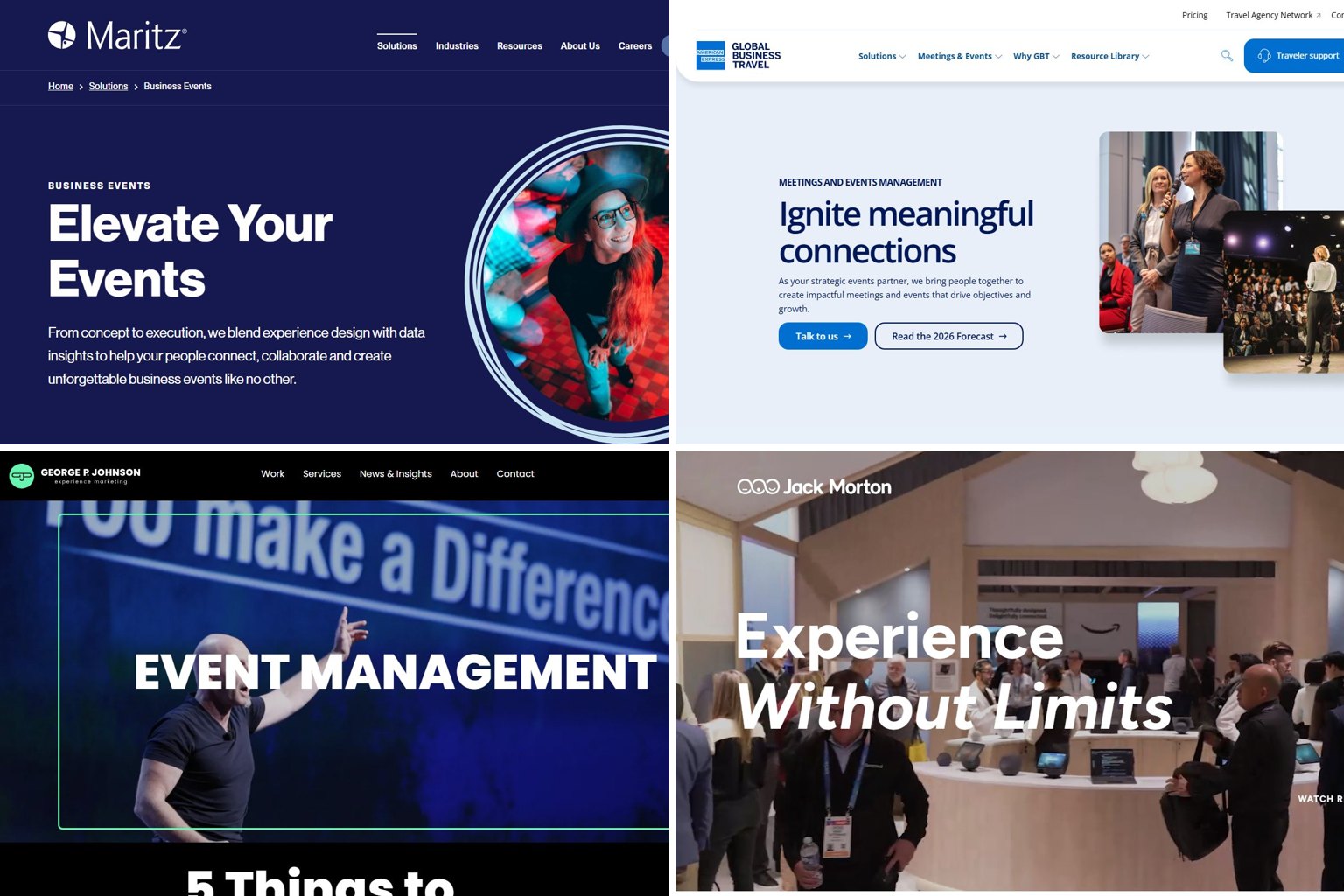
Corporate event management companies usually charge 10-20% of your total event budget. GBTA forecasts that the average meeting will cost about $263 per attendee per day in 2026. Which company fits depends mostly on headcount: Maritz or GPJ for a 2,000-person conference, and a freelancer or regional planner for a 25-person offsite. This guide covers the firms that independent trade rankings list, how they charge and how to vet one before you sign.
Key takeaways
- Pick the company type before the company. Global agencies, travel-linked meeting firms, regional planners and freelancers each suit different event sizes.
- Management fees run 10-20% of budget. Vendor commissions of 10-15% can sit on top of that, so ask for both in writing.
- GBTA puts 2026 meeting costs at about $263 per attendee per day, rising to about $267 in 2027.
- Ownership has consolidated. CWT Meetings & Events is now part of Amex GBT, and Jack Morton sits inside Omnicom.
- Agree in writing who owns your attendee data and when it gets deleted. Most buyers never ask.
Corporate event management companies: the quick answer
The best corporate event management company is the one built for your event size. These are the strongest picks by use case in 2026:
- Incentive trips and large sales meetings: Maritz, ITA Group, One10
- Global meetings programs linked to your travel policy: BCD Meetings & Events, Amex GBT Meetings & Events
- Flagship conferences and brand experiences: George P. Johnson (GPJ), Jack Morton Worldwide
- Product launches and experiential marketing: Agency EA, EGG Events, Impact XM
- International congresses and association-style conferences: MCI Group
- Trade show exhibits and expo production: Freeman
- Offsites and parties under 50 people: a freelance planner, a regional planner or an offsite platform
How this list was built. Firms got priority if they appear in an independent trade ranking: the Skift Meetings M&I 15 (February 2026), the Event Marketer It List 2026 or MeetingsNet’s CMI 25. Published scale data came next, then a clear specialty, then whether the firm still operates under the same name. Vendor-written “best of” lists didn’t count toward a firm’s position. Some of them rank the author’s own software company first.
Top corporate event management companies at a glance (2026)
| Company | HQ | Founded | Known for | Scale signal (latest published) | Ownership | On Skift M&I 15 (2026) |
|---|---|---|---|---|---|---|
| Maritz | St. Louis, Missouri | 1894 | Incentives, meetings, registration tech | About 1.7M room nights in 2025 | Privately held, family-owned | Yes |
| GPJ (George P. Johnson) | Auburn Hills, Michigan | 1914 (Detroit) | Tech conferences, auto shows, brand experiences | 40+ Fortune 500 clients | Project Worldwide | Yes |
| BCD Meetings & Events | U.S. arm of a Dutch group | Group founded 1975 | Global meetings programs | About 2,200 staff | BCD Group (private) | Yes |
| Amex GBT Meetings & Events | New York area (Amex GBT) | 2014 as standalone Amex GBT | Meetings tied to corporate travel | Includes former CWT M&E | American Express Global Business Travel | Yes |
| ITA Group | West Des Moines, Iowa | 1963 | Incentive travel and events | 4,000+ events in a decade | 100% employee-owned | Yes |
| One10 | Minneapolis | 2017 (roots in Carlson Marketing, 1969) | Sales and channel incentives | 1,300 incentive programs in 2025, about 600 staff | Privately held | Yes |
| Meetings & Incentives Worldwide | Caledonia, Wisconsin | 1967 | Midsize meetings and incentive trips | M&I 15 listed | Privately held | Yes |
| Bishop-McCann | Kansas City, Missouri | 1997 | Corporate meetings and incentives | 153 full-time staff | Privately held | Yes |
| Jack Morton Worldwide | Boston | 1939 | Brand experiences, large live events | Omnicom network agency | Omnicom (via IPG) | No (experiential) |
| Imagination | London | 1978 | Design-led brand experiences | Global design studio | Independent | No (experiential) |
| MCI Group | Geneva | 1987 | Congresses, association management | Multi-country network | Swiss-based group | No |
| Freeman | Dallas | 1927 | Trade show and exhibit production | Expo infrastructure provider | Family-owned | No |
| Impact XM | New Jersey | 1973 | Exhibits, experiential, corporate events | U.S. offices plus Toronto and London | Privately held | No |
| Agency EA | Chicago | 1999 (as Event Architects) | Experiential marketing, launches | About 140-175 staff | Independent | No |
| EGG Events | Neuilly-sur-Seine, France | 2000 | Corporate events, incentives, activations | About 120 staff, offices in 7 countries | Independent | No |
None of these 15 companies publishes a price list. Every one of them prices by quote, and the fee models further down show how those quotes are usually built.
Some names on older lists now sit under different owners. CWT Meetings & Events now operates inside Amex GBT. That deal was announced in March 2024 and closed on September 2, 2025, valuing CWT at about $540 million. Jack Morton and Momentum Worldwide were both Interpublic agencies, and both moved under Omnicom when Omnicom completed its acquisition of IPG on November 26, 2025. Smithbucklin is still active, but it’s an association management company, so it suits trade associations better than corporate teams. Wedding and social specialists such as Luxe Fete are left out because they don’t belong in a corporate shortlist.
What a corporate event management company actually does
A corporate event management company takes over the planning, buying and running of a business event so your staff don’t have to. You pay for its expertise, its supplier relationships and the buying power those relationships bring. These are the services you’re paying for, roughly in planning order:
- Strategy and budget: goals, audience, format, a draft budget and a timeline.
- Destination and venue sourcing: shortlisting cities and venues, requesting proposals and comparing rates.
- Contract negotiation: hotel room blocks, meeting space, food and beverage minimums, attrition and cancellation terms.
- Production: stage design, audio-visual, lighting, streaming for hybrid events, content and speaker management.
- Registration and attendee management: the registration site, housing, payments, badges and attendee communications.
- Travel and ground logistics: flights, transfers and sometimes visas for international events.
- Entertainment and experiences: dinners, team activities, awards shows and tours.
- On-site run-of-show: staff on the ground, managing vendors and fixing problems as they happen.
- Post-event reporting: reconciling the budget, surveys, attendance data and ROI measures.
Services included vs. billed extra
The planning team’s time is usually covered by the management fee. Almost everything you physically consume is billed on top, whether it passes through at cost or carries a markup or handling charge.
| Usually in the management fee | Usually billed separately |
|---|---|
| Planning and project management | Venue hire, rooms, food and beverage |
| Venue sourcing and negotiation | AV equipment, staging, production crew |
| Vendor coordination | Entertainment, speakers, décor |
| Timeline and run-of-show | Registration platform licence (sometimes) |
| On-site management for a set number of staff | Extra on-site staff, travel and per diems for the agency team |
| Basic post-event report | Custom research, attendee surveys, video edits |
Corporate event manager vs. event planner vs. DMC
A corporate event manager owns a company’s events from strategy through results, often as an in-house employee. They set goals, manage budgets, hire agencies and report ROI to leadership. An event planner handles the logistics of individual events, and the title is used both in-house and at agencies. A destination management company (DMC) is a local specialist in one city or region. It handles ground transport, local venues, tours and permits. National agencies often hire DMCs to deliver events in places they don’t know well.
Do you even need one? A 60-second decision tree
If you only need someone to book a restaurant and a meeting room, you don’t need a company. Hire outside help when the cost of a mistake is bigger than the fee.
Decide in 60 seconds
- Under 50 people, one venue, no travel? Plan it in-house, or hire a freelancer for the day-of.
- Under 50 people with flights or overnight stays? Hire a freelancer or use an offsite platform.
- 50-300 people, or a hotel block with an attrition clause? Hire a regional full-service planner.
- 300+ attendees, incentive travel or several countries? Shortlist meetings and incentives firms.
- Is the event itself the marketing, such as a launch or flagship conference? Shortlist an experiential agency.
A common question is “is it worth paying an agency for our offsite, or should we just plan it ourselves?” The answer turns on contracts. If the venue wants you to guarantee a room block or a food minimum, a planner who negotiates that contract usually saves more than the fee. If nothing gets signed except a booking for the day, do it yourself.
The 5 types of event companies (and which one fits your event)
Event companies fall into five types, and each is built for a different scale. Picking the wrong type is the most expensive mistake buyers make. A firm like GPJ runs production and creative teams designed for events on the scale of Salesforce Dreamforce. On a 25-person offsite, you’d pay for that overhead and get a junior account team.
| Company type | Typical event size | Examples | Best for | Watch out for |
|---|---|---|---|---|
| Global experiential agency | 500 to 20,000+ | GPJ, Jack Morton Worldwide, Imagination, Impact XM | Flagship conferences, launches, brand experiences | High minimum budgets, long sales cycles |
| Meetings, incentives and travel firm | 50 to 10,000+ | Maritz, BCD M&E, Amex GBT M&E, ITA Group, One10 | Sales kickoffs, incentive trips, global meeting programs | Ties to a travel provider, less creative production |
| Regional full-service planner | 25 to 1,000 | Local firms and DMCs in your metro | Midsize conferences, holiday parties, awards nights | Thin coverage outside their home region |
| Offsite and retreat platform | 10 to 150 | Perk and similar platforms | Team retreats with travel and lodging | Packaged options, limited custom production |
| Freelance corporate planner | 10 to 300 | Independent planners on Clutch or LinkedIn | Simple events, day-of coordination, tight budgets | One person, so you need a backup plan |
Global experiential agencies (GPJ, Jack Morton, Imagination)
Experiential agencies treat the event as a marketing channel. Their strengths are creative concepts, content, staging and measuring brand impact. They suit flagship user conferences, product reveals and touring experiences. They’re a poor fit for an internal meeting where logistics matter more than spectacle.
Meetings, incentives and travel firms (Maritz, BCD M&E, Amex GBT M&E, ITA Group)
These firms specialize in moving and housing large groups and getting good hotel rates. Several are tied to travel management companies: BCD Meetings & Events is part of BCD Group, and the former CWT Meetings & Events now belongs to Amex GBT. If your company already books travel through one of these parents, its meetings arm can plug into the same policy, data and duty-of-care tools. The trade-off is that their creative production is usually less ambitious than an experiential agency’s.
Regional full-service planners
Regional planners handle everything from venue sourcing to the run-of-show, mostly within one metro area or a handful of them. They’re the sweet spot for a 100-person conference or a company holiday party. You get senior attention, local vendor relationships and fees that make sense at mid-five-figure budgets.
Offsite and retreat platforms
Offsite platforms package lodging, travel and activities for small teams, often through software. They work for a 30-person leadership retreat with flights. They don’t work if you need custom staging or a complicated agenda.
Freelance corporate planners
Freelancers are independent planners, often former agency or in-house staff. UpCity reports that freelance meeting planners’ rates are generally 25-30% lower than some agencies’. The real difference between a freelancer and an agency is depth. An agency has a bench of staff and backup cover if someone gets sick. A freelancer is one person, which is fine for a 60-person event and risky for a 600-person one.
Pro tip
Write down three numbers before you contact anyone: headcount, total budget and date range. Agencies quote faster and more honestly when you give them a budget up front.
Top corporate event management companies in 2026
The shortlist below is drawn from independent trade rankings. Skift Meetings launched its M&I 15 in February 2026 as an unranked list of the most influential U.S. corporate meetings and incentive companies. It’s based on headcount, room nights, meetings and incentive programs from the previous year. The 15 named firms are Amex GBT Meetings & Events, BCD Meetings & Events, BI Worldwide, Bishop-McCann, ConferenceDirect, Creative Group, Etherio, Fox World Travel, George P Johnson Experience Marketing, ITA Group, M-Plus Global Events, Maritz, Meetings & Incentives Worldwide, One10 and Unbridled. For experiential work, Event Marketer’s It List 2026 bills itself as the only annual roster of the top 100 event agencies. It includes names such as Amplify, Astound Group, Cramer and NRG Experiential.
Did you know?
A 2025 “best event management companies” list published by Sched, a scheduling software company with about 17 staff, ranks Sched itself first, above Maritz and GPJ. Check who wrote any ranking before you trust it.
Biggest global players
Maritz
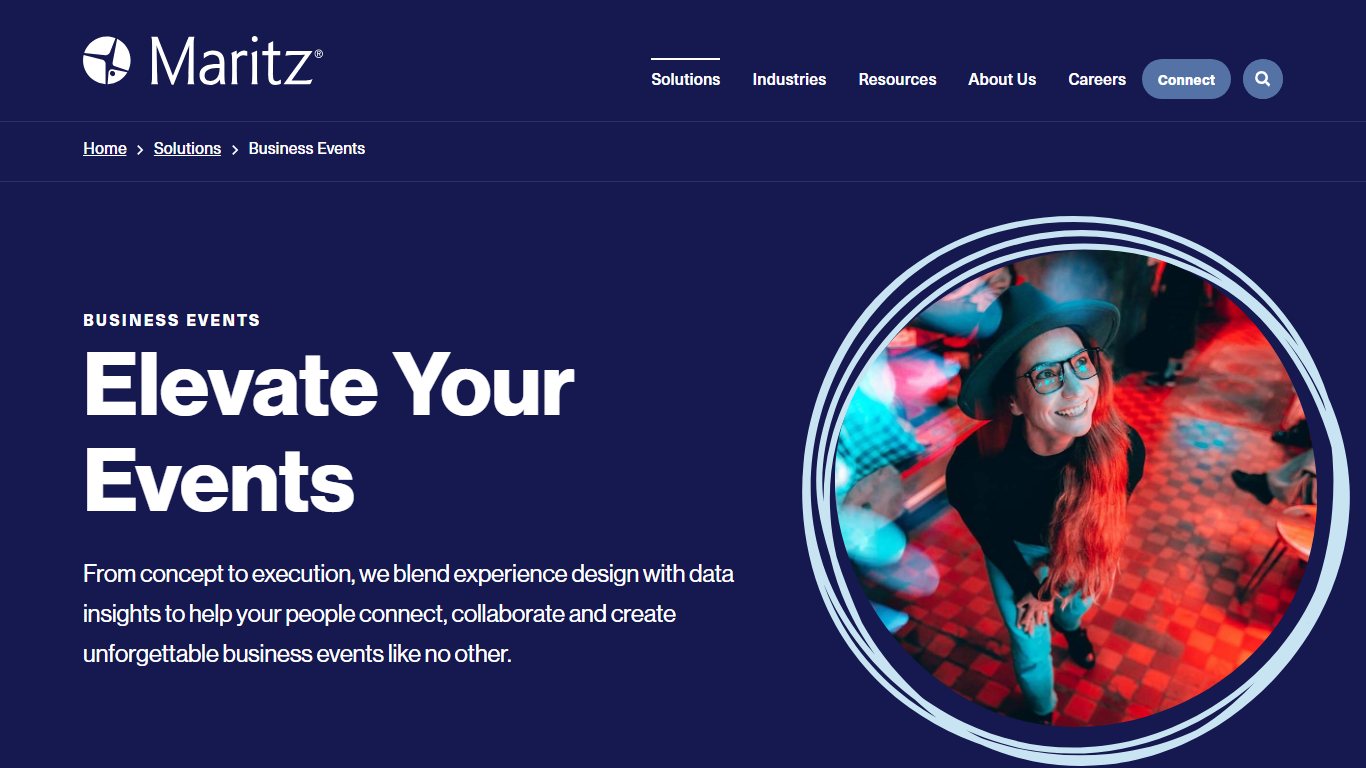
An estimated 1.7 million room nights booked in 2025 makes Maritz the scale leader in U.S. corporate meetings and incentives. The St. Louis firm was founded in 1894 and is still family-owned. Its Skift M&I 15 profile also credits it with roughly 3,800 meetings and 325 incentive programs in 2025, 17% of them outside the U.S.
- Best for: enterprises running dozens of meetings a year, or a big annual sales incentive.
- Track record: owns Experient (bought in 2012) and Convention Data Services (bought from Freeman in July 2024), so registration, housing and lead capture sit in-house.
- Limitation: built for programs, not one-off small events.
- Closest alternative: ITA Group, which tends to feel more hands-on for midsize programs.
BCD Meetings & Events
About 2,200 professionals work at BCD M&E under President Bruce Morgan, according to Skift’s February 2026 profile. It’s a division of privately held BCD Group, the Dutch parent of BCD Travel.
- Best for: companies that want one global partner for meetings in many countries, especially if they already use BCD Travel.
- Limitation: you get the most value when your travel program is also with BCD.
- Closest alternative: Amex GBT Meetings & Events. The offer is similar, and the deciding factor is usually which travel management company you already use.
Amex GBT Meetings & Events (including former CWT M&E)
When Amex GBT closed its purchase of CWT in September 2025, it absorbed CWT’s meetings business too. Former CWT clients now have access to Amex GBT’s software and its meetings and events services.
- Best for: large companies that want meetings spend, travel data and policy in one place.
- Limitation: post-merger integration can mean account team changes, so ask who will actually staff your program.
- Closest alternative: BCD M&E. Amex GBT brings the larger travel platform, while BCD is privately held and focused only on travel and meetings.
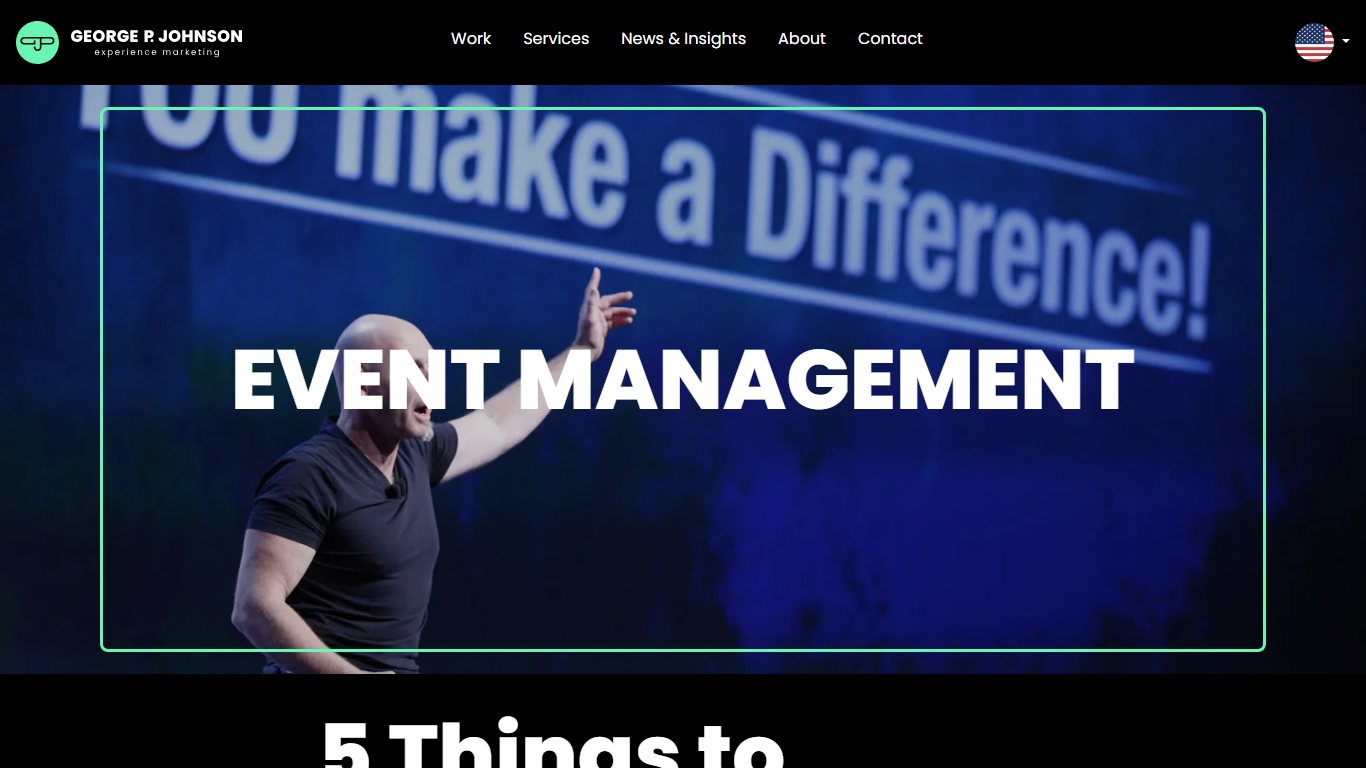
GPJ (George P. Johnson)
GPJ started in Detroit in 1914 and now runs its global headquarters from Auburn Hills, Michigan. It’s part of Project Worldwide and appears on the 2026 M&I 15 as George P Johnson Experience Marketing.
- Best for: flagship conferences where content, staging and attendee experience drive revenue.
- Track record: over 40 Fortune 500 clients across automotive, technology, software, food and beverage, and entertainment.
- Limitation: overkill for internal meetings and small offsites.
- Closest alternative: Jack Morton. GPJ leans toward large tech and B2B conferences, Jack Morton toward consumer-facing brand experiences.
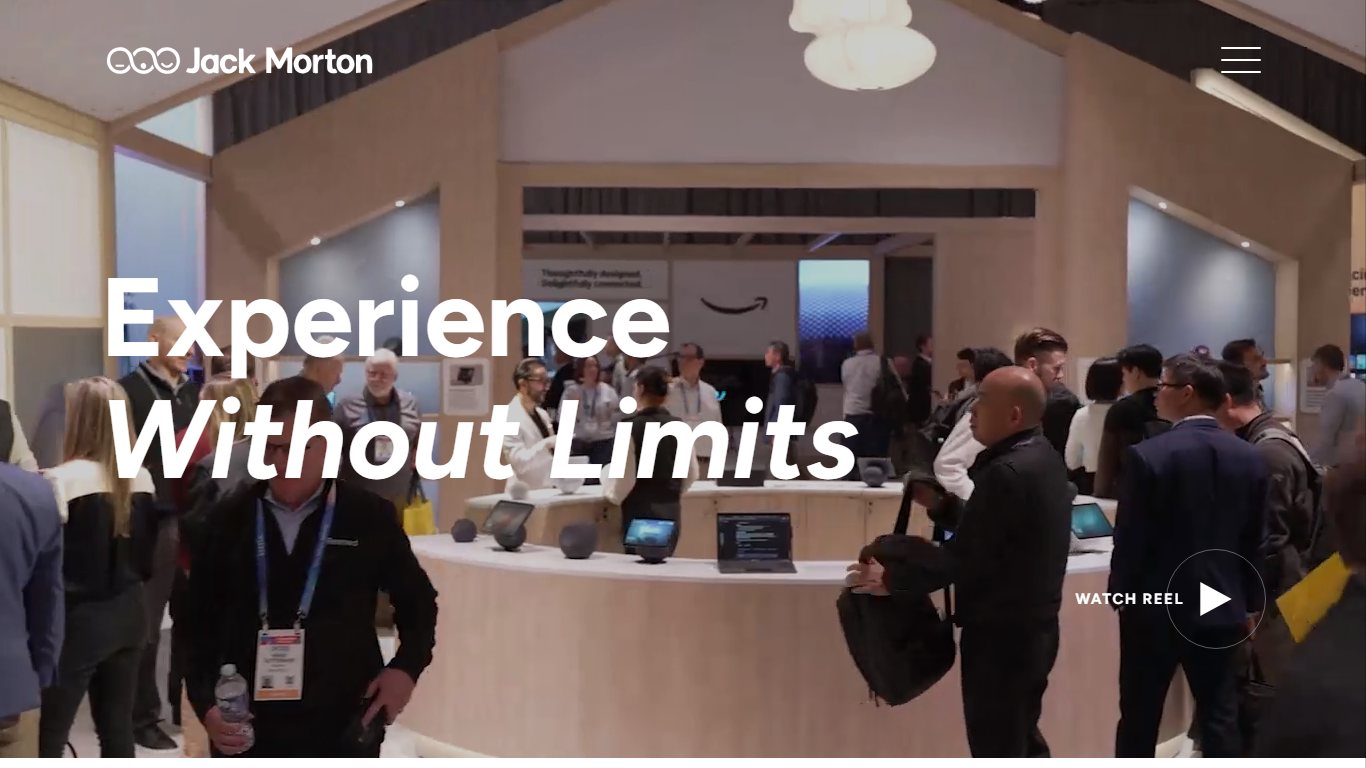
Jack Morton Worldwide
Few agencies have changed parents more recently: Boston-based Jack Morton, founded in 1939, moved under Omnicom when Omnicom completed its purchase of Interpublic in November 2025.
- Best for: large live events, launches and employee engagement events with a strong creative angle.
- Limitation: holding-company ownership can bring layered approvals and agency-style pricing.
- Closest alternative: Imagination. Jack Morton has a deeper U.S. footprint, while Imagination’s roots are in London design.
MCI Group
Geneva-based MCI, founded in 1987, combines events with association management, which few corporate agencies do.
- Best for: multi-country conferences, medical meetings and member-style user communities.
- Limitation: its center of gravity is Europe and associations, not U.S. incentive travel.
- Closest alternative: BCD M&E. MCI is stronger on congress content and association models, BCD on corporate travel integration.
Best for incentive trips and sales meetings
ITA Group
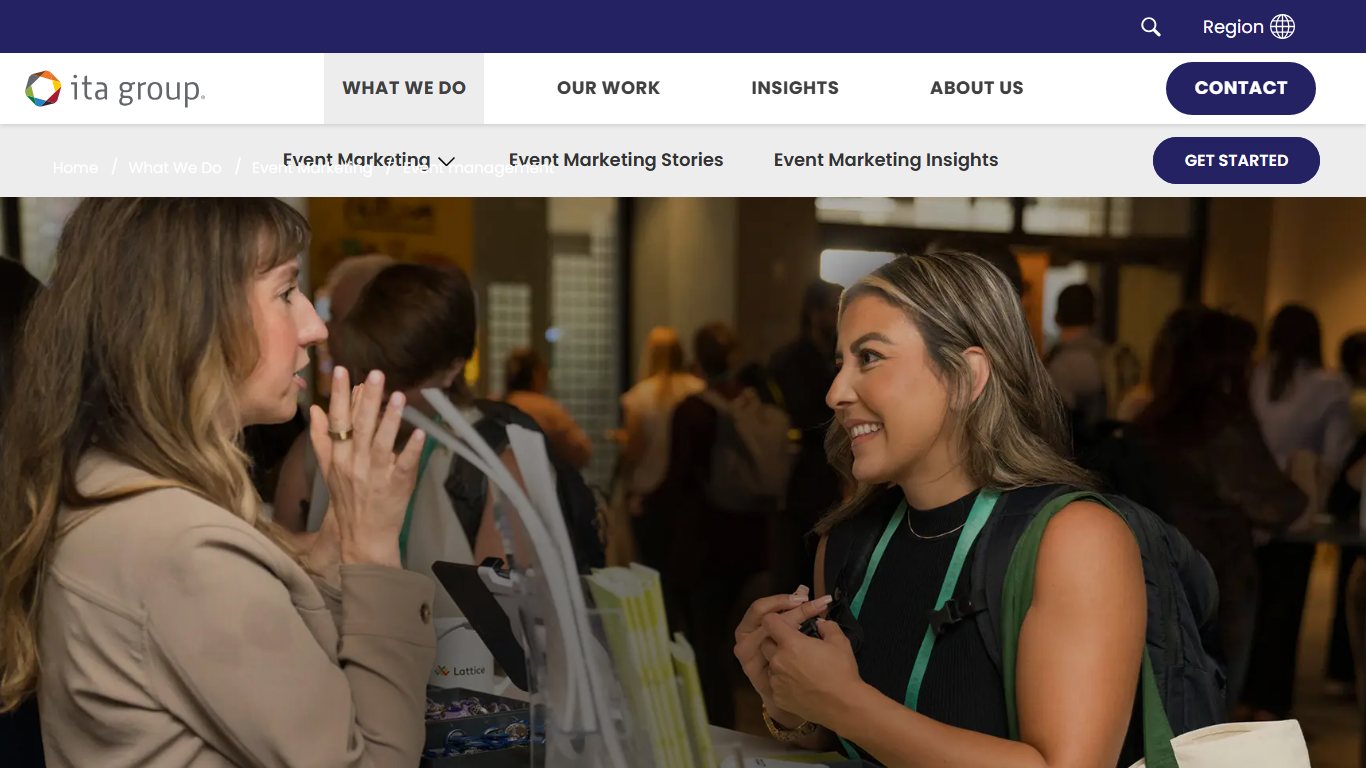
ITA Group has been 100% employee-owned for years, and it has been based in West Des Moines, Iowa since its founding in 1963. CEO Brent Vander Waal leads a firm that, according to its M&I 15 profile, has delivered over 4,000 live, virtual and hybrid events in the past decade.
- Best for: sales incentive trips and midsize to large sales kickoffs.
- Limitation: its creative production isn’t on the level of a pure experiential agency.
- Closest alternative: One10. ITA is more weighted to events, while One10 runs more incentive programs by count.
One10
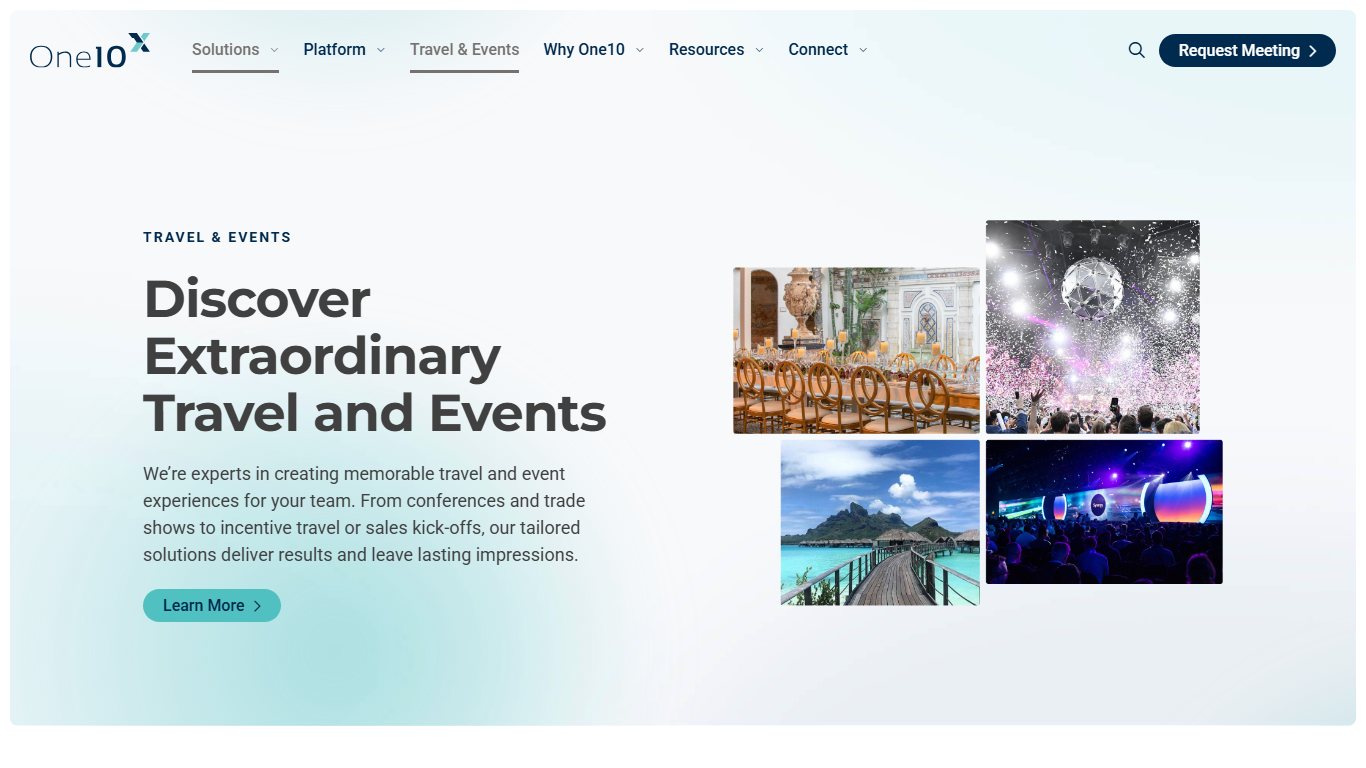
One10 booked 429,334 room nights in 2025 while delivering 471 meetings and 1,300 incentive programs. The Minneapolis company took its current name in 2017 after buying Aimia’s channel and employee loyalty division. Its roots go back to Carlson Marketing Group, started in 1969. In 2025 it bought Whistle, a St. Louis employee engagement and rewards technology company, and it runs incentive programs on its own PerformX platform.
- Best for: companies whose main need is rewarding sales teams or channel partners.
- Limitation: if you only need a single conference, its incentive strengths go unused.
- Closest alternative: Maritz, which is larger and broader.
Meetings & Incentives Worldwide (M&IW)
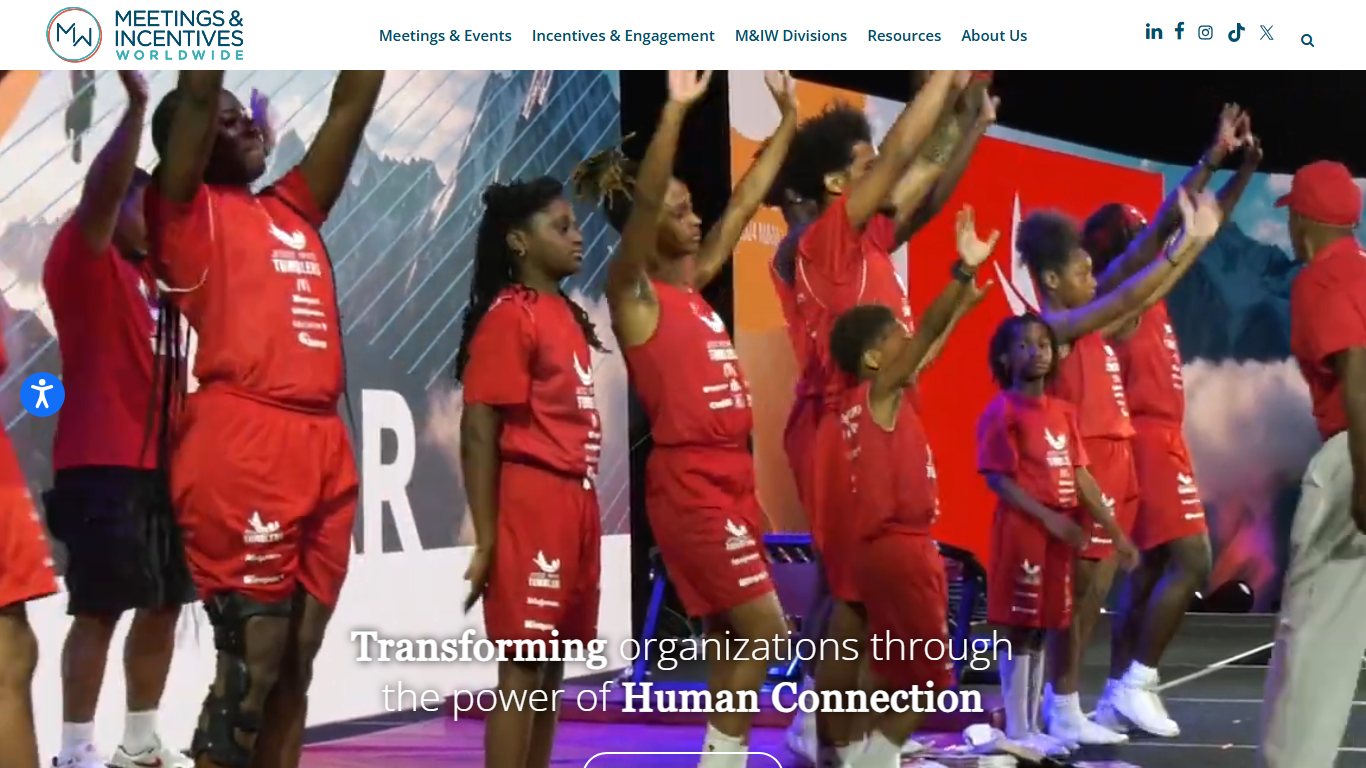
M&IW has run meetings and incentive trips from Caledonia, Wisconsin since 1967, and it made the 2026 M&I 15.
- Best for: midsize companies that want an established meetings and incentive firm without enterprise-scale overhead.
- Limitation: its global network is smaller than BCD’s or Amex GBT’s.
- Closest alternative: Bishop-McCann. The two are similar in scale, so compare their reference clients in your industry.
Bishop-McCann
SITE, the global incentive travel association, named Bishop-McCann its global strategic event partner for three years in December 2025. The Kansas City firm was founded in 1997, has 153 full-time staff and keeps offices in Chicago, San Francisco, Minneapolis and New York. In July 2025 it bought MTI Events, another Kansas City event and incentive travel company.
- Best for: corporate meetings and incentives where you want a senior team that stays engaged.
- Limitation: it doesn’t have the travel-management infrastructure of the largest firms.
- Closest alternative: M&IW, though Bishop-McCann has more visible recent industry recognition.
Two more worth a call: BI Worldwide for incentive and engagement programs, and ConferenceDirect for hotel and venue sourcing at scale. Both appear on the 2026 M&I 15.
Best for brand experiences and product launches
Agency EA
Agency EA began in Chicago in 1999 as Event Architects, with two employees and two clients. It now has roughly 140-175 staff and is still independent.
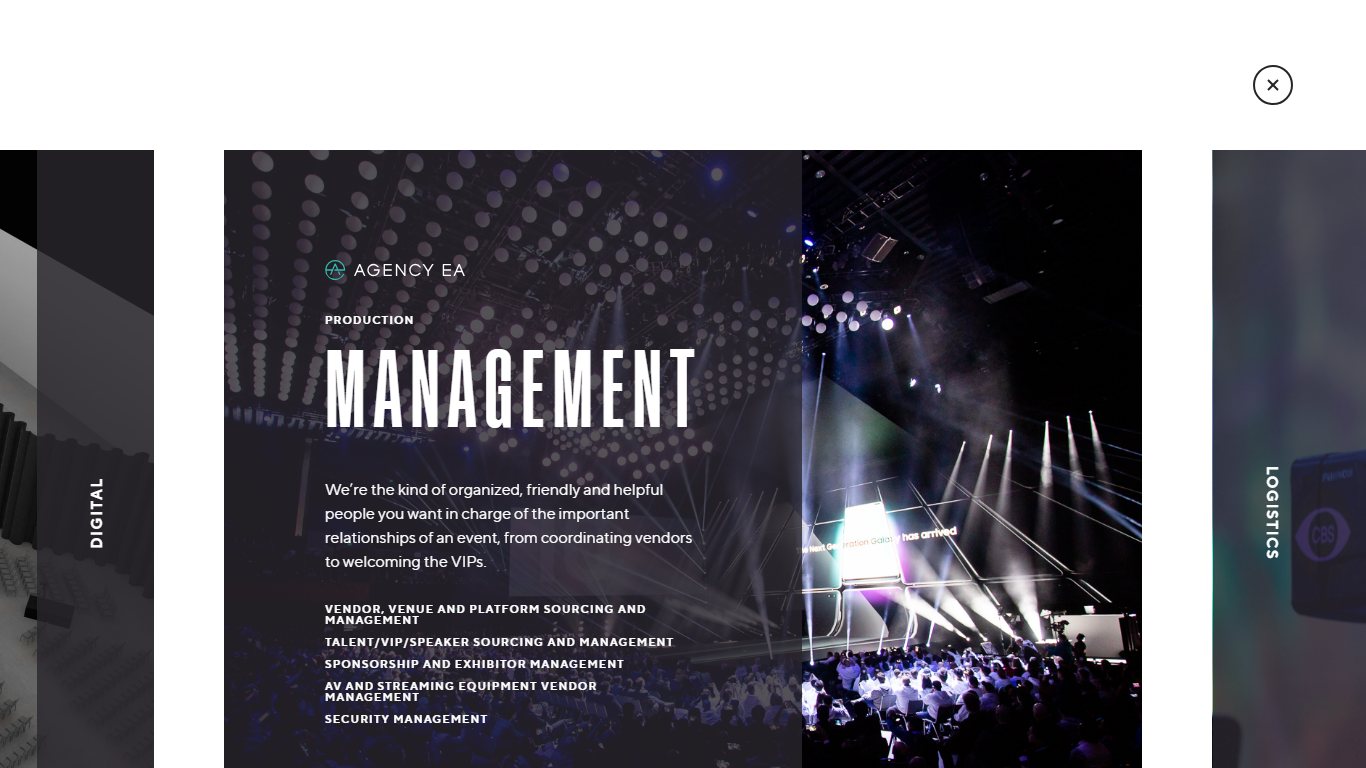
- Best for: marketing teams that want a memorable brand moment without holding-company overhead.
- Notable work: the agency names Google, Hilton, Intuit, Samsung and Molson Coors among its clients.
- Limitation: travel logistics aren’t its core strength.
- Closest alternative: Jack Morton. Agency EA is smaller and independent, which often means more senior attention.
EGG Events
EGG Events is a French agency, not a U.S. regional planner. It was founded in 2000, is headquartered in Neuilly-sur-Seine outside Paris, and has around 120 staff, with offices listed in France, Switzerland, Belgium, the U.S., the UAE, Italy and Spain.
- Best for: corporate events, incentives and brand activations with a European or multi-country angle.
- Limitation: U.S. teams should confirm which office and team will lead the work.
- Closest alternative: MCI Group for congresses, or Agency EA for a U.S.-led brand activation.
Impact XM
Impact XM has more than 50 years in exhibits behind it, dating to 1973. It’s based in New Jersey with locations across the U.S., plus Toronto and London, and it grew its Midwest presence by buying Chicago-based Matrex Exhibits.
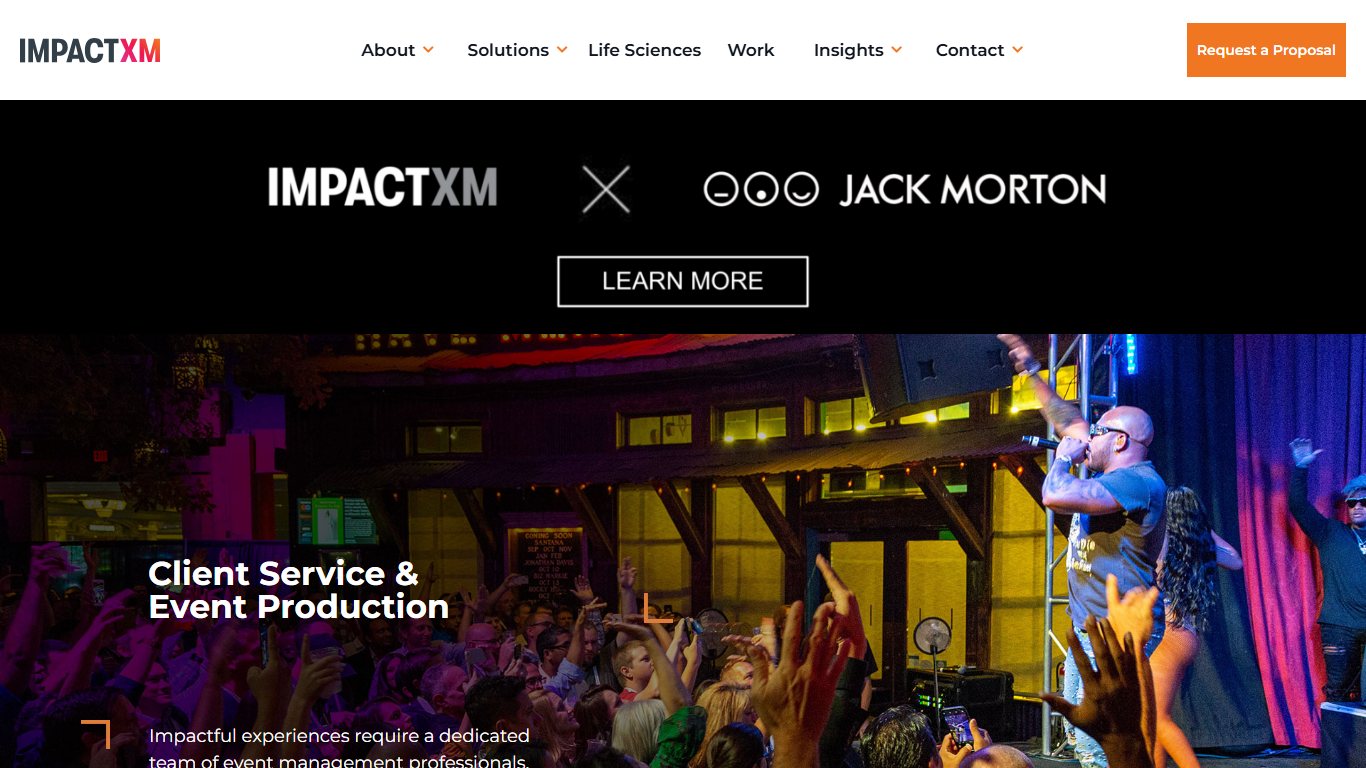
- Best for: companies whose event calendar mixes trade show booths with owned events.
- Limitation: you get the most value when exhibits are part of the brief.
- Closest alternative: Freeman. Impact XM is more brand- and creative-led, while Freeman runs the infrastructure behind the show floor.
Freeman
Most U.S. trade show floors run on infrastructure from companies like Dallas-based Freeman, a family-owned firm founded in 1927. Its work spans show floors, exhibits and AV.
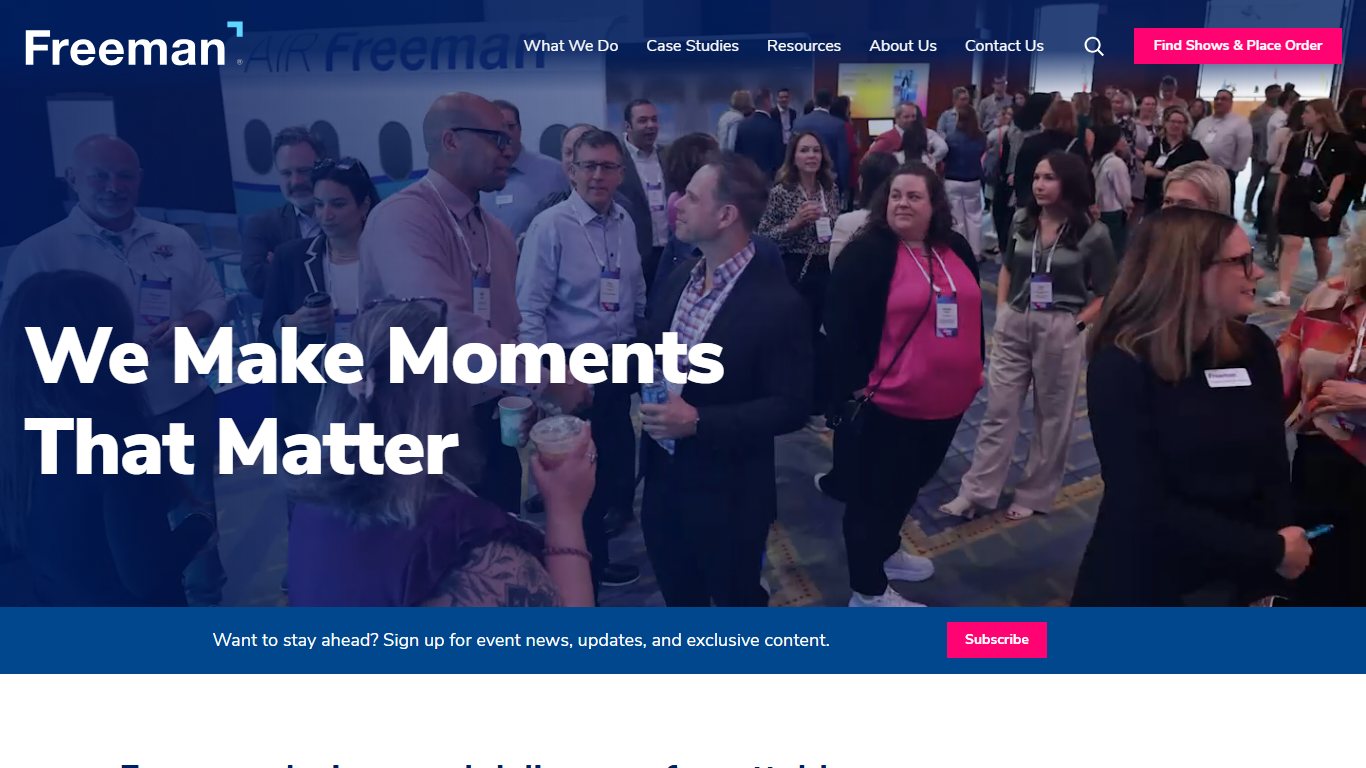
- Best for: companies exhibiting at or producing large expos.
- Limitation: it’s not the firm you call for an incentive trip or a team offsite.
- Closest alternative: The Expo Group, a Dallas-area rival from older lists, though Freeman is much larger.
Who owns whom: recent deals that affect your quote
Consolidation means two “competing” quotes can come from the same parent. Check the ownership before you assume you’re comparing independent firms.
| Deal | Status / date | What it means for you |
|---|---|---|
| Amex GBT acquires CWT (parent of CWT Meetings & Events) | Announced March 2024, closed September 2, 2025 | CWT M&E is now Amex GBT Meetings & Events |
| Omnicom acquires Interpublic (IPG) | Closed November 26, 2025 | Jack Morton and Momentum Worldwide now sit in Omnicom |
| Bishop-McCann acquires MTI Events | July 2025 | Two Kansas City incentive firms combined |
| One10 acquires Whistle | 2025 | Engagement and rewards tech added to One10 |
| Maritz buys Convention Data Services (CDS) from Freeman | Closed July 1, 2024 | Registration and lead-capture tech moved from Freeman to Maritz |
| Maritz bought Experient | 2012 | Experient’s housing and registration work is part of Maritz |
Did you know?
According to Maritz’s July 2024 announcement, its purchase of Convention Data Services from Freeman was its first acquisition in 12 years, following its purchase of Experient in 2012.
How much corporate event companies charge in 2026
Most corporate event planners charge 10-20% of the total event budget. DesignRush’s 2026 pricing guide puts the common range for corporate work at 15-20%. Flat fees, hourly rates and per-item handling charges are the main alternatives. Current pricing guides also say corporate events typically cost about 30% more to plan than social events of similar size.
| Fee model | Typical rate | How it works | Best when | Source / period |
|---|---|---|---|---|
| Percentage of budget | 10-20% (15-20% common for corporate) | Fee scales with total event spend | Complex events with many vendors | DesignRush and pricing guides, 2026 |
| Flat fee | Fixed sum agreed upfront | One price for a defined scope | Clear scope and stable headcount | DesignRush, 2026 |
| Hourly | Quoted per hour | You pay for time actually spent | Consulting, partial help, day-of coordination | DesignRush, 2026 |
| Per-item handling | Charge on each item sourced | Fee or markup on goods the planner buys | Logistics-heavy events with lots of rentals | DesignRush, 2026 |
| Vendor commissions | 10-15% | Paid by hotels or vendors to the planner | Can offset your fee if disclosed | Pricing guides, 2026 |
| Deposit | 30-50% of fee | Paid on signing to secure dates | Standard with most planners | Pricing guides, 2026 |
| Freelancer discount | 25-30% below some agencies | Lower overhead, smaller team | Simple events up to a few hundred people | UpCity, current |
Percentage of budget vs. flat fee vs. hourly
The percentage model is the most common. If you’re asking whether 15-20% of the budget is normal for corporate work, the answer is yes. Here’s what a percentage fee looks like at three budget sizes:
| Total event budget | Example event | Fee at 15% | Fee at 20% |
|---|---|---|---|
| $25,000 | 40-person two-day offsite | $3,750 | $5,000 |
| $100,000 | 150-person sales kickoff | $15,000 | $20,000 |
| $500,000 | 800-person conference | $75,000 | $100,000 |
The weakness of the percentage model is that the planner earns more when you spend more. A flat fee removes that incentive but needs a tight scope, because every addition becomes a change order. Hourly billing suits targeted help, such as negotiating one hotel contract.
Vendor commissions and handling charges
Yes, many planners earn commissions from hotels and vendors, commonly 10-15%. That isn’t wrong in itself. Hotels routinely pay commission to planners who bring group business. The problem is non-disclosure. Your contract should say whether commissions are rebated to you, credited against the fee or kept, and whether vendor invoices are passed through at cost or marked up.
Compare quotes fairly
Ask every company to list its management fee, its vendor commissions and its handling charges separately, in writing. Only then can you compare a 15% fee quote with a flat-fee quote.
Deposits and payment schedules
Expect a 30-50% deposit on signing. The balance usually comes in stages tied to milestones, such as final headcount or 30 days out. Venues and hotels set their own deposit schedules on top of this. Line both schedules up in one cash-flow plan.
Why 2027 events will cost more
Costs are still climbing, just more slowly. The 2027 Global Business Travel Forecast from GBTA and ALTOUR expects cost per attendee per day to rise about 3.0% to $263 in 2026 and about 1.5% to $267 in 2027. Food and beverage and production are the main drivers. Amex GBT’s 2027 Global Meetings and Events Forecast, its 16th edition, expects total cost per attendee to rise for every meeting type, along with higher hotel rates and airfares.
| Metric | 2026 | 2027 | Source |
|---|---|---|---|
| Cost per attendee per day | About $263 | About $267 | GBTA/ALTOUR forecast |
| Year-on-year change | +3.0% | +1.5% | GBTA/ALTOUR forecast |
| Planners “very optimistic” about the year ahead | 62% | 45% | Amex GBT forecasts |
| Cost per attendee’s rank among planner challenges | #1 | #5 | Amex GBT forecasts |
| Expected cost per attendee trend | Up about 6% | Up for every meeting type | Amex GBT forecasts |
In Amex GBT’s 2026 forecast, about 71% of planners expected rising expenses for hotel rates, wages and food and beverage. In the 2027 edition, 93% of meeting professionals are optimistic and expect to run more meetings of every type. Only 45% are “very optimistic”, though, down from 62% a year earlier. For international programs, the 2027 forecast ranks Barcelona as the top European meeting destination, ahead of London, Madrid, Paris and Lisbon.
Budget sanity check: headcount × days × $263
You can test any budget in 30 seconds by multiplying headcount by days by the GBTA daily figure. The result is the typical event spend before the planner’s fee.
| Event | Attendee-days | Typical spend at $263 (2026) | At $267 (2027) | 15% fee on 2026 spend |
|---|---|---|---|---|
| 25-person, 2-day offsite | 50 | $13,150 | $13,350 | About $1,973 |
| 100-person, 2-day meeting | 200 | $52,600 | $53,400 | $7,890 |
| 250-person, 3-day sales kickoff | 750 | $197,250 | $200,250 | About $29,588 |
| 800-person, 3-day conference | 2,400 | $631,200 | $640,800 | $94,680 |
Sanity-check your budget
If your approved budget is far below headcount × days × $263, cut scope (fewer days, a cheaper city, a lighter production) before you ask for proposals. Agencies will otherwise spend weeks quoting an event you can’t afford.
How to choose the right company: a vetting checklist
Choose on three things: experience with events of your size and industry, references you actually call, and contract terms you’ve read line by line. Polished proposals are cheap to produce. Clean contracts and happy references are much harder to fake.
Questions to ask before you sign
- What were your last three events of our size and budget?
- Can we speak to two of those clients directly?
- Who exactly will work on our event, and how senior are they?
- How is your fee calculated, and what isn’t included?
- Do you receive commissions from hotels or vendors? Are they rebated, credited or kept?
- Do you mark up vendor invoices, and by how much?
- Which registration and event platforms do you use, and who pays the licence?
- Who owns the attendee data, and when will you delete it?
- How many of your staff will be on-site, and is their travel billed to us?
- What is your process for change orders?
- What happens if our lead planner leaves mid-project?
- What insurance do you carry, and will you name us on the certificate?
- How do you handle force majeure and cancellations?
- What will the post-event report include?
- What would you cut first if our budget dropped by 20%?
Small companies often ask whether big event firms will even take a 20-50 person account. Some will, but you won’t be a priority. A regional planner or freelancer will usually give you better people for the money.
Contract clauses to read twice (attrition, cancellation, change orders, markups)
Attrition. This clause covers what happens if fewer people show up than you committed to at the hotel. You pay for the gap between the rooms or food you guaranteed and what you used, beyond an allowed margin. Negotiate a margin you can realistically hit, plus the right to reduce the block by a set date without penalty.
Cancellation. Check the sliding scale. Penalties usually rise steeply as the date approaches. Make sure the planner’s own cancellation terms line up with the venue’s, so you aren’t paying both in full.
Change orders. Agree a written process, with a price for each change, before anything is added.
Markups and commissions. Get a clause requiring disclosure of all commissions, rebates and markups.
Before you start
Read the attrition and cancellation clauses in the hotel contract yourself, even if a planner negotiated it. If headcount drops, those penalties often cost more than the planner’s whole fee.
Red flags in proposals
- No budget breakdown, only a total.
- Vague staffing (“a dedicated team”) with no names or roles.
- Commission or markup policy missing or evasive.
- References only from events much larger or smaller than yours.
- Pressure to sign the venue contract within days with no review time.
- A registration platform the agency owns, with no data-export terms.
For smaller firms, review platforms such as Clutch help. Look for verified reviews from the last 12-18 months that mention events of your size, and read the critical ones first. A firm with ten detailed reviews tells you more than one with fifty one-liners.
Fraud checks to build into your plan
Registration and hotel bookings attract scammers because attendees expect emails about both. Put three protections in your brief and ask the planner how they handle each:
- Hotel-block poaching: name your official housing provider in every attendee email, so “cheaper room” callers stand out.
- Fake registration pages: publish one official registration address and tell attendees not to pay anywhere else.
- Invoice fraud: confirm any change of vendor bank details by phone, using a number you already have.
One-page RFP checklist to copy
Paste this into the top of your request for proposals so every firm answers the same questions in the same format. It turns the vetting list above into something you can score side by side.
- Event basics: headcount, dates (with flexibility), city or region, number of days, and approved total budget.
- Budget check: headcount × days × $263, shown next to your budget.
- Fee disclosure: management fee model and rate; all hotel and vendor commissions, and whether each is rebated, credited or kept; any markup or handling charge on vendor invoices; deposit percentage and payment milestones.
- Team: names, roles and seniority of everyone on the account, and the on-site staff count.
- Proof: three events of similar size and budget, plus two client references you can call.
- Data terms: answers to the five attendee-data questions below.
- Contract terms: attrition margin, cancellation scale, change-order pricing, insurance and force majeure.
- Reporting: what the post-event report includes and when you’ll get it.
The tech side: event platforms and attendee data
Every event company runs your event through software, and that software holds your attendees’ names, emails, travel details and sometimes payment data. Treat the agency as a data processor, and settle the platform, data ownership and deletion terms in the contract.
Event software agencies commonly use
| Job | Common platforms | What to ask |
|---|---|---|
| Registration and housing | Cvent, Swoogo, Bizzabo, Eventbrite | Is the account in our name or the agency’s? |
| Agendas and session scheduling | Sched, Cvent, Bizzabo | Can attendees build personal agendas? |
| Enterprise conference tech | RainFocus, Cvent | Does it integrate with our CRM? |
| Event apps and engagement | Bizzabo, Cvent, Sched | What usage data comes back to us? |
If you need a custom event microsite as well, vet the builder the way you would vet any web development company: ownership of the domain, hosting and code.
Your attendee data: ask these 5 questions
- Who owns it? You should, with the agency acting only on your instructions.
- Where is it stored, and with which sub-processors? Get the list of platforms and vendors that will touch it.
- When is it deleted? Set a deadline, such as 90 days after the event, and ask for written confirmation.
- How are payments handled? Card data should go through a PCI DSS-compliant payment processor, never by email or spreadsheet.
- Does it go into AI tools? In Amex GBT’s 2026 forecast, 50% of industry professionals were using AI throughout planning and execution, for jobs like agenda drafts, session summaries, translation and networking matches. Ask which tools see attendee data, and under what agreement.
Timeline: when to book and what happens when
Book a planner 9-12 months ahead for events over 300 people, 4-8 months for 50-300, and 2-4 months for small offsites. Hotels and convention venues in popular cities book up first, so the venue sets your timeline more than the planner does.
| Event size | Book the planner | Lock the venue |
|---|---|---|
| Under 50 people | 2-4 months out | 2-3 months out |
| 50-300 people | 4-8 months out | 4-6 months out |
| 300-1,000 people | 9-12 months out | 8-12 months out |
| 1,000+ people | 12-24 months out | 12-24 months out |
A typical timeline for a midsize conference or sales kickoff:
- 6+ months out: set goals, budget and headcount. Hire the planner. Shortlist destinations.
- 5 months: sign the venue and hotel contracts. Book keynote speakers.
- 4 months: open registration. Brief AV and production. Book entertainment.
- 3 months: finalize the agenda. Book ground transport. Send housing details.
- 2 months: confirm food and beverage. Order signage and swag.
- 1 month: final headcount to the hotel, which is the attrition checkpoint. Lock the run-of-show.
- Event week: walk the venue, rehearse and brief staff.
- 2-4 weeks after: reconcile the budget, run the survey and present the post-event report.
If the holiday party or company retreat just landed on your desk and you’ve never run an event, start with step 1 today. Get headcount, budget and dates approved before you talk to any venue.
Finding a local corporate event company (California, Texas, Boston and beyond)
For events under about 500 people in one city, a strong local planner or DMC usually beats a national agency on price and vendor knowledge. National agencies make sense when you run events in several cities, or when production quality is the main goal.
How to find good local firms:
- Call the convention and visitors bureau. Groups such as Visit Dallas, Meet Boston and San Francisco Travel help with venue sourcing at no charge and know which local planners deliver.
- Ask the venue. Hotel sales managers see every planner in town and know who runs a clean event.
- Search ADMEI members for destination management companies in your city.
- Check Clutch and LinkedIn for recent corporate projects, not weddings.
- Ask your peers. Office managers and EAs at nearby companies give some of the best references you’ll find.
A local DMC beats a national agency when the event depends on local knowledge: permits, transport between venues, unusual locations or regional entertainment. Many national firms hire DMCs anyway, so going direct can cut out a layer of margin.
Measuring whether it was worth it
Agree success metrics in the contract before the event, so the post-event report measures what leadership cares about. Start with these:
- Attendance rate: registered vs. attended, and attended vs. the room block.
- Satisfaction: a short survey with a net promoter score question.
- Business outcomes: pipeline created, deals influenced, or retention for incentive winners.
- Engagement: session attendance and app use.
- Cost per attendee per day vs. benchmark: compare against GBTA’s $263 for 2026.
- Budget variance: final spend vs. approved budget, with every change order listed.
Corporate event planner jobs and salary
The U.S. Bureau of Labor Statistics reports a median annual wage of $59,440 for meeting, convention and event planners in May 2024. Its latest Occupational Employment and Wage Statistics release counts 122,130 employed planners, with a mean wage of $62,280 a year ($29.94 an hour). BLS projects 5% job growth from 2024 to 2034, from about 155,800 to 163,600 jobs, which it classes as faster than average.
Corporate event managers usually earn more than the median, because the role adds budget ownership, vendor management and reporting to leadership. Day to day, the job involves sourcing venues, negotiating contracts, building budgets and timelines, managing vendors and attendees, and running events on-site. Industry certifications such as the CMP (Certified Meeting Professional) help when you apply to agencies.
FAQ
What are the top event management companies?
For corporate meetings and incentives, Maritz, BCD Meetings & Events, Amex GBT Meetings & Events, ITA Group and One10 all appear on the Skift Meetings M&I 15 (2026). For brand experiences, GPJ and Jack Morton Worldwide lead, and Freeman leads in trade show production.
How much do corporate event planners charge?
Usually 10-20% of the total event budget, with 15-20% common for corporate work. The alternatives are flat fees, hourly rates and per-item charges. Deposits of 30-50% are standard.
What are the top 5 event management companies in the world?
By scale and reach, a strong top five is Maritz, BCD Meetings & Events, Amex GBT Meetings & Events, GPJ and MCI Group. The independent trade rankings don’t publish a single ranked top five, so be wary of any numbered “world top 5”.
What is a corporate event manager?
A professional who owns a company’s events from strategy through results: goals, budgets, venues, vendors, attendee experience and ROI reporting. The role can be in-house or at an agency.
Is it worth hiring an event management company for a small company event?
Only if there are contracts to negotiate or travel to arrange. For a 30-person event at one local venue, plan it in-house or hire a freelancer. Freelancers can cost 25-30% less than some agencies.
What is the difference between an event agency and a DMC?
An event agency plans and manages events wherever they happen. A DMC is a local expert in one destination that handles ground logistics, venues and activities. Agencies often hire DMCs.
How far in advance should I book a corporate event planner?
Book 9-12 months ahead for events over 300 people, 4-8 months for 50-300, and 2-4 months for small offsites.
Do event planners get commissions from venues and hotels?
Often, yes. Commissions of 10-15% are common. Require written disclosure of all commissions, and agree whether they’re rebated to you or credited against the fee.
How much does a corporate event cost per person in 2026?
GBTA forecasts about $263 per attendee per day in 2026, rising to about $267 in 2027. Food and beverage and production are the biggest drivers. A 100-person, two-day meeting works out to about $52,600 before the planner’s fee.
Is EGG Events a U.S. company?
No. EGG Events is headquartered in Neuilly-sur-Seine, France, and was founded in 2000. It lists offices in several countries, including the U.S.
How much do corporate event planners make?
The BLS median for meeting, convention and event planners was $59,440 in May 2024, and the latest OEWS mean is $62,280. Corporate event managers with budget and team responsibility typically earn more.
Your next step
Before you email any company, get three numbers approved internally: headcount, total budget and dates. Run them through the headcount × days × $263 check in the budget table. Then copy the one-page RFP checklist into your brief and send it to three firms of the right type, including one freelancer or regional planner. Score the replies on fee disclosure, named staff and data terms first, and on the proposal’s polish last.