
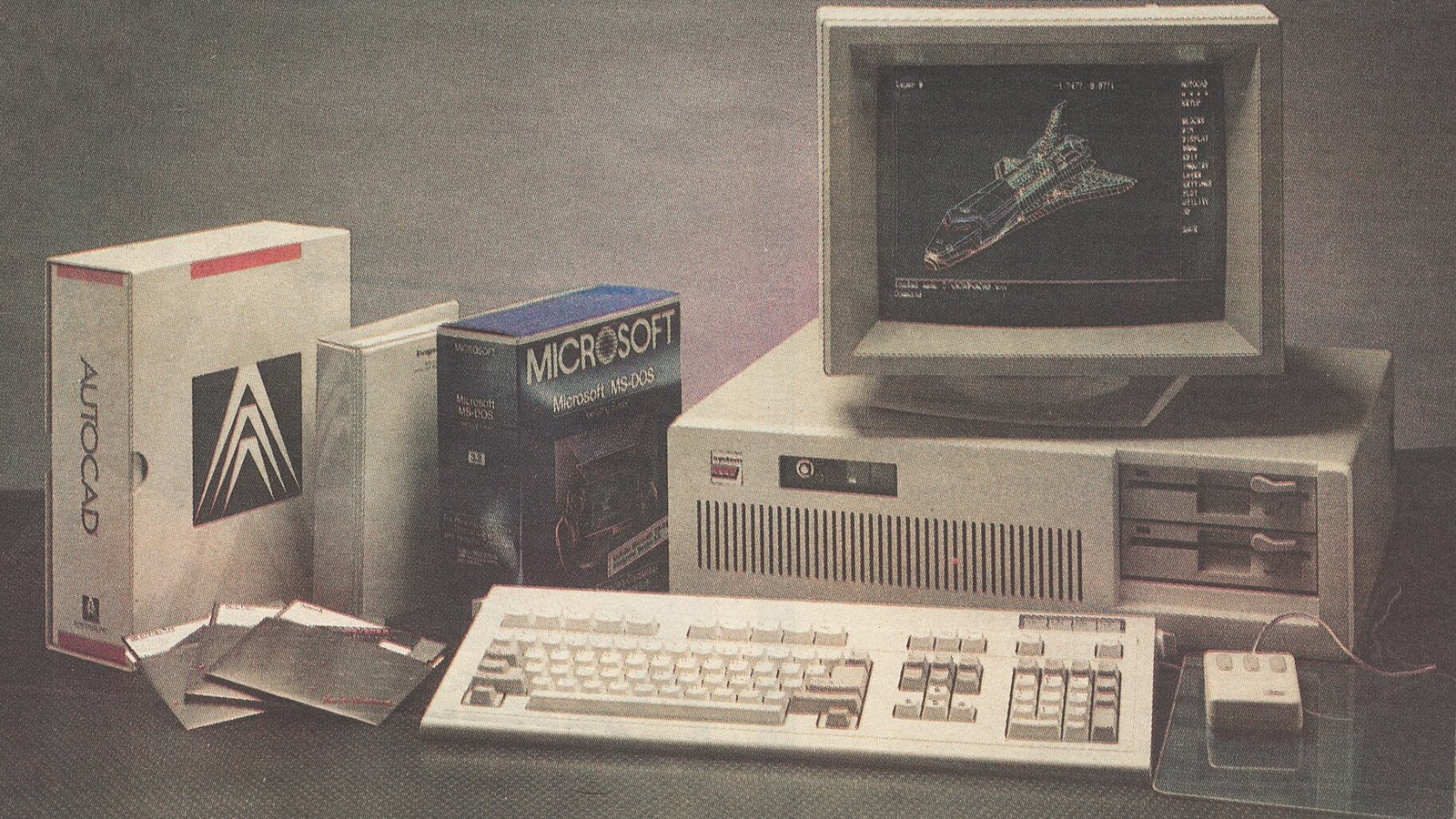
If you have AutoCAD or AutoCAD LT 2017 or later, including the current 2027 release, you don’t need extra software. The PDFIMPORT command (Insert tab > Import panel > PDF Import) turns the lines, fills and TrueType text in a vector PDF into editable AutoCAD objects. Scanned PDFs come in as raster images, not lines. If you don’t have AutoCAD, a desktop converter such as AutoDWG‘s PDF to DWG Converter or an online service such as Zamzar can produce the DWG file for you.
Students and designers often ask how to get a PDF drawing into AutoCAD so they can edit it. The methods below go from the built-in AutoCAD route to third-party converters, with the limits of each.
What is the PDF format?
PDF stands for “Portable Document Format”. People use it when a file needs to look the same on every screen and printer and should be hard to edit by accident. Almost every computer and phone can open one, through Adobe Acrobat Reader, a web browser or the reader built into the operating system. On a Mac, any of the best PDF readers mac users rely on will open a drawing PDF, but to turn it into a DWG you need a CAD application that can import PDF content, such as AutoCAD for Mac with its PDFIMPORT command.
Once a drawing is saved as a PDF, you can’t simply turn it back into the original file. You need software that rebuilds the geometry, and how good the result is depends on how the PDF was made. A PDF exported straight from CAD software converts well. A scanned paper plan contains no lines at all, only pixels.
What is the DWG format?
DWG is AutoCAD’s native drawing format and one of the most widely used design file formats. CAD programs across most design fields can read it. A DWG file stores everything you put into a CAD drawing: geometry, layers, dimensions, text styles, blocks, maps and attached images.
The PDF keeps how the drawing looks. The DWG keeps how it was built. Converting from PDF to DWG means rebuilding that structure from a flattened page, so expect some cleanup afterwards.
How to convert PDF to DWG
Since AutoCAD 2017, AutoCAD and AutoCAD LT can convert PDF content into editable drawing geometry with the PDFIMPORT command. Before 2017, you could only attach a PDF as an underlay (a reference image you could trace over) and then redraw or scale the content to match known dimensions.
PDFIMPORT works in two ways:
- From a PDF file on disk. It imports a page of the PDF straight into the drawing.
- From a PDF underlay already in the drawing. This includes underlays in drawings made with older AutoCAD versions. You pick the underlay and convert all of it, or just an area, into AutoCAD objects.
Vector geometry comes in as lines, arcs and polylines. Solid fills become 2D solids or hatches. TrueType text becomes real text objects. How clean the result is depends heavily on the source PDF, so two files that look the same on screen can convert very differently.
The same rule applies as with the best tools to convert PDF to Word: PDFs created digitally convert well, and scans come in only as images.
What PDFIMPORT can and cannot convert
PDFIMPORT can import vector geometry, TrueType text and raster images from a PDF, but only the vector geometry and TrueType text become editable objects. If you import a PDF made from images or scanned paper, you get a raster image attached to the drawing, and AutoCAD doesn’t turn the lines and text pictured in that image into editable geometry.
| Content in the PDF | What you get in AutoCAD |
|---|---|
| Vector lines, arcs, curves | Editable lines, arcs and polylines |
| Solid fills | 2D solids or hatches (optional) |
| TrueType text | Editable text objects |
| SHX text (common in CAD exports) | Linework shaped like letters, until you run PDFSHXTEXT |
| Scanned pages and photos | Raster image only, not editable geometry |
| Password-protected PDF | Not imported until the protection is removed |
SHX text causes the most confusion. The PDF format has no concept of AutoCAD’s SHX fonts, so a PDF plotted from AutoCAD stores SHX text as small strokes of geometry. After you import, run PDFSHXTEXT. It compares that geometry against the SHX fonts you choose and turns it back into multiline text. TXT2MTXT can then join separate text objects into single paragraphs. Big fonts for Asian languages aren’t recognised.
A dedicated converter is just a separate program that does the same job outside AutoCAD. It reads the PDF, rebuilds the geometry and saves a DWG file you can open in any CAD program. These converters are useful if you don’t have an AutoCAD subscription.
Two ways to convert your PDF to DWG in AutoCAD
The first method attaches the PDF as a reference and then converts it. This helps with large or busy plans, because you can check the underlay and convert only the parts you need. The second method imports the file directly.
Method 1: Attach the PDF as an underlay, then convert it
- Open a new drawing in AutoCAD.
- Attach the PDF: go to Insert tab > Reference panel > Attach, or open the External References palette (XREF), choose Attach PDF, select the file and click OK. Place it on screen.
- If you’re working with two PDF sheets, attach the second one the same way.
- Use the MOVE command (type M and press Enter) to separate the two underlays so they don’t overlap. F8 is not the Move key. It toggles Ortho mode, which is handy for moving them in a straight line.
- Type PDFIMPORT and press Enter, then select the first underlay.
- At the prompt, choose All to convert the whole sheet, Polygonal to draw a boundary around just part of it, or Settings to choose what gets imported and how layers are handled.
- In Settings, choose Use PDF layers if the PDF kept its layer structure. The imported objects will then go onto matching AutoCAD layers.
- When AutoCAD asks what to do with the underlay, choose Detach to remove it once the geometry is in. Open the XREF palette and you’ll see that the reference is gone.
- Repeat the process with the second underlay. Run PDFIMPORT, select it, go to Settings and choose Use PDF layers.
- Choose All, but this time pick Keep, so the underlay stays in the drawing as a reference you can compare against.
- Use MOVE again to line the converted geometry up where you want it. That’s it.
Method 2: Import the PDF file directly
- Open AutoCAD and start a new drawing.
- Type PDFIMPORT, press Enter and choose the File option. You can also go to Insert tab > Import panel > PDF Import.
- Select the PDF file and click Open.
- The Import PDF dialog box opens. It gives you more control than Method 1:
– Page to import, for a multi-page set.
– Scale, Rotation and Specify insertion point on-screen.
– PDF data to import: vector geometry, solid fills, TrueType text and raster images, each one on or off.
– Layers: use PDF layers, create object layers (PDF_Geometry, PDF_Solid Fills, PDF_Images, PDF_Text) or put everything on the current layer.
– Import options such as importing as a block, joining line and arc segments, and converting solid fills to hatches. - Click OK. If you chose to pick the insertion point on screen, click where the drawing should go. If the drawing already has content, place the import away from it so you can line things up later. The conversion then runs.
- If the text came in as linework, run PDFSHXTEXT on it.
Scale is the step most people skip, and skipping it causes trouble. A PDF has no real-world units. Check one known dimension with the DIST command, then use SCALE with the Reference option to fix the whole drawing.
Best PDF to DWG converters: 4 options
These four tools come from two vendors that make desktop converters and two that work in the browser. They were picked on what matters most for this job: whether the tool can actually go from PDF to DWG, whether it works without AutoCAD, how much control you get over the output, and price. Some of these vendors also sell tools that go the other way, from DWG to PDF. Each entry says which direction is which.
| Tool | Type | PDF to DWG | DWG to PDF | Needs AutoCAD | Price |
|---|---|---|---|---|---|
| AnyDWG | Windows desktop | Yes (separate product) | Yes | No | DWG to PDF from US$83 |
| AutoDWG | Windows desktop | Yes | Yes (separate product) | No | PDF to DWG Standard US$179 |
| AConvert | Online | Check the current format list | Yes | No | Free online |
| Zamzar | Online | Yes | Yes | No | Free tier, paid plans |
1. AnyDWG to PDF Converter
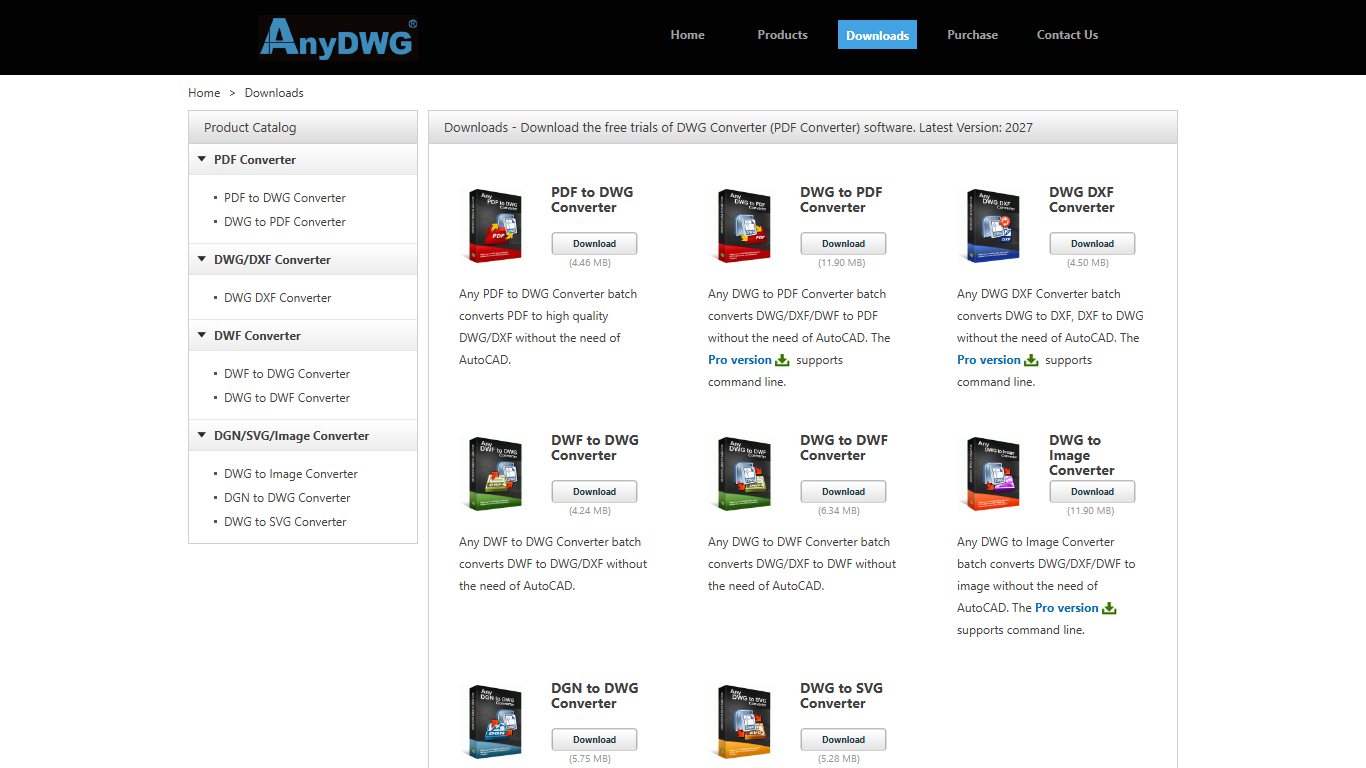
AnyDWG to PDF Converter goes in the reverse direction. It turns DWG, DXF and DWF files into PDF, and it’s for when you need to send drawings to people who don’t use CAD. If you need to go from PDF to DWG, AnyDWG sells a separate PDF to DWG converter. Registration for AnyDWG to PDF Converter costs US$83, and the Pro version, which adds command-line support, costs US$150.
The tool can resize the page automatically based on the extents saved in your file. It can also create one PDF per layout, one PDF per drawing, or a single PDF with everything in it. That gives you full control over how the output is organised.
Main features of AnyDWG to PDF Converter:
- Custom output: page size, quality, colour or monochrome, and more.
- Works without AutoCAD installed.
- Converts SHX and TTF fonts, embedded raster images and Excel tables.
- Supports AutoCAD plot style (CTB) settings.
- Creates bookmarks in the PDF so you can move through multi-sheet sets easily.
- Supports DWG, DXF and DWF files across AutoCAD versions.
2. AutoDWG
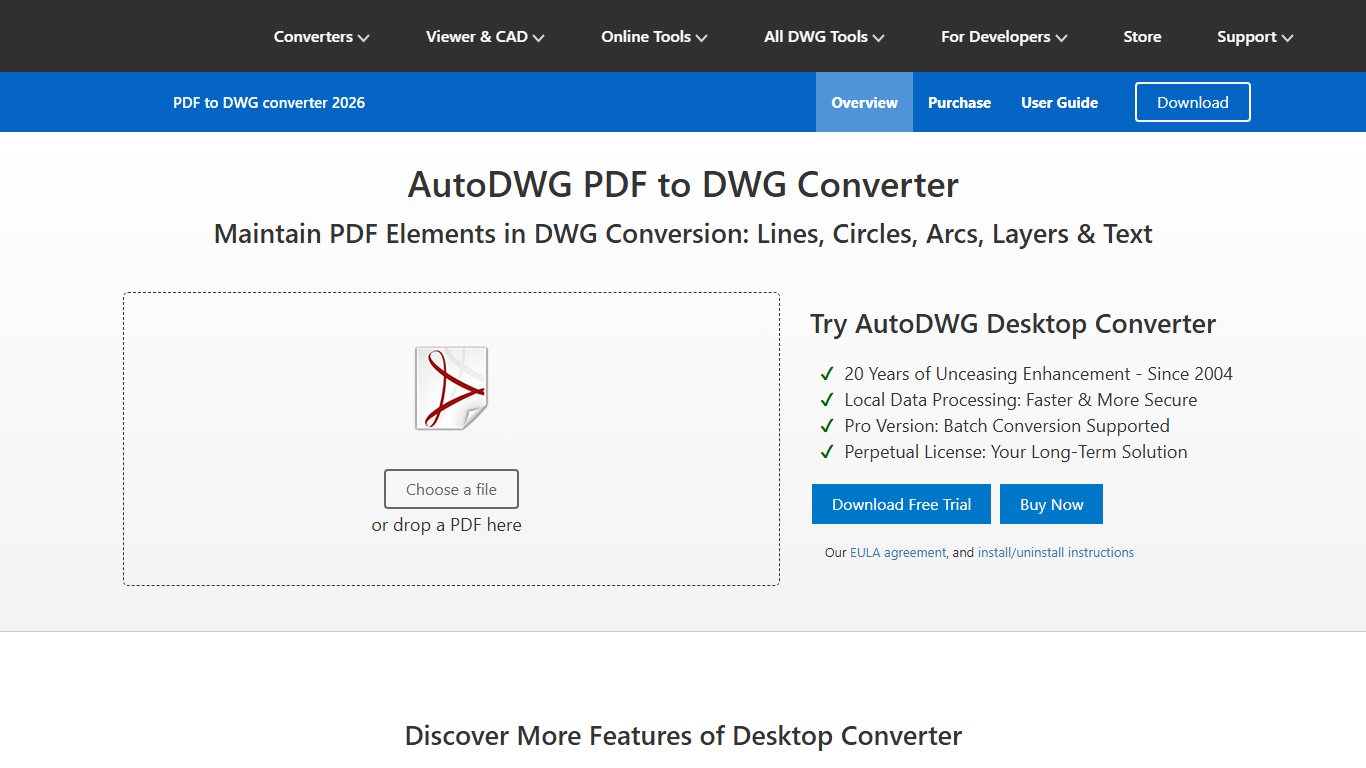
AutoDWG makes the converter in this list that goes the right way for this guide: its PDF to DWG Converter turns vector PDFs into editable DWG or DXF files on your own computer, with no upload. The Standard version is a one-time, single-user licence at US$179 on AutoDWG’s store, with a lower per-seat price for bulk orders. The licence covers the current major version, and moving to a newer major version is a separate upgrade.
AutoDWG also sells a DWG to PDF converter for the opposite job. That tool lets you choose which layout or layer to convert and keeps TrueType text searchable in the PDF. It also lets you set permissions such as printing and copying to the clipboard, add a password, adjust line widths and import CTB plot style files.
AutoDWG’s converters are Windows programs. On a Mac, use AutoCAD for Mac or AutoCAD LT for Mac, both of which include PDFIMPORT, or use an online tool.
3. AConvert
AConvert is a free browser-based converter, which is useful if you don’t want to install any third-party software. Go to the AConvert website, pick the category for your file from the side menu, upload the file, choose the output format and click Convert Now.
AConvert is mainly a document and image converter, and the formats it offers change over time. Check that DWG or DXF appears in the output list before you rely on it for CAD work. For PDF to DWG specifically, Zamzar and AutoCAD’s own PDFIMPORT are the surer choices. A general PDF tool such as the best epub to pdf converter for ebooks belongs in a different category from a CAD converter, even when both sites list “PDF”.
4. Zamzar
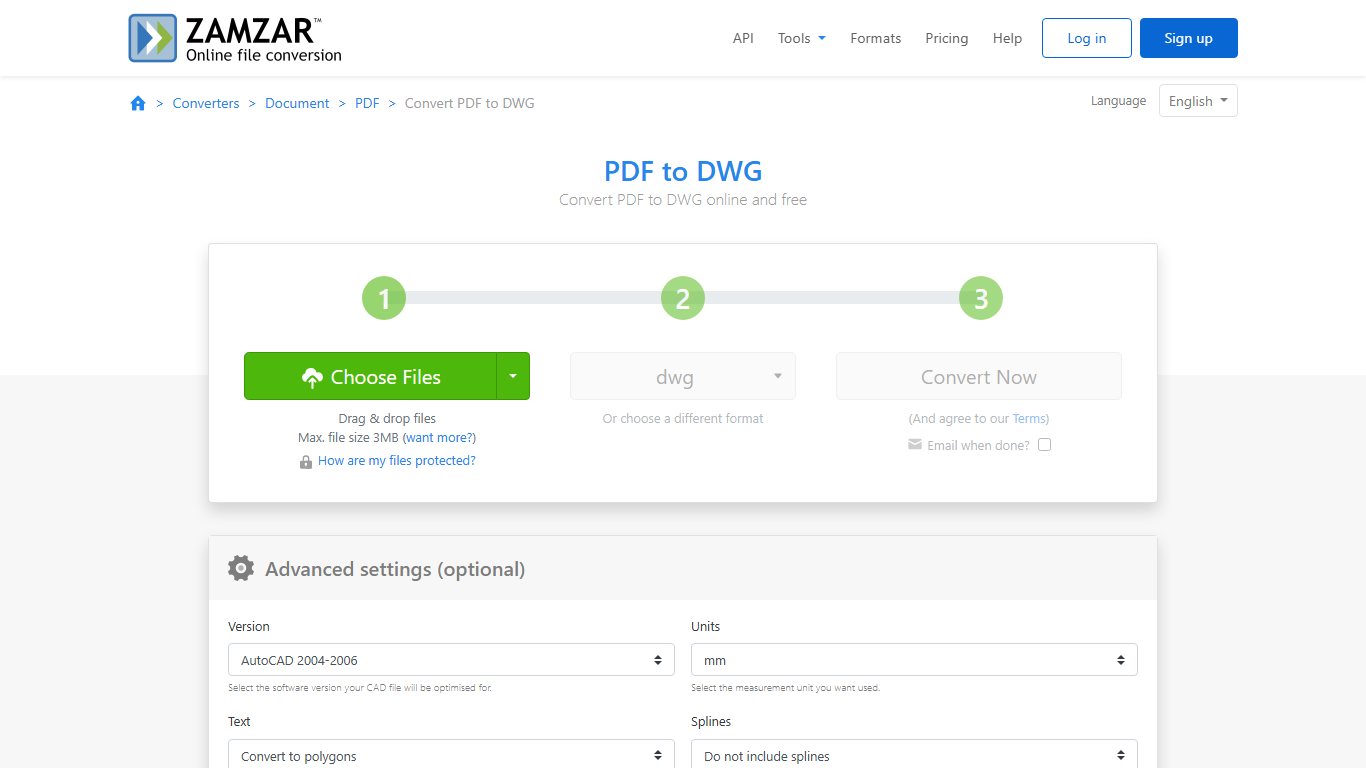
Zamzar is an online converter with a dedicated PDF to DWG tool, and it can also turn AutoCAD files into PDF. It works well when you need a quick conversion of a simple drawing. Because it runs entirely online, you get far fewer settings for the output than AutoCAD’s Import PDF dialog gives you. There are no layer, scale or text recognition options.
To use Zamzar:
- Go to the Zamzar website and open the PDF to DWG converter.
- Upload your PDF.
- Make sure the output format is set to DWG.
- Click Convert and download the result. Small files usually take less than a minute.
Free use is limited by file size and number of conversions, and paid plans raise those limits. Before you upload drawings for a client or employer, check the confidentiality terms: online tools send your file to someone else’s server.
How to import a PDF into AutoCAD from the ribbon
Importing a PDF into AutoCAD is one short process:
- Create or open an AutoCAD drawing.
- Go to Insert tab > Import panel > PDF Import.
- Find the PDF you want to import and click Open.
- In the Import PDF dialog box, set an insertion point or accept the default location (0,0), choose your options and click OK.
How to import a PDF from the Application menu
If you prefer menus to the ribbon, the Application menu does the same thing:
- Open a new or existing drawing.
- Click the Application menu (the large red A at the top left) and choose Import > PDF. You can also type PDFIMPORT and press Enter.
- Select the PDF in the file dialog and click Open.
- The Import PDF dialog box appears.
- Choose your settings and click OK.
If nothing comes in except a picture, the PDF is a scan. You can trace over it as an underlay, or use a raster-to-vector tool. For an important drawing, the most reliable fix is to ask whoever made the PDF for the original DWG file.
FAQ
Can AutoCAD LT convert PDF to DWG?
Yes. AutoCAD LT has included PDFIMPORT since the 2017 release, along with PDFSHXTEXT for recovering SHX text. AutoCAD LT for Mac also includes it. The steps are the same as in full AutoCAD.
Why did my PDF import as a picture instead of lines?
The PDF was made from a scan or an image, so it contains pixels, not vector geometry. PDFIMPORT attaches such content as a raster image. To get lines, you need to trace it or use a raster-to-vector program. Better still, get the original CAD file from whoever made the drawing.
Why is the text in my imported drawing made of tiny lines?
The original drawing used AutoCAD’s SHX fonts, which PDF stores as geometry, not text. Run PDFSHXTEXT, select the linework and pick the matching SHX fonts so AutoCAD can rebuild it as editable text. Then use TXT2MTXT to merge the pieces.
Is the converted drawing to scale?
Not reliably. A PDF has no real-world units, so check one known dimension with DIST after importing. Then use SCALE with the Reference option to correct the whole drawing.
Are free online PDF to DWG converters safe to use?
Well-known services such as Zamzar are fine for drawings that aren’t sensitive. Keep in mind that your file is uploaded to the service’s servers and that free tiers limit file size and the number of conversions. For confidential plans, use AutoCAD’s PDFIMPORT or a desktop converter that runs on your own computer.
Can I convert a DWG back to PDF?
Yes. In AutoCAD, use PLOT or EXPORTPDF with a PDF plotter configuration such as DWG To PDF.pc3. Without AutoCAD, tools such as AnyDWG to PDF Converter, AutoDWG’s DWG to PDF converter or Zamzar do the same job.
Sources
- Autodesk Help: About Importing PDF Files (AutoCAD LT)
- Autodesk Help: To Work with Importing PDF Data (AutoCAD LT 2025)
- Autodesk Help: Import PDF Dialog Box (AutoCAD LT 2025)
- Autodesk Help: PDFIMPORT (AutoCAD LT for Mac 2025)
- Autodesk Help: What’s New or Changed in AutoCAD 2027
- AutoDWG: PDF to DWG Converter purchase page
- AnyDWG: DWG to PDF Converter purchase page
- Zamzar: PDF to DWG converter













