Since August 29, 2025, every low-value parcel shipped into the US owes duty, and that one change reshuffled which dropshipping platforms make sense for a new store. This guide compares 16 store builders, sourcing apps, supplier networks and print-on-demand services, with prices checked on November 15, 2026. It also shows which combination fits your budget, your niche and the market you sell to.
Key takeaways
- Every working dropshipping setup has three layers: a store builder, a sourcing app and a supplier.
- Shopify plus DSers’ free Basic plan is the cheapest serious way to test products, thanks to Shopify’s $1-a-month promo.
- US-warehouse suppliers such as Spocket, CJdropshipping and Zendrop gained ground once the de minimis exemption ended.
- Under the FTC’s Mail Order Rule, you are responsible for late shipping, not your supplier.
- Oberlo and Handshake are both gone, so any list that still recommends them is out of date.
Fact-checked
We checked these key facts against the sources named, on November 15, 2026:
- PricingSaaS shows an Import tier at $19.90, Starter at $39.90 and Advanced at $49.90 (source: pricingsaas.com)
- Frontdesk Review, checked September 2, 2026, lists $26.90/mo for Import 200 on Shopify (source: frontdeskreview.com)
- After that, most plans cost $1 a month for the first 3 months, though availability varies by region (source: dodropshipping.com)
- Shopify, because nearly every dropshipping app supports it first and Basic costs $39 a month ($29 billed annually) (source: shopify.com)
- According to customs broker GHY International, the US duty-free exemption for imports under $800 ended for every country on August 29, 2025 (source: tech.co)
Quick answer: the best dropshipping platforms in November 2026
For most beginners in the US, the best setup is Shopify as the store, DSers or AutoDS to move orders, and Spocket or CJdropshipping when shipping speed matters. WooCommerce is the cheapest store if you can run WordPress. Printify suits print-on-demand. SaleHoo is the paid supplier directory most worth a look.
| Job | Top pick | Runner-up | Why |
|---|---|---|---|
| Store builder | Shopify | WooCommerce | Biggest app ecosystem, $1/month promo for 3 months |
| Free AliExpress automation | DSers | AutoDS | Free Basic plan, official AliExpress partner |
| Multi-source automation and eBay | AutoDS | DSers | Many suppliers, price and stock monitoring |
| Fast US/EU shipping | Spocket | CJdropshipping | US and EU suppliers, roughly 5 to 8 day delivery (vendor-reported) |
| No-subscription sourcing | CJdropshipping | AliExpress | Free to join, US warehouses, custom packaging |
| Print-on-demand | Printify | Printful | Free plan, large print-provider network |
| Vetted supplier directory | SaleHoo | Worldwide Brands | $67 a year, cheaper entry |
Dropshipping platforms at a glance (prices checked November 2026)
| Platform | Layer | Free plan or trial | Starting paid price | Integrates with | Typical US delivery | Best for |
|---|---|---|---|---|---|---|
| Shopify | Store | 3-day trial, then $1/mo for 3 months | $5/mo Starter, $39/mo Basic | DSers, AutoDS, Spocket, CJ and thousands more | Set by supplier | Most beginners |
| WooCommerce | Store | Free plugin | Hosting and extensions | WordPress, AliDropship, DSers | Set by supplier | Low fees, full control |
| Wix | Store | No ecommerce on free plan | $29/mo Core (annual) | DSers, Spocket, Zendrop | Set by supplier | Simple brand sites |
| BigCommerce | Store | Trial | $29/mo Core (annual) | Spocket, Doba | Set by supplier | Larger catalogs |
| DSers | App | Free Basic plan | $19.90/mo Advanced | Shopify, WooCommerce, Wix | 10 to 15+ days (AliExpress) | Free AliExpress orders |
| AutoDS | App | $1, 3-day trial | From $12.90/mo (Capterra) | Shopify, eBay, WooCommerce, Wix and more | Depends on source | Multi-supplier, eBay |
| Spocket | App + supplier | 7 or 14-day trial (sources conflict) | $39.99/mo Starter | Shopify, WooCommerce, Wix, BigCommerce | About 5 to 8 days (US/EU suppliers) | Fast shipping |
| CJdropshipping | App + supplier | Free to use | Pay per order | Shopify, WooCommerce, eBay, Wix and more | About 5 to 8 days from US warehouses | Sourcing without a subscription |
| Zendrop | App + supplier | Free tier | $49/mo Pro | Shopify, Wix | Faster for US-stocked items | US fulfillment, branding |
| SaleHoo | Directory | None | $67/yr | Any store (directory) | Depends on supplier | Vetted supplier leads |
| Worldwide Brands | Directory | None | About $299 lifetime | Any store (directory) | Depends on supplier | US wholesalers |
| Doba | Supplier network | Trial | Listings conflict (see below) | Shopify, BigCommerce | US suppliers | US catalog in one app |
| AliExpress | Marketplace | Free to use | Pay per order | DSers, AutoDS | 10 to 15 days, often longer | Cheapest product tests |
| Alibaba | B2B marketplace | Free to use | Pay per bulk order | Manual or agents | Varies by freight | Private label after testing |
| Printify | POD | Free plan | $39/mo Premium (monthly) | Shopify, Etsy, WooCommerce, eBay | Varies by print provider | POD margins |
| Printful | POD | Free account | $24.99/mo Growth | Shopify, Etsy, WooCommerce | In-house production | POD quality and branding |
How these platforms were ranked
The list is grouped by layer and ranked inside each group. The ranking draws on vendors’ published pricing, their documentation, current US trade and FTC rules, and 2026 third-party pricing reviews.
Four criteria mattered, weighed in this order:
- Cost to start and pricing clarity. A free plan or a cheap way to test counted most. So did honest renewal terms.
- Delivery speed to US customers. This matters far more since duties came back on low-value imports.
- Integrations. The app has to work with the store you picked.
- Lock-in and trial risk. Non-refundable annual plans and auto-renewing $1 trials counted against a platform.
Third-party price listings conflict for several tools, AutoDS and Doba above all. Where they do, this guide gives the range and says so.
What a dropshipping platform actually is (the 3 layers)
A “dropshipping platform” can mean three different things: the store where customers buy, the app that passes orders to suppliers, or the supplier that ships the product. Most top-ranking lists mix all three into one ranking. That’s why beginners end up comparing Shopify with SaleHoo as if they did the same job.
Here’s how one order flows:
- A customer buys a phone stand in your Shopify store (layer 1).
- DSers sees the order and places it with the matching AliExpress seller (layer 2).
- The AliExpress seller packs and ships the stand to your customer (layer 3).
- DSers pulls the tracking number back into Shopify, and Shopify emails it to the customer.
Pick layer 1 first. Your store decides which apps you can use, and the app decides which suppliers you can reach.
Pick the store before the app
DSers and AutoDS are Shopify-first, while AliDropship’s plugin and WooDropship are for WooCommerce only. Confirm that your sourcing app supports your store builder before you pay for either.
Layer 1: where your shop lives
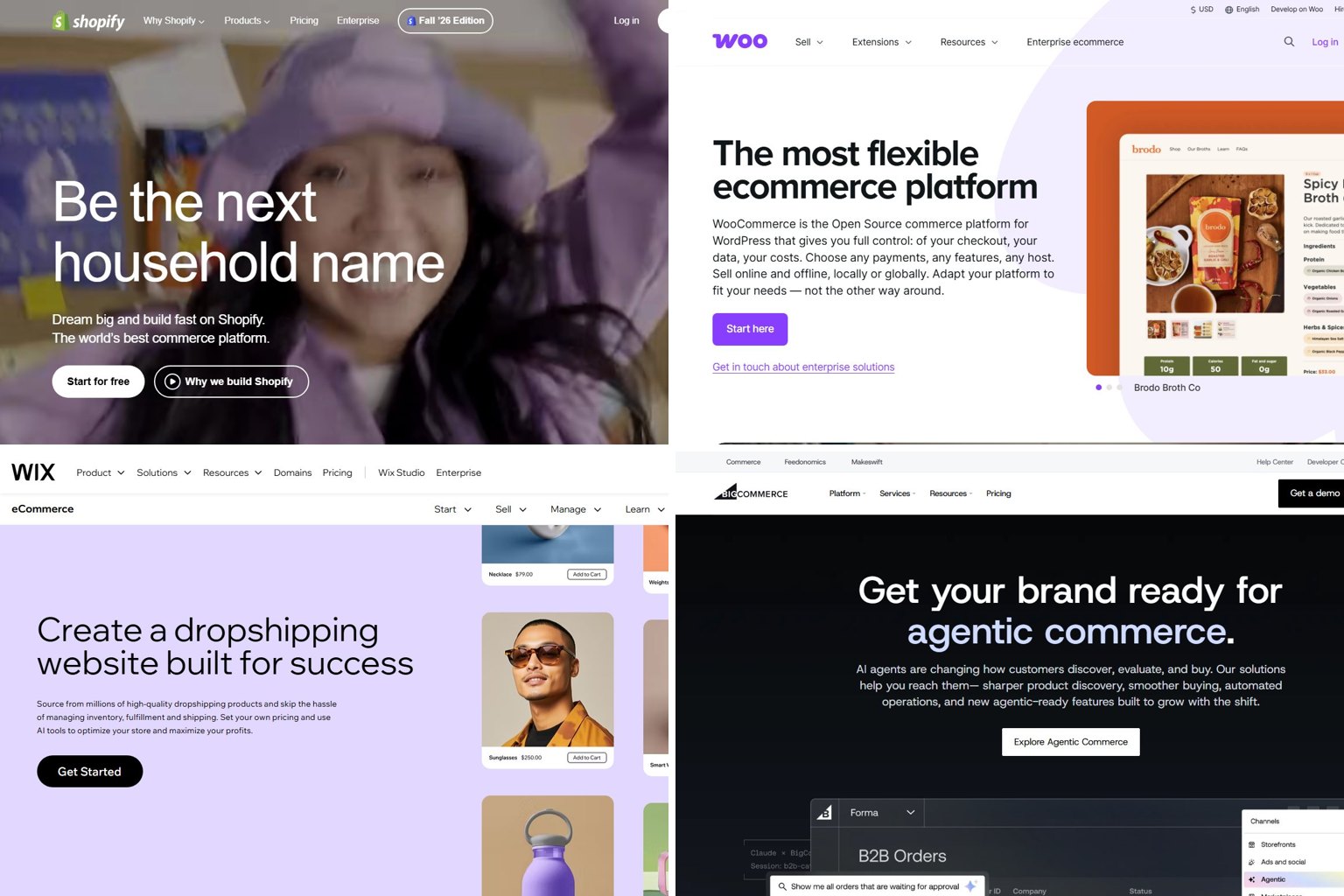
The store builder hosts your product pages, checkout and payments. Shopify, WooCommerce, Wix and BigCommerce are the four realistic options. They differ mainly in monthly cost, fees and how many dropshipping apps plug into them.
Layer 2: the app that moves orders to suppliers
Sourcing apps import products into your store, sync stock and prices, and forward orders. DSers and AutoDS work mainly with marketplaces such as AliExpress. Spocket, CJdropshipping and Zendrop are both app and supplier, so they cover layers 2 and 3 at once.
Layer 3: who actually ships the product
This is the business holding the stock. It might be an AliExpress seller in China, a US warehouse run by CJdropshipping, or a US wholesaler you found through SaleHoo or Worldwide Brands. The supplier sets your delivery time, your product quality and your packaging.
Or skip the store: selling on Amazon, eBay, Etsy or TikTok Shop
Marketplaces replace layer 1 and bring their own traffic. They also bring stricter rules. Amazon and eBay allow dropshipping only on their terms, Etsy allows production partners for your own designs, and TikTok Shop enforces its own fulfillment standards. The rules section below covers the details.
Store builders compared: Shopify vs WooCommerce vs Wix vs BigCommerce
Shopify is the best store builder for most dropshippers because nearly every sourcing app supports it first. WooCommerce costs less over time but needs you to manage WordPress hosting. Wix and BigCommerce work fine, though fewer dropshipping apps support them.
1. Shopify
Shopify is a hosted store builder with the largest dropshipping app ecosystem. It’s the default choice for beginners and for anyone planning to run paid ads.
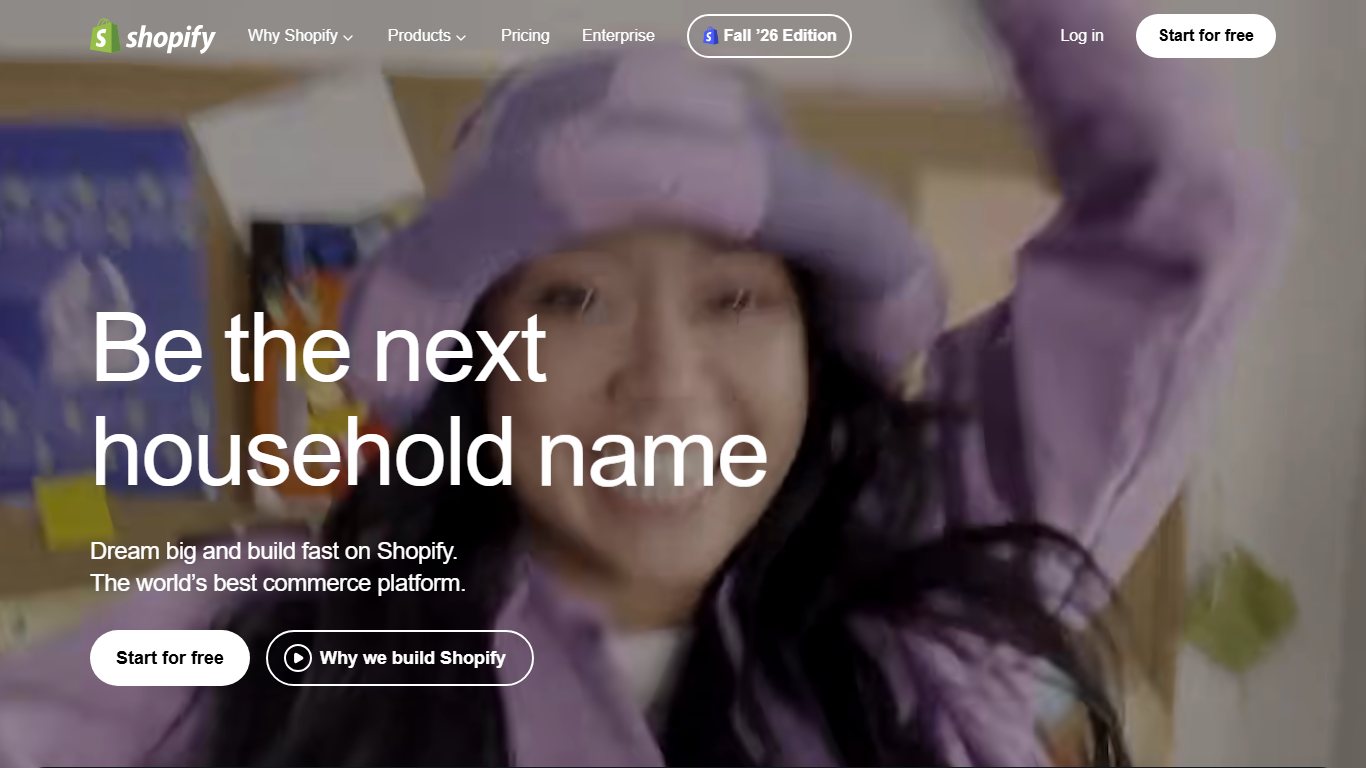
According to NerdWallet’s 2026 Shopify pricing breakdown, the plans look like this:
| Plan | Monthly billing | Annual billing | Who it’s for |
|---|---|---|---|
| Starter | $5/mo | Monthly only | Selling through social links, no full store |
| Basic | $39/mo | $29/mo ($348/yr) | Most new dropshipping stores |
| Grow | $105/mo | $79/mo | Stores with steady sales and staff accounts |
| Advanced | $399/mo | $299/mo | High-volume stores that need advanced reports |
Trial and promo: Website Builder Expert reports a 3-day free trial with no credit card needed. After that, most plans cost $1 a month for the first 3 months, though availability varies by region. Older articles still quote “$29 a month with a 14-day trial”. That price is now the annual rate, and the 14-day trial is gone.
What matters for dropshipping: one-click installs for DSers, AutoDS, Spocket, CJdropshipping and Zendrop. You also get built-in tracking emails and Shopify Payments.
Limitations: apps and premium themes stack up fast. A store with three paid apps can easily cost more than the plan itself.
Compared with WooCommerce: Shopify costs more every month but needs no server upkeep. WooCommerce works out cheaper, but updates, backups and security are your job.
2. WooCommerce + WordPress
WooCommerce is a free, open-source ecommerce plugin for WordPress. It suits people who already run a WordPress site, or who want to own their store outright.
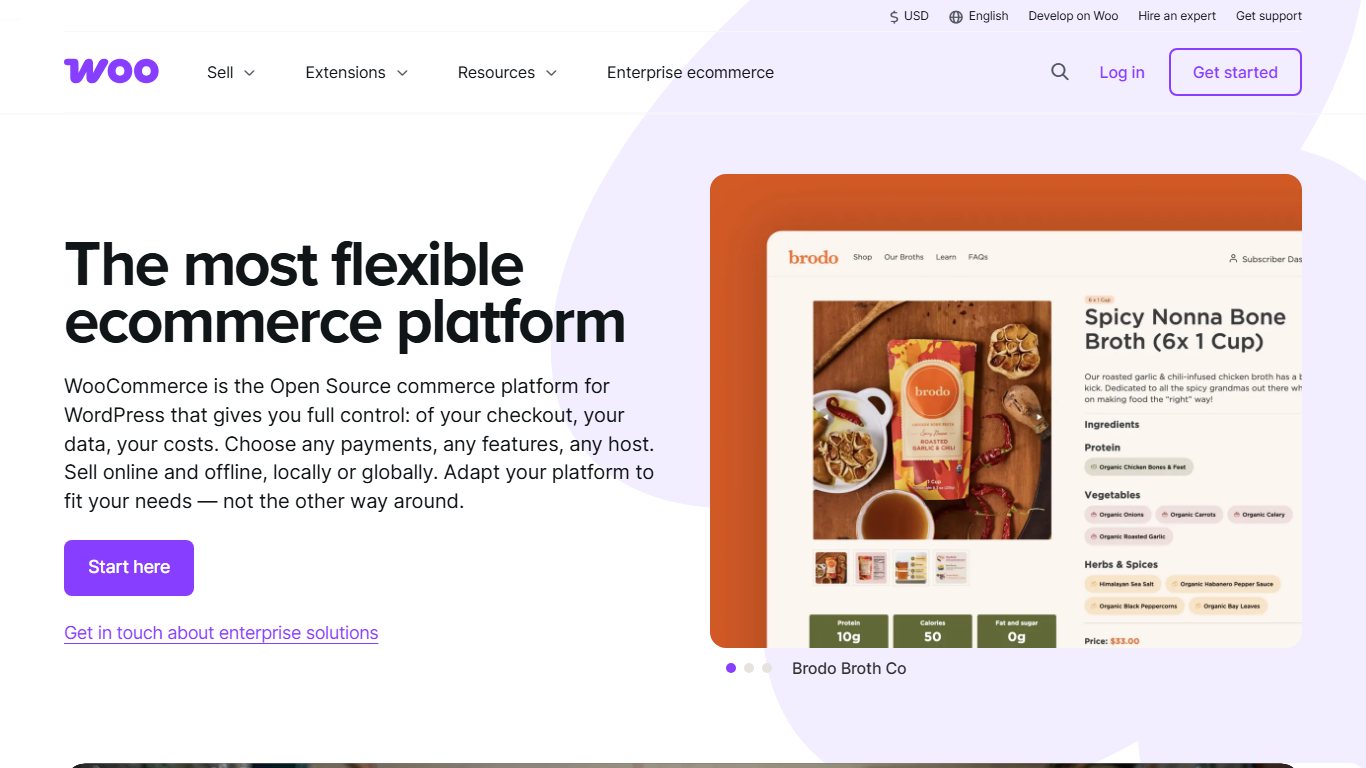
Pricing: the plugin itself is free. You pay for hosting, a domain and any paid extensions, so the real cost depends on your host.
What matters for dropshipping: dedicated plugins such as AliDropship and WooDropship, plus DSers’ WooCommerce version. You don’t pay a platform subscription.
Limitations: you handle plugin conflicts, security updates and site speed yourself. If your store goes down during an ad campaign, nobody else is on call to fix it.
Compared with Shopify: WooCommerce is the cheapest store if you can handle WordPress. Shopify is the safer pick if you’d rather spend your time on products and ads.
3. Wix
Wix is a drag-and-drop website builder with an ecommerce layer. It suits sellers who want a polished brand site with a small catalog.
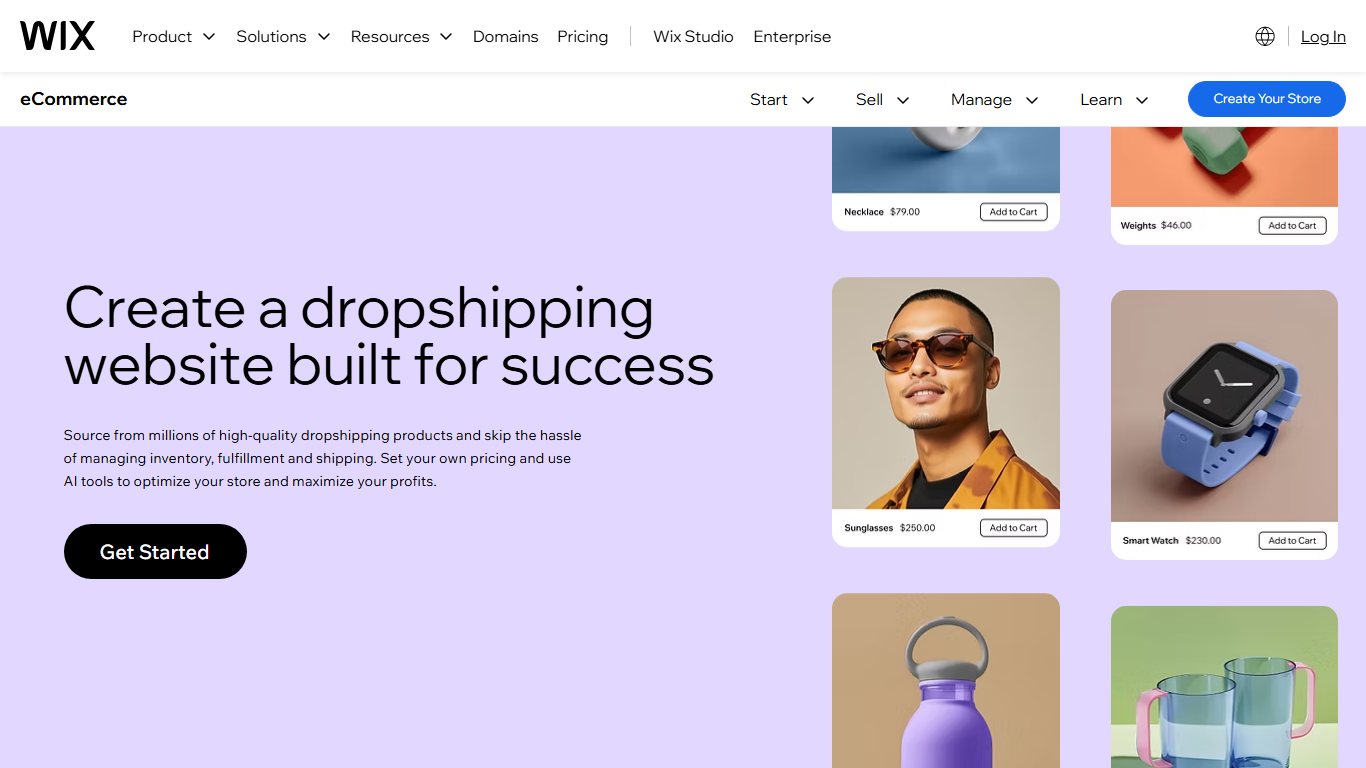
Pricing (2026): Style Factory’s and Expert Market’s 2026 Wix breakdowns list Core at $29/mo on annual billing ($36 monthly), Business at $39 ($46), and Business Elite at $159 ($172). You need at least Core to sell, because the free and Light plans don’t include ecommerce.
What matters for dropshipping: DSers, Spocket and Zendrop all support Wix.
Limitations: fewer dropshipping apps than Shopify, and moving a Wix store to another platform later is awkward.
Compared with Shopify Basic: Wix Core and Shopify Basic both cost $29 a month on annual billing. Shopify wins on apps, Wix on design ease.
4. BigCommerce
BigCommerce is a hosted platform aimed at larger catalogs and B2B features. It suits sellers with hundreds of SKUs from US suppliers.
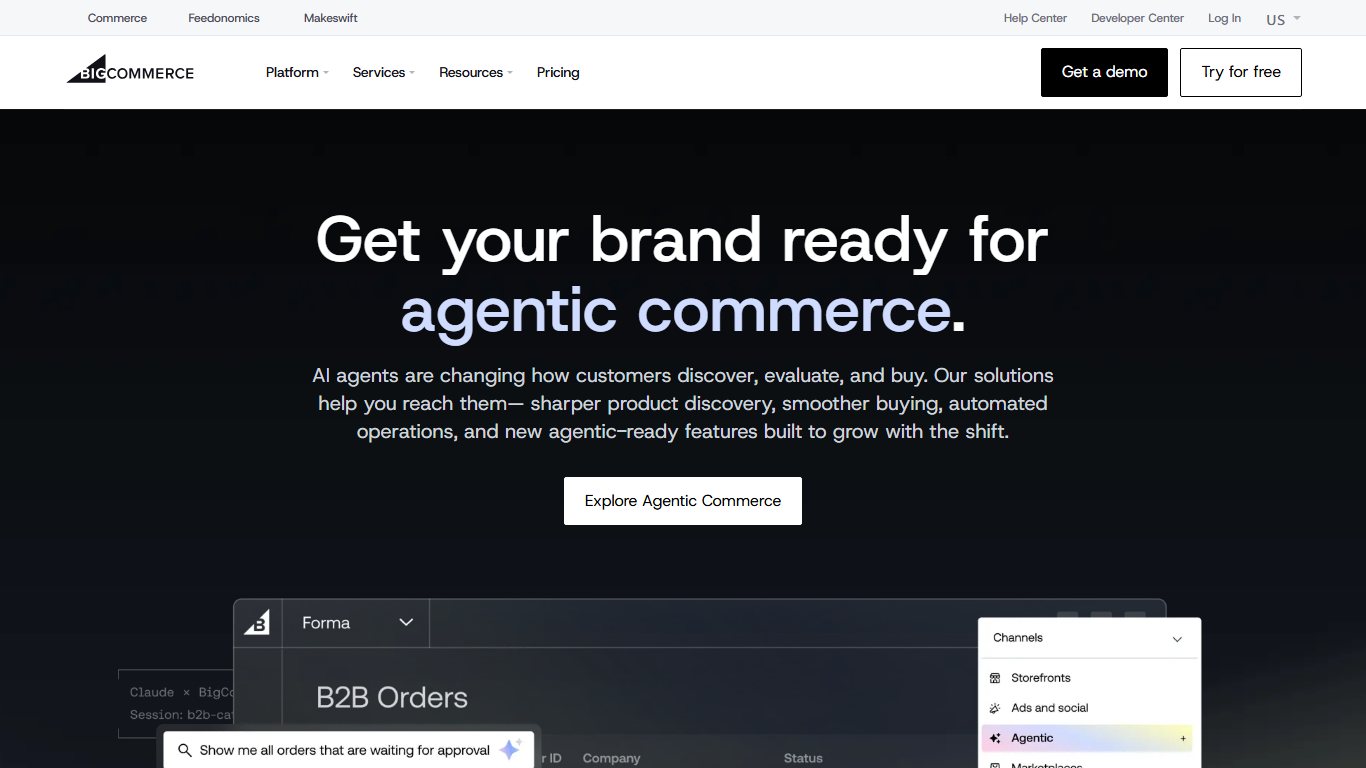
Pricing (2026): with a June 1, 2026 update, the old Standard plan became Core, at $29/mo billed annually or $39/mo monthly. Core has a $30,000 trailing-12-month sales cap and a 2.0% fee if you use an outside payment provider. Some listings still show “Standard”, so expect to see both names.
Limitations: the sales cap pushes you up a plan as you grow, and the dropshipping app choice is narrower than on Shopify.
Compared with Wix: both entry plans cost the same per month. BigCommerce handles big catalogs better, while Wix is easier for small brand stores.
Sourcing and automation apps: DSers, AutoDS, Spocket, CJdropshipping and Zendrop
For a new store, DSers is the best sourcing app because its Basic plan is free and it connects directly to AliExpress. AutoDS is the better choice for eBay sellers and anyone using several suppliers. Spocket and CJdropshipping are the picks when your customers complain about three-week shipping.
| App | Free tier | Paid tiers (monthly) | Supplier source | Trial terms / catch |
|---|---|---|---|---|
| DSers | Basic, free | Advanced $19.90, Pro $49.90, Enterprise $499 | AliExpress (official partner) | Limits on the free plan; AliExpress shipping times |
| AutoDS | No permanent free plan | From $12.90 (Capterra); other 2026 listings show $19.90 to $26.90 entry | AliExpress, CJ, US marketplaces, own warehouses | $1, 3-day trial auto-renews at full price |
| Spocket | Trial only | Starter $39.99, Pro $59.99, Empire $99.99, Unicorn $299.99 | Mostly US and EU suppliers | Trial reported as 7 or 14 days; annual plans non-refundable |
| CJdropshipping | Free to use | No subscription; you pay product + shipping | Own sourcing, China, US and other warehouses | US stock varies by SKU |
5. DSers (the free Oberlo replacement)
DSers is an order-automation app that links your store to AliExpress sellers. Shopify itself pointed users to it when Oberlo shut down in 2022.
Pricing: according to xpay’s 2026 DSers pricing page, Basic is free. Advanced is $19.90/mo, Pro $49.90/mo and Enterprise $499/mo.
Features that matter: bulk ordering of dozens of AliExpress orders in one go. It also does supplier mapping, so you can switch a product to a cheaper or faster seller without relisting it, and it syncs tracking back to your store.
Limitations: DSers moves orders, but it doesn’t speed up shipping. You’re still on AliExpress delivery times and quality, and duties now apply to every one of those parcels.
Compared with AutoDS (which suits a beginner better?): start with DSers if you sell on Shopify and source from AliExpress, because it costs nothing until you need more. Choose AutoDS if you sell on eBay or want one dashboard for several suppliers.
Test before you subscribe
Start on DSers’ free Basic plan and Shopify’s $1-for-3-months promo to test products. Only pay for Spocket or an AutoDS tier once a product has made sales.
6. AutoDS
AutoDS is an all-in-one dropshipping platform. It imports products from many suppliers, watches their prices and stock, and can place orders for you. It suits multi-channel sellers, especially on eBay.
Pricing: listings disagree. Capterra lists AutoDS from $12.90/month. PricingSaaS shows an Import tier at $19.90, Starter at $39.90 and Advanced at $49.90. Frontdesk Review, checked September 2, 2026, lists $26.90/mo for Import 200 on Shopify. Prices depend on your sales channel and product count, and Enterprise is custom.
The trial catch: several 2026 sources describe a $1, 3-day trial that renews automatically at the full plan price. If you were charged after one, cancel in your AutoDS billing settings and contact AutoDS support straight away to ask about a refund under its terms. Do this before you think about a card dispute.
Limitations: AutoDS can source from big US retail marketplaces. Amazon and eBay both ban buying from another retailer and having it shipped straight to your customer, so stick to wholesale and dropship suppliers on those channels.
Compared with DSers: AutoDS does more but costs money from day one. DSers is free and simpler, but it’s tied to AliExpress.
Set a day-2 reminder
Put a calendar reminder on day 2 of any $1 or 3-day trial. That gives you time to cancel before the full monthly price hits your card.
7. Spocket
Spocket is a supplier marketplace and app focused on US and EU suppliers. It suits stores whose customers won’t wait two weeks.
Pricing (2026): AffMaven’s 2026 breakdown lists Starter at $39.99/mo (monthly only), Pro at $59.99/mo (about $24/mo billed annually), Empire at $99.99/mo ($57/mo annually) and Unicorn at $299.99/mo ($79/mo annually). Older lists quoting “Starter $24” are describing the annual Pro rate.
Trial: sources conflict. Some say 14 days, while Hackceleration reports 7 days on monthly plans only and notes that annual plans are non-refundable.
Features that matter: branded invoicing on higher tiers, US and EU suppliers, and vendor-reported delivery of roughly 5 to 8 days from US warehouses.
Limitations: product costs run higher than on AliExpress, so margins are thinner on the same item.
Is Spocket worth $40 a month before your first sale? Usually not. Test demand with CJdropshipping (free) or DSers first. Move to Spocket once a product sells and delivery complaints start costing you refunds.
Compared with CJdropshipping: Spocket gives you a curated catalog of Western suppliers for a subscription. CJ has no subscription but a messier, China-heavy catalog with US warehouse stock on selected items.
8. CJdropshipping
CJdropshipping is a sourcing agent and fulfillment company with its own warehouses, including in the US. It suits sellers who want faster shipping and custom packaging without a monthly fee.
Pricing: free to join and use, with no subscription for the core service. You pay for products and shipping per order.
Features that matter: product sourcing requests (you send a product link and CJ finds it), US warehouse stock with vendor-reported 5 to 8 day delivery, private label and custom packaging, and integrations with Shopify, WooCommerce, eBay and Wix.
Limitations: only some SKUs are stocked in the US, and the rest still ship from China with duty. Quality varies by product, so samples are essential.
Compared with Spocket: CJ is cheaper to start and better for branding. Spocket is more curated and has more native US and EU suppliers.
9. Zendrop
Zendrop is a dropshipping app built around US fulfillment and branded dropshipping. It suits Shopify and Wix sellers who want to move into custom packaging.
Pricing (2026): a Free tier gives limited access, $100 in order credits and no automated fulfillment. Pro is $49/mo ($399/yr) and Plus is $79/mo ($549/yr). Zendrop’s support center also describes a Flex plan, billed through Shopify or Wix, that charges by the peak number of linked products in your billing cycle.
Limitations: without automated fulfillment, the free tier is only good for browsing, and some 2026 guides list prices that differ from Zendrop’s own page.
Compared with CJdropshipping: Zendrop is more polished and subscription-based. CJ is free but more hands-on.
WooCommerce plugins: AliDropship, WooDropship, Dropship.me
These plugins do for WooCommerce what DSers does for Shopify.
- AliDropship is a WordPress plugin that imports AliExpress products and automates orders. Tooltester lists a one-time $89 price for the plugin, including the WooCommerce version. Some directories show other figures, but a one-time fee is the main draw against monthly apps. AliDropship also runs a Shopify app.
- WooDropship is a WooCommerce-only AliExpress importer and order tool. It’s a lighter alternative to AliDropship.
- Dropship.me is a product-import plugin from the AliDropship team. It sells curated AliExpress product packs for WordPress stores.
Dropified is still listed by older guides as an automation app for Shopify and WooCommerce. Next to DSers and AutoDS it has far less momentum, so compare its current terms carefully before you commit.
Supplier networks and directories (US, EU and China)
A supplier network sells and ships the goods. A directory just lists vetted suppliers you then contact yourself. For speed, choose US-warehouse suppliers. For the cheapest tests, AliExpress is still the default, but duties now apply. Paid directories are worth it only if you plan to sell from US wholesalers.
10. SaleHoo
SaleHoo Directory is a paid list of vetted wholesale and dropship suppliers.
Pricing: SaleHoo’s pricing page lists the Directory at $67 a year. SaleHoo Dropship is a separate Shopify app with its own billing, and 2026 sources disagree on its tiers.
Features that matter: suppliers screened before listing, minimum order and dropship flags on each listing, and market research tools.
Limitations: a directory doesn’t automate anything. You still negotiate with each supplier and set up order handling.
Compared with Worldwide Brands: SaleHoo is cheaper to try and covers more regions. Worldwide Brands focuses on US wholesalers.
11. Worldwide Brands
Worldwide Brands is a long-running directory of US wholesalers and drop shippers that it says it has certified.
Pricing: about $299 one-time for lifetime access, often promoted at $199 to $249, with a payment plan option.
Features that matter: a focus on genuine wholesalers, many of which carry branded products.
Limitations: many of the wholesalers listed want a registered business and a tax ID before they’ll sell to you. There’s no store integration.
Compared with SaleHoo: it costs more and is US-only. Pick it if you’re building a branded-goods store for American customers.
12. Doba
Doba is a US supplier catalog with a Shopify app (now branded “Doba ‑ AI Dropshipping”) and a BigCommerce app.
Pricing: 2026 listings conflict. PricingSaaS shows Limited at $28.66/mo, Basic at $56.99/mo, Standard at $142.66/mo and a quote-only Enterprise. Xpay, citing Doba’s page in May 2026, shows a free tier and a $14.99 entry plan. A September 2026 review notes that the displayed prices are monthly equivalents on quarterly billing.
Limitations: pricing that keeps changing, and billing that can be quarterly rather than monthly.
Compared with Spocket: both cover US suppliers. Spocket’s monthly pricing is clearer.
13. AliExpress
AliExpress is Alibaba Group’s retail marketplace. It’s the main source for DSers and AutoDS, and it’s free to use, because you only pay per order.
Shipping: standard shipping to the US typically takes 10 to 15 days and often longer.
What changed: low-value parcels from China have owed duty since May 2, 2025. “Free shipping” no longer means a low landed cost.
Compared with CJdropshipping: AliExpress has the widest catalog. CJ offers US warehouse stock and custom packaging for products that sell.
14. Alibaba
Alibaba is a B2B marketplace for factory orders, not a dropshipping source. Most listings set a minimum order quantity (MOQ), the smallest number of units a factory will produce per order, often in the hundreds.
Pricing: free to browse. You pay for the bulk order and freight.
When it fits: after a product has proven itself, when you want your own brand and you’ll ship stock to a US warehouse or a fulfillment partner such as CJ.
Other US suppliers you’ll see on older lists
- Inventory Source: an integration service that syncs inventory feeds from many US dropship suppliers into your store. Its supplier directory is free to browse, and the automation is a paid subscription.
- Wholesale2b: a US dropship catalog with store integrations, sold by subscription.
- Sunrise Wholesale: a membership-based US drop shipper. Check its catalog freshness and shipping times before you join.
- DropCommerce: a Shopify app focused on US and Canadian independent brands.
- Modalyst: a supplier marketplace for independent and branded goods.
- Wholesale Central: a free directory of wholesalers. Most sell in bulk rather than dropship.
- Faire: a wholesale marketplace where retailers buy stock from independent brands. It’s for holding inventory, not dropshipping.
Paid directories: are they worth it?
SaleHoo and Worldwide Brands are not scams. They’re paid research tools. They’re worth the money if you want US or branded suppliers and will do the outreach yourself. They’re a waste if all you want is AliExpress-style products, which DSers gives you for free.
Print-on-demand platforms: Printify vs Printful
Print-on-demand (POD) beats classic dropshipping when your edge is design rather than finding products. Nobody else can sell your exact shirt. Printify is cheaper and more flexible, while Printful controls quality better.
15. Printify
Printify is a POD platform that sends your orders to a network of independent print providers.
Pricing: a free plan, plus Premium. Printify’s help center says the monthly Premium price rose from $29 to $39 in February 2026, while annual Premium stayed at about $299 a year (around $24.99 a month). Premium mainly buys discounts on products, so it pays off only at steady volume.
Features that matter: you choose a provider for each product by price, location and rating, and it integrates with Shopify, Etsy, WooCommerce and eBay.
Limitations: quality and delivery speed vary from provider to provider.
16. Printful
Printful runs its own production facilities, which gives you more consistent quality and branding.
Pricing: a free account. Third-party 2026 sources list the Growth membership at $24.99/mo in the US, with Business quote-based. Printful also raised prices on February 26, 2026 for Cotton Heritage products and some accessory shipping rates.
Branding: inside labels, branded packing slips and pack-ins.
Compared with Printify: Printful costs more per item but gives you tighter control. Start on Printify to test designs, and move your best sellers to Printful if returns over print quality start eating your margin.
What changed in 2025 and 2026: tariffs, de minimis and AliExpress dropshipping
The US used to let parcels worth under $800 in duty-free. That exemption, called de minimis, is now suspended for every country, and the law behind it is set to be repealed. Every China-sourced dropshipping order now carries duty and customs fees, which makes US-warehouse suppliers far more competitive.
Did you know?
According to customs broker GHY International, the US duty-free exemption for imports under $800 ended for every country on August 29, 2025. The law that created it is set to be repealed outright on July 1, 2027.
The de minimis timeline in plain English
| Date | What changed | What it means for your store |
|---|---|---|
| May 2, 2025 | De minimis suspended for China and Hong Kong | AliExpress parcels start owing duty |
| August 29, 2025 | Suspended for all other countries | No duty-free route through other countries either |
| February 20, 2026 | Suspension continued | Don’t plan around it coming back |
| February 24, 2026 | Reported by ShipTime: after the Supreme Court invalidated IEEPA tariffs, a 10% tariff on imports from all countries took effect | Duty also applies to non-China suppliers |
| February 28, 2026 | Under CBP CSMS #65934463 (Executive Order 14324), postal shipments must use the ad valorem method | Duty on postal parcels is a percentage of value |
| July 1, 2027 | The 2025 budget law (“One Big Beautiful Bill”) repeals the statutory basis for de minimis | The change becomes permanent |
A worked landed-cost example
AliDrop, a dropshipping vendor, works through a $4.00 AliExpress item with shipping included. Using its own assumptions, the item costs about $8.10 landed once duties and a per-parcel customs fee are added. Here’s what that does to a $19.99 sale. Payment processing (about 3% plus $0.30) and a $10 ad cost per sale are illustrative assumptions.
| Line | Before May 2025 | After August 2025 |
|---|---|---|
| Product + shipping | $4.00 | $4.00 |
| Duty and customs fees | $0.00 | $4.10 |
| Landed cost | $4.00 | $8.10 |
| Sale price | $19.99 | $19.99 |
| Payment processing (assumed) | $0.90 | $0.90 |
| Profit before ads | $15.09 | $10.99 |
| Profit after $10 ad cost (assumed) | $5.09 | $0.99 |
The same product, at the same price and with the same ads, now earns about a dollar.
Work out landed cost before ads
Add product, shipping, duty and carrier fees before you spend anything on ads. Since August 29, 2025 there’s no duty-free threshold to fall back on.
Who pays the duty now, you or the customer?
That depends on how the parcel ships. If the supplier ships duty-paid, the duty is in your cost. If not, the carrier may bill your customer before delivery. Surprise fees cause refused parcels, refunds and chargebacks, so ask suppliers whether their shipping is duty-paid and build the cost into your price.
Does this make AliExpress dropshipping dead?
No, but cheap impulse products with thin margins are in trouble. AliExpress still works for testing ideas and for higher-priced items, where duty is a smaller share of the margin. Once a product sells, the better move is to switch it to US warehouse stock through CJdropshipping, Spocket or Zendrop. Dropshipping isn’t dead in 2026. What’s gone is the $3-item, $20-price, three-week-shipping model.
Which platform setup is right for you? 4 starter stacks
The right stack depends on your budget and your customers. With under $100, test on Shopify’s promo with DSers. With about $80 a month, add Spocket for faster shipping. For design-led products, use Printify. To avoid running a store at all, use a marketplace with a compliant supplier.
Can you start with $100?
Yes, if you treat it as a product test rather than a launch. One way to split $100:
| Item | Cost |
|---|---|
| Shopify trial, then $1/mo promo for 3 months | $3 |
| DSers Basic | $0 |
| Samples of your top 3 products shipped to you | About $30 to $45 (your budget) |
| Free myshopify.com address to start | $0 |
| First small ad or creator test | The remaining $50 or so |
After the promo, Shopify Basic is $39 a month, so budget for that if the test works. If you need to track your hours across product research and supplier emails, a time tracking app helps keep the test honest.
Mid-budget stack: fast US shipping
Shopify Basic ($39/mo) plus Spocket Starter ($39.99/mo) comes to about $79 a month. A leaner version is Shopify Basic plus CJdropshipping, which charges no fee, for $39 a month. Annual billing on both Shopify and Spocket lowers the monthly cost, but Spocket’s annual plans are non-refundable.
WordPress low-fee stack
WooCommerce (free) plus hosting plus AliDropship ($89 one-time) or DSers’ WooCommerce version (free). Over a year this is the cheapest store you can run, as long as you’re comfortable maintaining WordPress.
Print-on-demand stack
Etsy or Shopify plus Printify’s free plan. Upgrade to Printify Premium ($39 monthly, or about $24.99 a month billed annually) once your product discounts beat the fee.
Marketplace-only stack
eBay plus AutoDS, sourcing from CJdropshipping or US wholesalers, or TikTok Shop with US warehouse stock. You skip store fees but must follow each marketplace’s dropshipping policy to the letter.
Rules you can’t skip: FTC 30-day rule, marketplace policies, license and sales tax
You’re the seller in the eyes of the law and the marketplace, so your supplier’s delays and mistakes count against you. That covers shipping promises under FTC rules, seller-of-record rules on Amazon and eBay, and basic registration and sales tax.
The FTC 30-day shipping rule
The FTC’s Mail, Internet, or Telephone Order Merchandise Rule says you need a reasonable basis to ship within the time you advertise. If you state no time, the limit is 30 days. When you can’t make it, you must ask the customer to agree to the delay or give a refund.
Did you know?
According to the FTC’s business guide to the Mail Order Rule, the agency has enforced the rule against business owners whose drop shippers missed deadlines. The store owner is the one held responsible.
In practice, put realistic delivery estimates on product pages. A 5 to 8 day promise on an item that ships from China breaks the rule.
Amazon, eBay, Etsy and TikTok Shop dropshipping policies
- Amazon: dropshipping is allowed only if you’re the seller of record. Remove third-party identifiers from packing slips and invoices. Buying from another retailer, including Amazon itself, and having it shipped straight to your customer is prohibited. If you do grow on Amazon, you’ll also want to look at Amazon PPC tools.
- eBay: dropshipping from a wholesale supplier is allowed. Buying from another retailer or marketplace and having it shipped directly to your buyer is not.
- Etsy: reselling mass-produced items isn’t allowed, apart from vintage and craft supplies. Print-on-demand from your own designs is allowed if you disclose your production partner.
- TikTok Shop: it sets its own fulfillment-time standards and penalizes late shipments, so slow China-shipped stock is risky there.
Marketplace rules
Breaking a marketplace’s dropshipping policy can get your listings removed or your account suspended. Read the current policy in each seller center before you list.
Do you need a business license?
Usually yes, in some form, though the details depend on your state and city. Check your state’s secretary of state and revenue department websites for three things:
- Business registration. A sole proprietorship is legal in most places. You don’t need an LLC to start, although an LLC separates your personal assets from business debts.
- Sales tax permit. You need one if you sell into states where you owe sales tax. Marketplaces such as Amazon, eBay and Etsy collect and remit sales tax for you in most states.
- Resale certificate. This lets you buy from suppliers without paying sales tax on goods you’ll resell. Real US wholesalers often ask for one, along with your tax ID.
How to vet a supplier and spot scams before you pay
Order samples, check tracking, and walk away from any “wholesaler” that charges you just for access. A sample order costs a few dollars and catches most problems before your customers do.
Vet a supplier
- Order your top 3 products to your own address.
- Record the days from order to delivery.
- Check the packaging and whether the supplier’s branding or prices appear on the invoice.
- Confirm the tracking updates in your store app.
- Ask the supplier, in writing, how returns and damaged items are handled.
- Ask whether shipping is duty-paid to the US.
Red flags for fake wholesalers:
- They charge a monthly fee just to be their customer. Real wholesalers make money on products. Directories such as SaleHoo charge for research, which is different.
- They never ask for a tax ID or resale certificate, yet call themselves wholesalers.
- Their “wholesale” prices match retail prices on Amazon.
- They have no verifiable address or phone number.
- They want payment by wire transfer, crypto or gift cards only.
- They can’t give you real tracking numbers.
Dead or renamed platforms you’ll still see recommended
Several pages that rank today still recommend tools that no longer exist. If a list includes either of these two, the rest of its advice is probably just as old.
- Oberlo: removed from the Shopify App Store on May 12, 2022 and shut down on June 30, 2022, after the originally announced June 15 date was pushed back. Shopify recommended DSers as the replacement.
- Handshake: Shopify’s wholesale marketplace was phased out around 2023 after Shopify invested in Faire. The Shopify Plus Wholesale Channel was retired on April 30, 2024. Use Faire, or Shopify’s built-in B2B tools on Plus, instead.
Older lists also quote prices without context, such as “Shopify $29 with a 14-day trial” or “Spocket Starter $24”. Shopify Basic is $39 a month billed monthly ($29 billed yearly) and now comes with a 3-day free trial followed by a promotional period, while Spocket Starter is $39.99 a month billed monthly ($24 billed annually). Those numbers can push a beginner into the wrong plan or a trial that ends sooner than they expect.
Where to start this week
Open a Shopify trial and install DSers’ free plan. Pick three products with at least a 3x margin over their landed cost, duty included, and order samples. Only pay for Spocket, AutoDS or a directory once one of those products sells and you know whether your customers care more about price or speed.
FAQ
What apps can I use for dropshipping?
DSers (free Basic plan) and AutoDS (from $12.90/mo on Capterra) handle AliExpress and multi-supplier orders. Spocket, CJdropshipping and Zendrop add US warehouse suppliers. Printify and Printful cover print-on-demand. All of them run on Shopify, and most also support WooCommerce or Wix.
Can I start dropshipping with $100?
Yes. Use Shopify’s $1-a-month promo for three months, DSers’ free plan, about $30 to $45 for samples, and the rest for a small ad test. Plan for Shopify Basic at $39 a month once the promo ends.
Do I need a business license to dropship?
Most states and cities expect some form of business registration, and you’ll need a sales tax permit where you owe sales tax. You don’t need an LLC to start. Check your state’s secretary of state and revenue department for the exact rules.
Which eCommerce website is best for dropshipping?
Shopify, because nearly every dropshipping app supports it first and Basic costs $39 a month ($29 billed annually). WooCommerce is cheaper if you can manage WordPress.
What are the free dropshipping platforms?
WooCommerce (the plugin is free), DSers Basic, CJdropshipping, Zendrop’s free tier, and the free plans from Printify and Printful. AliExpress is free to use. You still pay for products, and on WooCommerce for hosting.
Is Shopify or WooCommerce better for dropshipping?
Shopify suits beginners because hosting, security and updates are handled for you. WooCommerce suits technical sellers who want lower ongoing costs and full control.
Is DSers really free?
Yes, the Basic plan is free, with limits on features and scale. Paid tiers start at $19.90 a month for Advanced.
Is Spocket worth the money in 2026?
It’s worth it once you have a selling product and delivery complaints are costing you sales. Starter is $39.99 a month. Before your first sale, test with free tools instead.
Is AliExpress dropshipping still profitable after the de minimis change?
It can be for higher-priced products with healthy margins. In AliDrop’s example, a $4.00 item becomes about $8.10 landed, which wipes out most of the profit on cheap impulse items. Many sellers now test on AliExpress, then move winning products to US warehouses.
How long does dropshipping shipping take to the US in 2026?
AliExpress standard shipping typically takes 10 to 15 days and often longer. Suppliers with US warehouses, such as CJdropshipping and Spocket, advertise roughly 5 to 8 days. Those figures are vendor-reported, so check them with your own sample orders.