
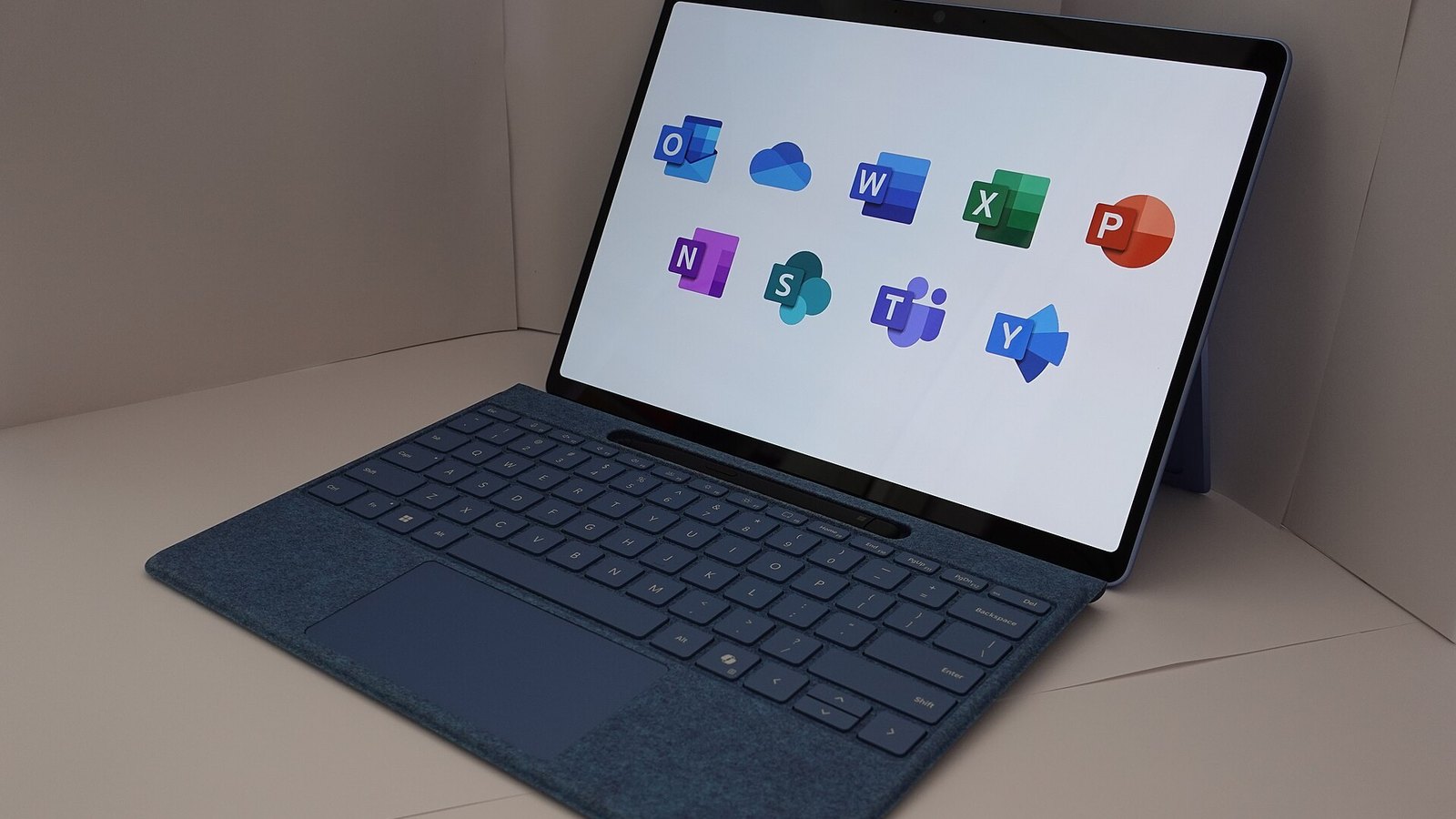
NAKIVO Backup & Replication protects your Microsoft 365 data by copying Exchange Online mailboxes, OneDrive for Business, SharePoint Online sites and Microsoft Teams data out of Microsoft’s cloud and onto storage you control. As of November 2026, it’s in its v11 line, and v11.2.2 shipped on 13 August 2026. Since v11, those backups can go to local disks, NAS devices, network shares or public cloud object storage such as Amazon S3, and they can be made immutable. Pricing is per user, with a 10-user minimum per order. A free edition covers 5 Microsoft 365 users for one year.
Many organizations run their collaboration on Microsoft 365, which Microsoft renamed from Office 365 in 2020. Teams, Outlook, SharePoint and OneDrive handle internal messages, document sharing and everyday file work. That means a large share of a company’s working data lives inside Microsoft’s cloud.
With that much important data stored in Microsoft services, IT teams need a reliable way to prevent data loss. This review covers what NAKIVO Backup & Replication does for Microsoft 365, how it works, what it costs and where it fits.
General overview
Microsoft 365 is always online, so it faces constant threats. These range from simple phishing emails to multi-stage attacks that plant ransomware. To protect the data your organization keeps in Microsoft’s software-as-a-service (SaaS) environment, you need a Microsoft 365 backup that sits outside that environment.
Microsoft includes tools such as file versioning and retention policies, and some admins treat these as backups. They do help you undo some human errors. But a file version or retention copy stored inside Microsoft 365 isn’t a backup. If you rely on them as backups, you risk serious data loss, financial and reputational damage, and in the worst cases a threat to the business itself.
A backup is a copy of your data that’s independent of the production environment. It stays available for recovery when you can’t use the original data anymore, whatever the reason: a bad update, a deleted account, a ransomware attack or a hardware failure. For Microsoft 365, that means a copy stored outside Microsoft’s own storage. As long as those copies are current, available and restorable, you keep control of your data when something goes wrong with Microsoft’s software, hardware or network, or with your connection to them.
NAKIVO’s Microsoft 365 backup lets you keep SaaS backups on premises. Since version 11, released in November 2024, you can also send them to NFS and SMB shares, deduplication appliances, and public clouds such as Amazon S3, Wasabi, Azure Blob Storage, Backblaze B2 and other S3-compatible storage. You can schedule backups to match your organization’s recovery objectives. Protection goes beyond email and accounts. The solution covers data in:
- OneDrive for Business
- Exchange Online
- SharePoint Online
- Microsoft Teams (files, posts and supported tab content)
The solution is light on hardware. NAKIVO’s deployment requirements list a baseline of an x86-64 machine with 2 CPU cores and 4 GB of RAM, plus extra memory for each task running at the same time. Microsoft 365 backups stored in a SaaS repository need additional RAM on top of that. You can install it on Windows or Linux machines or on supported NAS devices, and one deployment can protect thousands of Microsoft 365 users. Installation is simple, and you can set up a first backup job right after it finishes.
Key features
NAKIVO Backup for Microsoft 365 creates and maintains backups of your Microsoft 365 data in a location you control. These are the features that matter most day to day.
Fast incremental backups
The solution creates one full backup at the start. After that, it transfers only the data that has changed since the last run. Backups finish faster and use less storage because much less data moves each time. For Teams and Exchange Online, it also uses Microsoft’s delta query to shrink backup windows and backup sizes further.
Flexible granular recovery
You can restore one specific item without restoring the whole backup. Recovered items can go back to the original Microsoft 365 account or to a destination you choose. For OneDrive, NAKIVO also restores whole folders or single files to the original or a different location.
Backup management and scheduling
You can schedule automatic backups to match your organization’s Microsoft 365 retention policy and manage everything from a web-based interface. Because it runs in a browser, you can create and edit backup jobs from any location. The Calendar dashboard shows past, running and planned jobs in one view, so you can spot overlapping jobs that compete for resources and fix them quickly.
Advanced search
The built-in search tool finds items inside your backups quickly. Once you find an item, you can start a recovery job and restore it in a few clicks. Search is especially useful when you need to answer compliance requests or eDiscovery requests.
Security and management features
NAKIVO Backup for Microsoft 365 also includes security and administration tools. Together, these features make it suitable for small and mid-sized businesses as well as large enterprises.
Enhanced backup security
Role-based access control (RBAC) lets you decide who can access backup repositories. You assign each employee a role that grants only the rights they need for their job, which follows the principle of least privilege.
Two-factor authentication (2FA) adds another layer of protection. With 2FA turned on, an admin has to enter a one-time code from an authenticator app such as Google Authenticator as well as their normal login details. Using 2FA and RBAC together makes it much harder for an outsider to reach your Microsoft 365 backups after a breach.
Since v11, you can also make Microsoft 365 backups immutable and encrypt them, both locally and in the cloud. You can also create extra backup copies in different storage locations. Immutable copies can’t be changed or deleted during their lock period, which protects them from ransomware that goes after backups. On S3 buckets, NAKIVO’s setup guidance requires versioning and Object Lock to be enabled first.
Data protection delegation
Large organizations can use the multi-tenant mode to create separate, isolated environments called tenants. You can then hand backup and recovery management for each tenant to specific employees. Running a multi-tenant setup doesn’t require extra copies of the software.
Delegation makes it easier to share the workload and assign resources to different users. You keep central control the whole time: the full backup and recovery system stays visible and available to you whenever you need it.
Customizable data retention
NAKIVO Backup for Microsoft 365 keeps up to 4,000 recovery points per backup, and you can rotate them on a daily, weekly, monthly or yearly schedule. This lets you keep data for as long as your retention policy requires while keeping storage use under control. You can also have the solution delete data automatically once its retention period ends, which helps with regulatory compliance.
Microsoft 365 backup pricing
NAKIVO licenses Microsoft 365 backup per user, with a minimum of 10 users per order, billed annually upfront. One user license covers that person’s data across Exchange Online, OneDrive for Business, SharePoint Online and Teams, so you don’t pay separately for each service. You can add licenses later as your organization grows.
NAKIVO’s Microsoft 365 backup page lists subscriptions starting at $0.95 per user per month. Older listings quoted $0.80 per user for a 3-year subscription. Longer terms lower the rate, so ask for a quote for your exact user count and term before you budget. Support is included in the subscription.
You can also test the product for free in two ways:
- Free Edition: free for one year for up to 5 Microsoft 365 users, alongside up to 10 other workloads. Microsoft 365 backups in this edition can only go to local repositories, not to the cloud.
- Free Trial: 15 days with every feature and edition unlocked and no workload limits.
Conclusion
The best protection against losing Microsoft 365 data in a ransomware attack, an account compromise or a hardware failure is a secure backup. It should sit outside Microsoft’s SaaS infrastructure and stay accessible even when Microsoft services are down.
With NAKIVO Backup for Microsoft 365 you can:
- Back up Microsoft 365 documents and folders
- Back up SharePoint Online
- Back up OneDrive for Business
- Back up Exchange Online
- Back up Microsoft Teams
- Send SaaS backups to Windows, Linux or NAS repositories, network shares or S3-compatible cloud storage
- Make backups immutable so ransomware can’t change or delete them
- Find and restore the items you need to the original or a different location in minutes
- Control who can access the solution and the backups
From one dashboard, you can set up and manage backup jobs and retention policies, and run backups on demand or on a schedule so you always have recent copies ready. The multi-tenant option lets you hand off day-to-day backup work to chosen employees. Combined with per-user licensing, these features make NAKIVO Backup & Replication a solid choice for SMBs and enterprises. A good first step is to try the Free Edition or the 15-day trial on a small group of mailboxes and OneDrive accounts. Then do a test restore before you roll it out to everyone.
FAQ
Does Microsoft 365 back up my data on its own?
Not in the sense of an independent backup. Microsoft provides versioning, recycle bins and retention policies, but those copies live inside the same Microsoft 365 environment. If an account is compromised, data is deleted past its retention window, or ransomware encrypts synced files, those copies can be lost along with the originals.
What Microsoft 365 data can NAKIVO back up?
It backs up Exchange Online mailboxes, OneDrive for Business, SharePoint Online sites and Microsoft Teams data, including files, posts and supported tab content. One user license covers all of these services for that person.
Where can NAKIVO store Microsoft 365 backups?
You can keep them on Windows or Linux machines, on supported NAS devices, on NFS and SMB shares, or on deduplication appliances. Since v11, you can also store them in Amazon S3, Wasabi, Azure Blob Storage, Backblaze B2 and other S3-compatible storage. The Free Edition only supports local repositories for Microsoft 365 backups.
How much does NAKIVO Microsoft 365 backup cost?
It’s priced per user, with a minimum of 10 users per order, billed annually upfront. NAKIVO’s own page lists a starting price of $0.95 per user per month, and longer subscription terms reduce the rate. For up to 5 users, the Free Edition costs nothing for one year.
Can NAKIVO protect Microsoft 365 backups from ransomware?
Yes. Since v11, you can make Microsoft 365 backups immutable in local and cloud repositories, so they can’t be changed or deleted during the lock period. RBAC and two-factor authentication on the NAKIVO console add further protection against attackers who get into your network.
What is the latest version of NAKIVO Backup & Replication?
The current line is v11. Version 11.2 was released in March 2026, v11.2.1 in June 2026 and v11.2.2 on 13 August 2026. NAKIVO has said that support for Windows 8 and 8.1 ends with v11.3, so plan to move any install on those systems to a supported OS.
Sources
- NAKIVO: Microsoft 365 Backup and Recovery product page
- NAKIVO: Pricing and Editions
- NAKIVO: Back Up Microsoft 365, Free Edition
- NAKIVO Help Center: v11.2.2 Release Notes
- NAKIVO Help Center: Deployment Requirements
- NAKIVO: Press release, NAKIVO Launches v11
- NAKIVO: How to Back Up Microsoft 365 to S3-Compatible Storage













