The biggest publicly reported domain sale of 2026 is Shop.com at $99 million, and most of the action happens on a handful of domain marketplaces. Your best choice depends on your goal. For broad reach when you sell, use Afternic. For lower commissions, use Sedo or Spaceship SellerHub. For brandable names, use Atom, and for expiring names, use DropCatch. Every fee below was checked against the platform’s own pages or reporting dated 2026, as of November 15, 2026.
Key takeaways
- A registrar sells unclaimed names. A marketplace sells names someone already owns.
- Spaceship SellerHub doubled its fee from 5% to 10% in February 2026.
- Afternic charges 15% to 30% depending on your nameservers and whether Boost is on.
- Never pay outside escrow, and always type the escrow site’s address yourself.
- Aged domains are allowed. Using them mainly to game Google rankings counts as spam.
Fact-checked
We checked these key facts against the sources named, on November 16, 2026:
- New sales cost 10% since February 2026 (source: domainnamewire.com)
- DNJournal lists AI.com at $70 million, sold in February (source: dnjournal.com)
- Spaceship SellerHub doubled its fee from 5% to 10% in February 2026 (source: domaininvesting.com)
- The biggest publicly reported domain sale of 2026 is Shop.com at $99 million (source: dnjournal.com)
- Afternic charges 15% to 30% depending on your nameservers and whether Boost is on (source: afternic.com)
Domain marketplaces explained in 60 seconds
A domain marketplace (also called the aftermarket) is where owners resell names that are already registered. A registrar like Squarespace Domains, Namecheap or GoDaddy registers names nobody owns yet, usually for $10 to $20 a year. If the .com you want is taken, a registrar can’t help you. You need a marketplace, an auction or the owner.
Jump to the part you need:
- The name you want is taken: read the buying walk-through and the scam checklist.
- You want to sell a name: read the fee table and the payout math.
- You want a name that’s about to expire: read the auction and drop-catching section.
- You want an aged domain for SEO: read the section on Google’s expired domain abuse policy first.
Registrar vs marketplace vs auction vs broker
Each one solves a different problem, and many companies run more than one.
| Type | What it does | Example | You pay |
|---|---|---|---|
| Registrar | Registers unclaimed names, accredited by ICANN | Squarespace Domains, Namecheap | Yearly registration fee |
| Marketplace | Lists owned names for Buy Now or Make Offer | Afternic, Sedo, Atom | Asking price; seller pays commission |
| Auction house | Timed bidding on owned or expiring names | GoDaddy Auctions, NameJet | Winning bid plus renewal |
| Drop-catcher | Tries to register names the moment they expire | DropCatch, Park.io | Backorder fee, or auction if contested |
| Broker | Negotiates with a specific owner for you | Sedo brokerage, Atom brokers | Fee or commission, usually quote only |
If you came from Google Domains, your registration moved to Squarespace in 2023. Squarespace still only sells unregistered names. It’s fine for registering a name. It’s no use for buying one someone already owns.
Is the name I want actually for sale?
Type the domain into your browser. A “for sale” landing page with a price or an offer form means it’s listed. A parked page full of ads means someone owns it and may sell. A working business site means you’re probably out of luck unless you make a serious offer.
Check the landing page first
A “for sale” page with a price means the name is listed on a marketplace. If you buy through that page, the marketplace’s escrow and transfer process protects you.
Best domain marketplaces in 2026 at a glance
Sedo, Spaceship, Namecheap and Dynadot charge sellers the lowest commissions, 10% at the low end. Afternic charges more but has the widest distribution. Buyers pay nothing extra on most platforms. The exceptions are a $4.99 GoDaddy Auctions membership and backorder fees at the drop-catchers.
| Marketplace | Owner | Sale formats | Seller commission | Buyer fee or membership | Best for | Checked |
|---|---|---|---|---|---|---|
| Afternic | GoDaddy | Buy Now, Make Offer, lease-to-own, Fast Transfer | 15% on approved nameservers, 25% otherwise, +5 points with Boost, $15 minimum | None | Maximum exposure | Nov 2026 |
| GoDaddy Auctions | GoDaddy | 7-day auctions, expired auctions, offers | About 20% ($15 min) on sales up to $5,000, per third-party guides | $4.99/yr membership to bid | Bidding on expired names | Nov 2026 |
| Sedo | IONOS (sale pending) | Auctions, Buy Now, Make Offer, brokerage | 10% to 20% by sale type and TLD, no minimum fee | None | European buyers, ccTLDs | Nov 2026 |
| Spaceship SellerHub | Spaceship | Buy Now, Make Offer, lease-to-own, checkout links | 10% on new sales (5% on existing LTO and checkout links) | Can share commission by agreement | Cheap, modern seller tools | Nov 2026 |
| Atom | Atom (formerly Squadhelp) | Curated Buy Now, offers, lease-to-own | 15% on Plus listings, higher on premium tier | None | Brandable names | Nov 2026 |
| Namecheap Market | Namecheap | Buy Now, auctions | Flat 10% | None | Low-cost names in Namecheap accounts | Nov 2026 |
| Dynadot Marketplace | Dynadot | Buy Now, Make Offer, user and expired auctions | 10%, no listing fee | None | Sellers already at Dynadot | Nov 2026 |
| DropCatch | DropCatch (sister to NameBright) | Backorders, expired auctions, marketplace | 15% on marketplace sales (reported) | Backorders from about $59 | Catching expiring .com names | Nov 2026 |
| NameJet | NameJet | Pre-release and backorder auctions | 20% (reported) | Backorder fee | Pre-release expired inventory | Nov 2026 |
| Park.io | Park.io | ccTLD backorders, auctions | Quote only | $99 uncontested backorder | .io, .me, .co and similar | Nov 2026 |
What changed in 2026
Four changes in 2026 make older guides wrong:
- Spaceship’s fee doubled. Domain Name Wire reported on February 11, 2026 that SellerHub went from 5% to 10% for new sales. Existing lease-to-own deals and checkout-link payments stay at 5%.
- Dan.com is gone. GoDaddy bought Dan.com in 2022, then shut it down. Listings moved onto Afternic’s terms instead of being deleted. Dan lease deals migrated in November 2024. Dan used to charge 9% on lander sales, so those sellers now pay more.
- Sedo is for sale. Its owner IONOS aimed to close the sale by Q3 2026. No buyer had been announced by September 30, according to an October 15, 2026 report on Webhosting.Today.
- Afternic’s rates are tiered. The rate depends on your nameservers at the time of sale and on whether Afternic Boost is switched on.
Two names from older lists also need a note. Undeveloped rebranded to Dan.com in 2020, so it now ends up at Afternic too. SnapNames no longer runs as its own auction house, and its drop-catching inventory was folded into NameJet. Domain.com and BuyDomains are still around. But Domain.com is a registrar, and BuyDomains sells only its own inventory, so neither works as a place for you to sell.
Free to list vs free to sell
Every major marketplace is free to list on. None is free to sell on. If you searched for a free option like Luxury Domains or DomainLions, the free part is the listing. You pay a commission when the name sells. The real comparison is commission percentage times your likely sale price.
The big marketplaces, one by one
Each review covers how the platform works, what it costs as of November 2026, the catches, and who should use it. Afternic and Sedo get the most space, because those are the two platforms readers ask about most.
Afternic and GoDaddy Auctions
Afternic is the largest distribution network for listed domains. It’s owned by GoDaddy and now absorbs the old Dan.com and Uniregistry listings. Its edge is Fast Transfer. Eligible names show up as instant purchases in domain searches at GoDaddy and partner registrars, so buyers can check out without ever visiting Afternic.
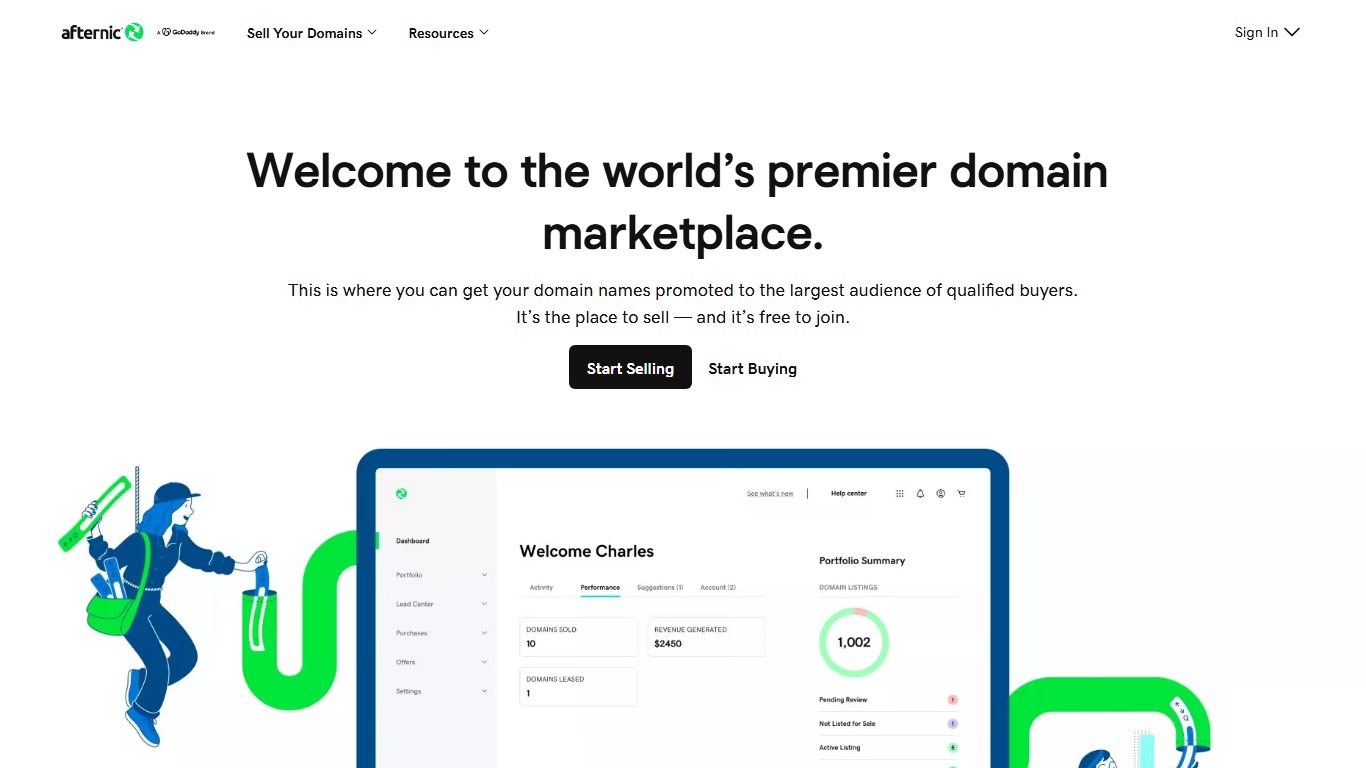
Fees. Afternic’s own pricing page sets a reduced 15% commission ($15 minimum) when your primary nameservers point to GoDaddy Aftermarket nameservers at the time of sale. Approved nameservers include afternic.com, dan.com and smartname.com. GoDaddy’s help center puts the standard rate at 25% for names on other nameservers. Afternic Boost, which pushes listings harder across the network, adds 5 points. Domain Details and Above.com, writing in July and September 2026, describe Boost as the default setting. That makes 30% standard and 20% on approved nameservers.
Catches. It’s the most expensive option on this list when Boost is on and your nameservers point elsewhere. Pointing nameservers to Afternic also means you can’t run your own site on the name while it’s listed.
Who it suits. Owners of generic .com names priced under about $10,000, where an impulse buy at a registrar checkout is the likeliest sale.
GoDaddy Auctions is the bidding side of the same company. Bidding on 7-day auctions and expired domains requires a membership that costs $4.99 a year. You can make offers without one. On expired names, a year of renewal is added to your winning bid. Payment is due within 48 hours of the auction closing.
Check your nameserver tier
Before you list on Afternic, confirm which nameservers qualify for the lower commission and whether Boost is on. On the same sale, the gap can be 15 points or more.
Sedo (and what its pending sale means)
Sedo is the oldest large marketplace, based in Germany and owned by IONOS. It runs auctions, Make Offer and Buy Now listings in 17 languages. It also runs SedoMLS, a network that distributes Buy Now names to partner registrars. Sedo’s own page says commission ranges from 10% up to a maximum of 20%, depending on sale type and TLD. Sedo has also dropped its minimum commission fee, which helps sellers of cheap names.
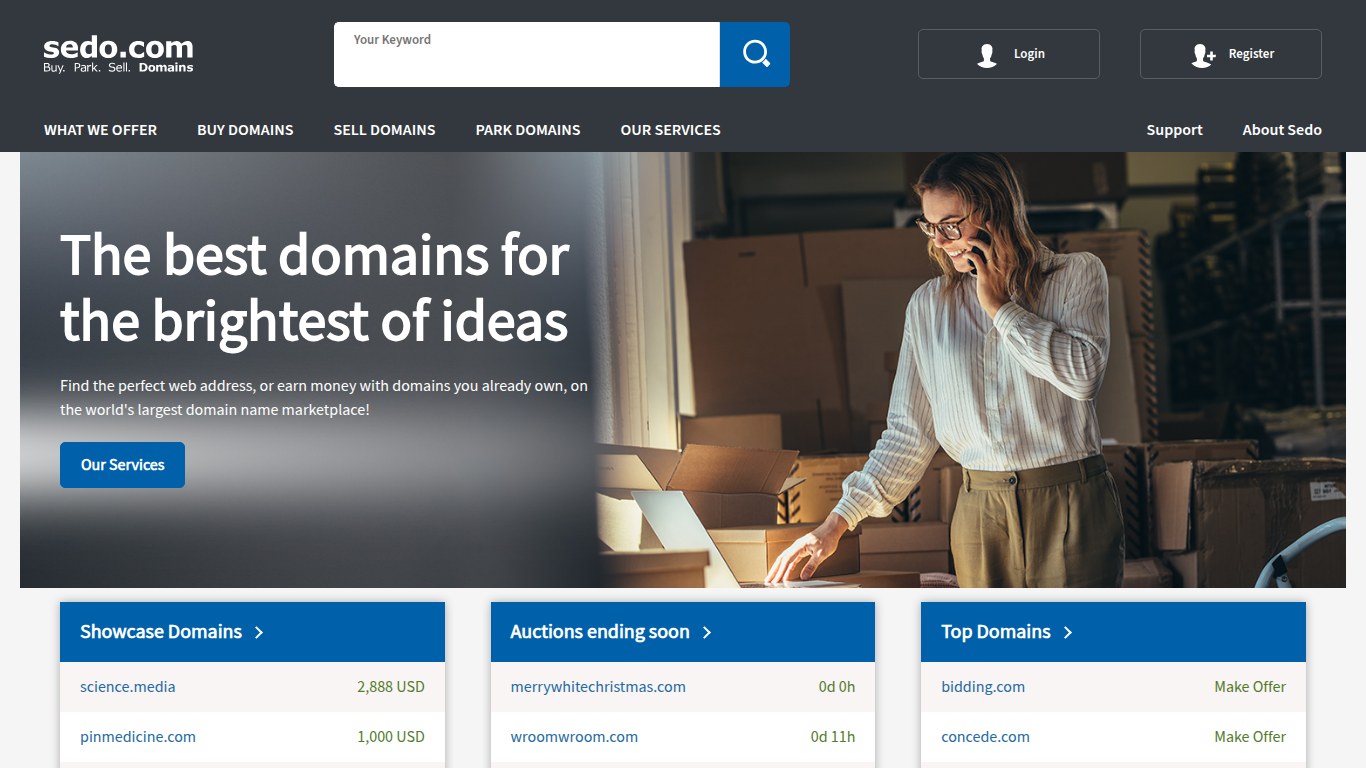
The sale. IONOS is selling Sedo. Domain Name Wire reported that Arthur Mai, a former Sedo managing director, became Sedo’s CEO on March 23, 2026. Sedo’s parking business has shrunk badly. DomainGang reported AdTech revenue of €6.86 million for the first half of 2026, against €239 million a year earlier, and linked the drop to Google’s PPC collapse.
What it means for you. Nothing changes on day one. Your listings, escrow and payouts keep running under Sedo’s current terms. New owners often change fees, though. Keep your listings in your own registrar account, not parked solely with Sedo, so you can move quickly if terms get worse.
Afternic or Sedo: which actually gets sales? Afternic usually wins for .com names, because of its registrar checkout placement in the US. Sedo is stronger for European ccTLDs like .de, .fr and .es, and for negotiated deals with non-English buyers. Most serious sellers list on both.
Did you know?
Sedo, one of the oldest domain marketplaces, is itself for sale. Webhosting.Today reported on October 15, 2026 that owner IONOS had missed its Q3 2026 target to close a deal.
Spaceship SellerHub
Spaceship is the newer registrar launched by Namecheap founder Richard Kirkendall. SellerHub is its marketplace, with Buy Now, Make Offer, lease-to-own and shareable checkout links. New sales cost 10% since February 2026. Buyer and seller can agree how to split that commission in Make Offer and lease-to-own deals.
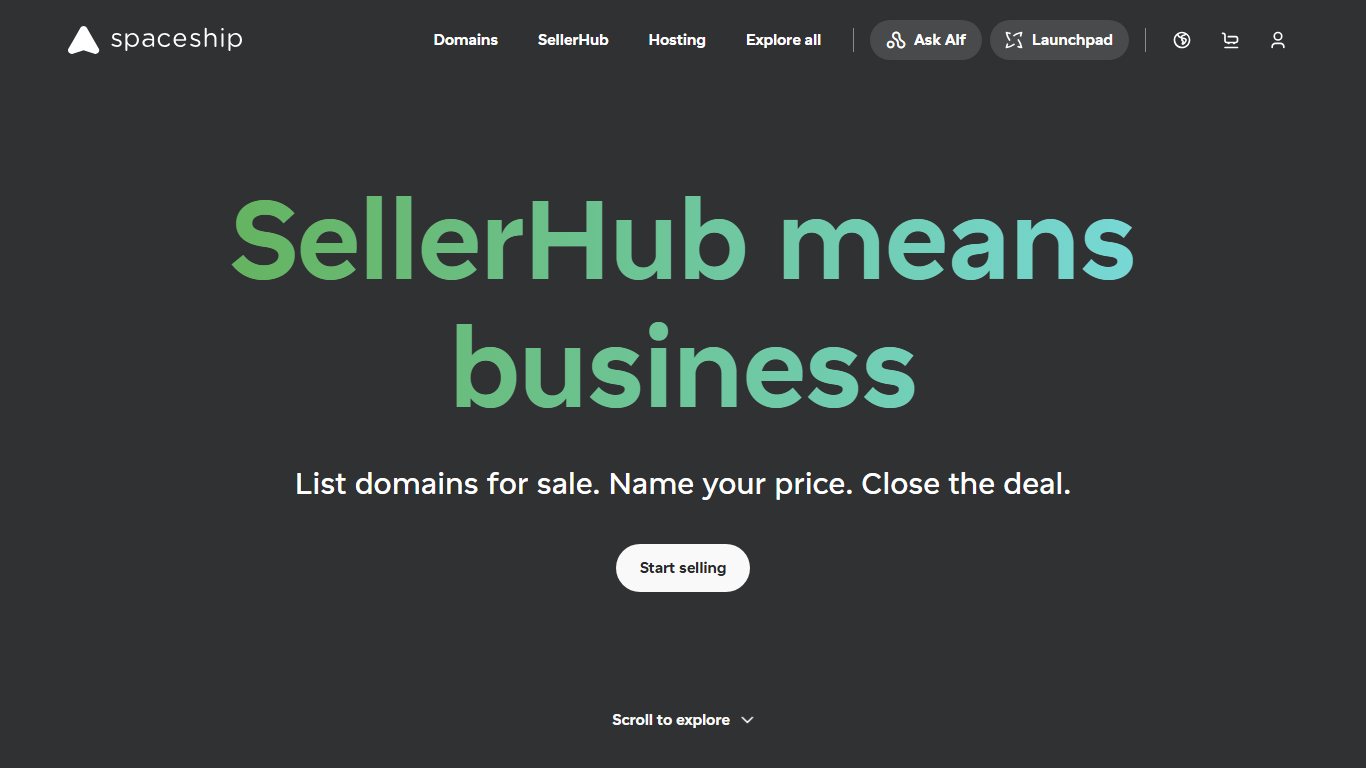
Is it still worth it at 10%? Yes, for most sellers. It still matches Sedo’s lowest tier and Namecheap. It’s also less than half of Afternic’s standard 25%. The catch is reach: Spaceship’s buyer traffic is smaller. Use it as the low-fee home for your listings and syndicate to Afternic for exposure.
Atom (brandables)
Atom, formerly Squadhelp, is a curated store for brandable names like invented words and short two-word .coms. It packages each listing with logos and pitches it to startups. If you’re looking for an alternative to DomainLions or Luxury Domains, Atom is the largest curated option.
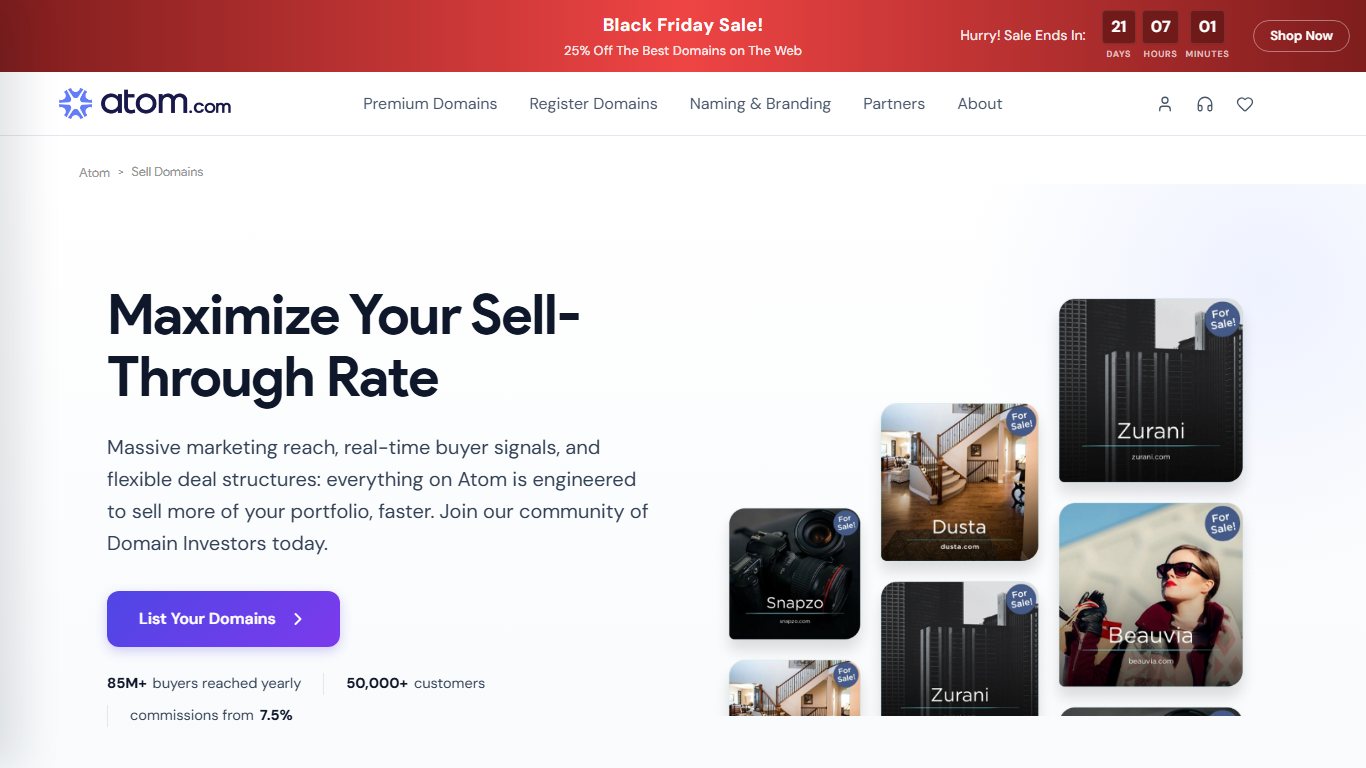
Reports from 2025 put Atom’s Plus listing level at 15%, down from the 20% it used to charge marketing-exposure names. Premium-tier listings pay a higher commission. Ultra-premium names get a custom rate agreed upfront. Atom must approve your names, and many get rejected. Compared with Afternic, Atom sells fewer names at higher prices, and only names that fit its brandable style.
Namecheap Marketplace
Namecheap’s knowledge base states a flat 10% commission on each Namecheap Market transaction. Buy Now listings must be registered in your Namecheap account. Prices can start at $5. That makes it a good fit for cheap hand-registered names that wouldn’t sell anywhere else. The buyers are mostly bargain hunters. Don’t expect five-figure sales here.
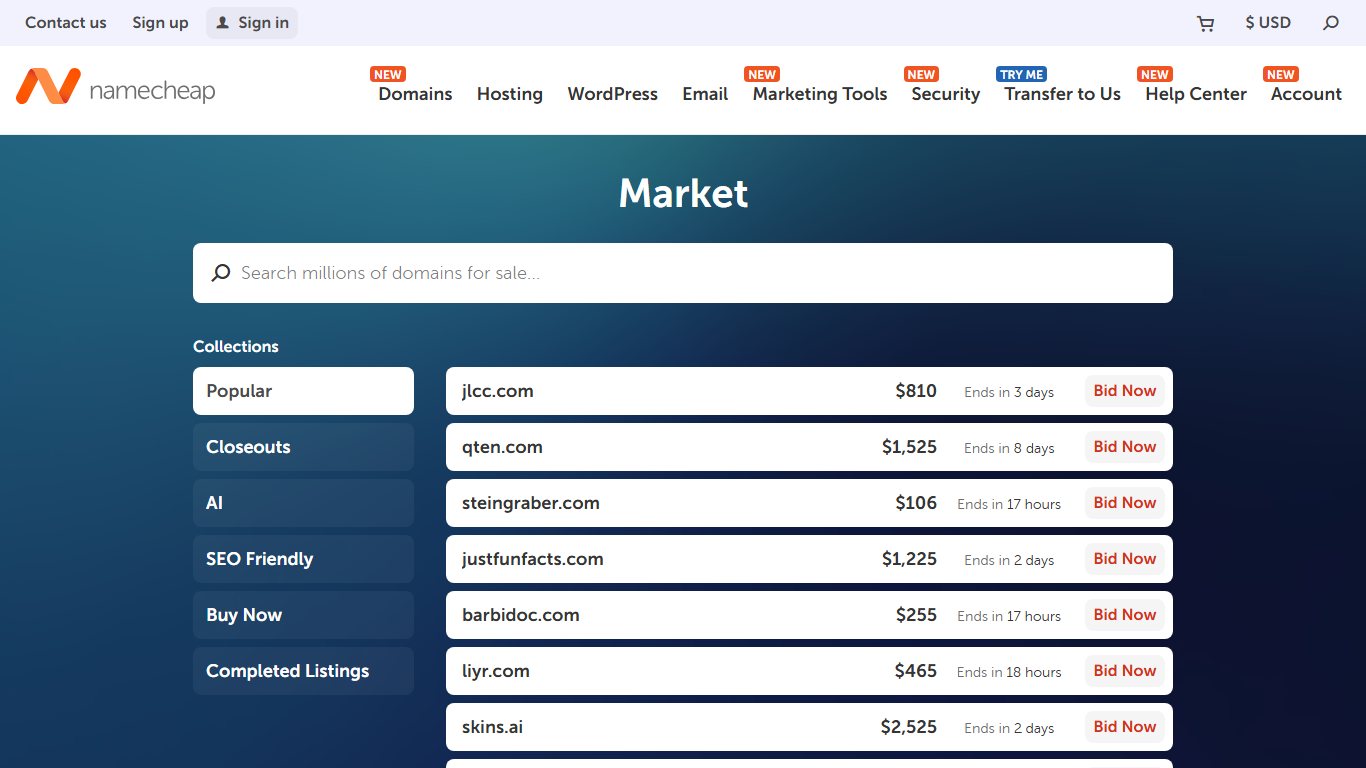
How Namecheap domain auctions work. You browse the listings, bid or buy, and the name moves into your Namecheap account after payment. The seller pays the 10%. Because both parties are on the same registrar, the transfer is an internal account push, not a slow registrar-to-registrar transfer.
Dynadot
Dynadot’s help pages say its marketplace charges 10% of the sale price with no listing fee. The site also runs Buy Now, Make Offer, user auctions and expired-domain auctions. Sale proceeds go into a Sales Balance. Processing takes 2 to 3 days. Converting the balance to Dynadot account credit earns a 2% bonus.
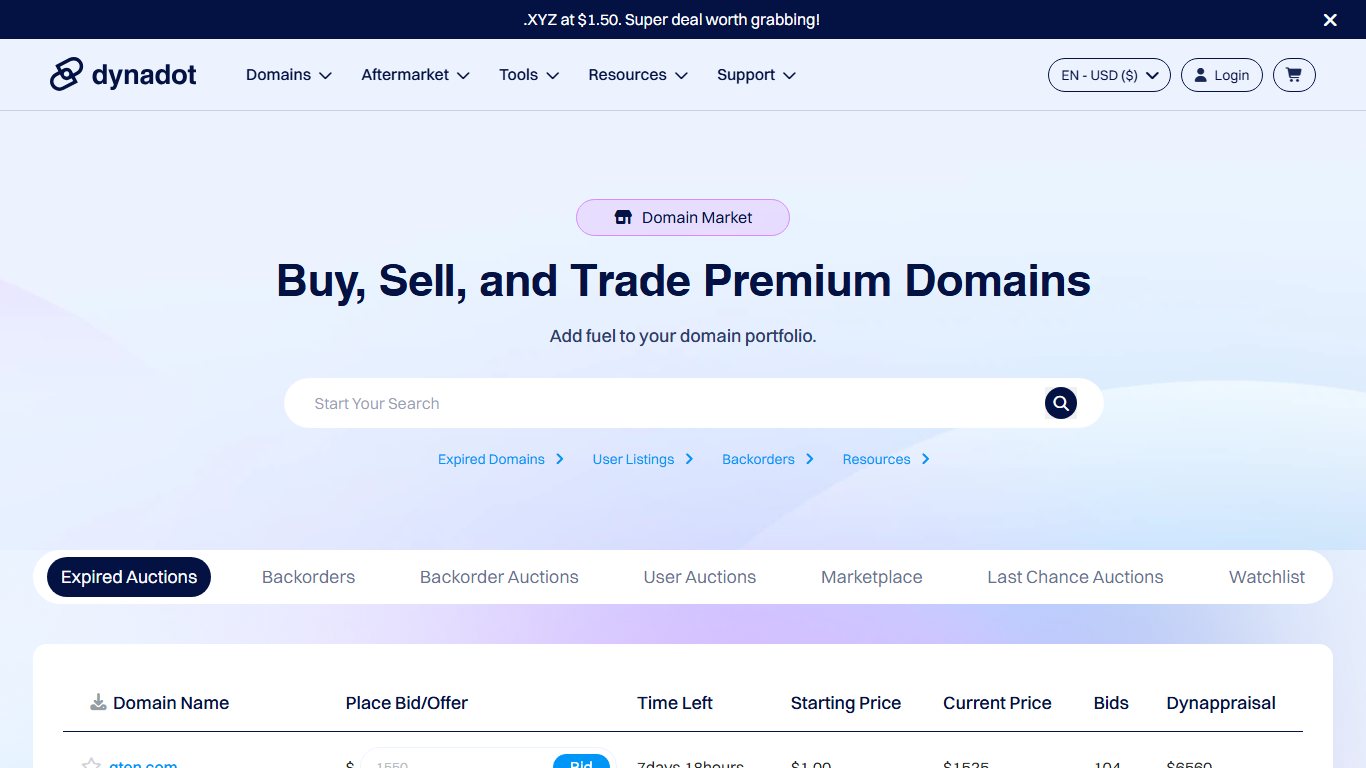
You can syndicate from Dynadot’s dashboard too. Afternic sales through it are charged 25% ($15 minimum) and SedoMLS sales 20%. Compared with Namecheap Market, the fee is identical. Dynadot’s auction tools are better if you also buy expired names.
Domain auction sites and expired-domain catchers
When a registration lapses and isn’t renewed, the name goes through a grace period and then drops. Drop-catchers try to grab it at that moment. If you’re the only person who backordered it, you pay the backorder fee. If several people did, it goes to a private auction among them.
DropCatch
DropCatch is the biggest drop-catching service for expiring .com and .net names. It’s a sister company of the registrar NameBright. Backorders typically start around $59, and you pay only if it catches the name. Contested names go to an auction. Its marketplace reportedly charges sellers 15%.
NameJet
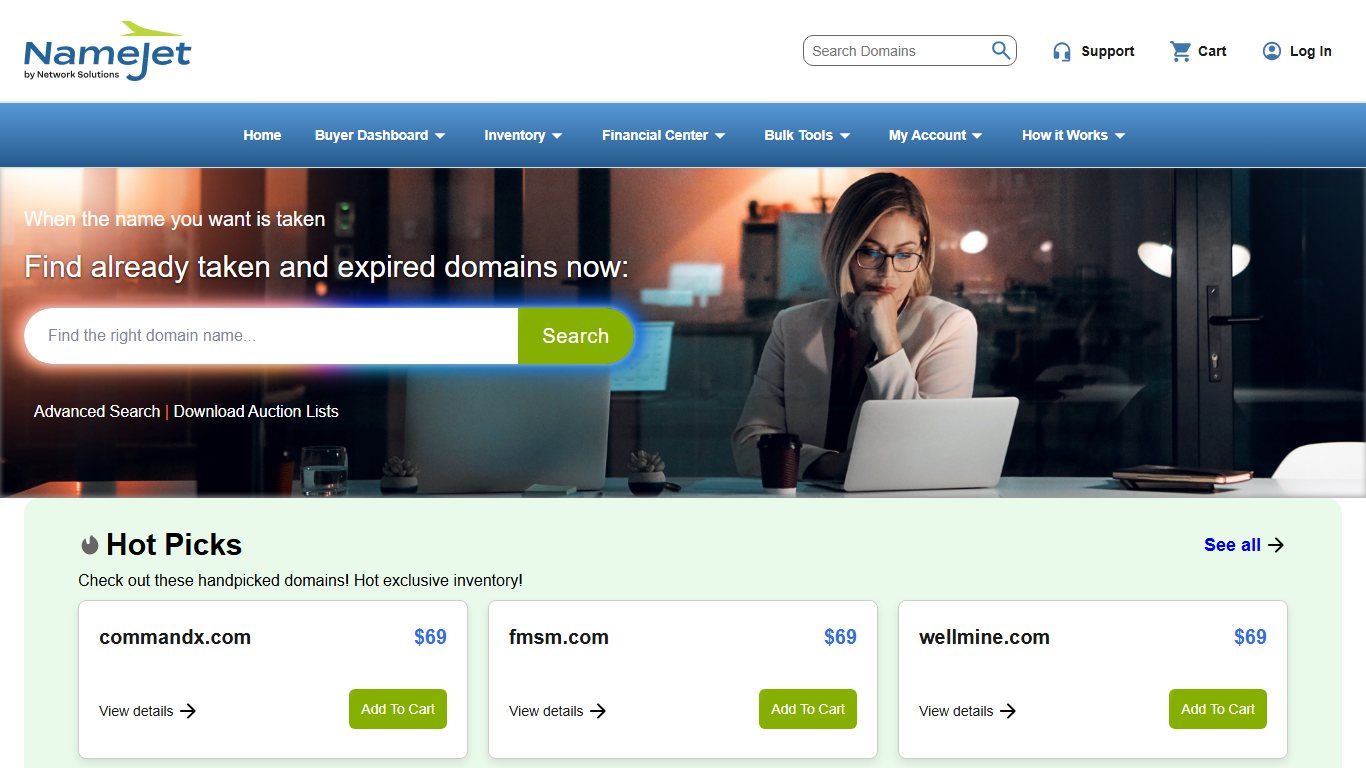
NameJet auctions pre-release inventory. These are expiring names from partner registrars that reach auction before they ever drop. Its reported seller commission is 20%. It’s a good second backorder alongside DropCatch, since each catches names the other can’t.
Park.io for ccTLDs
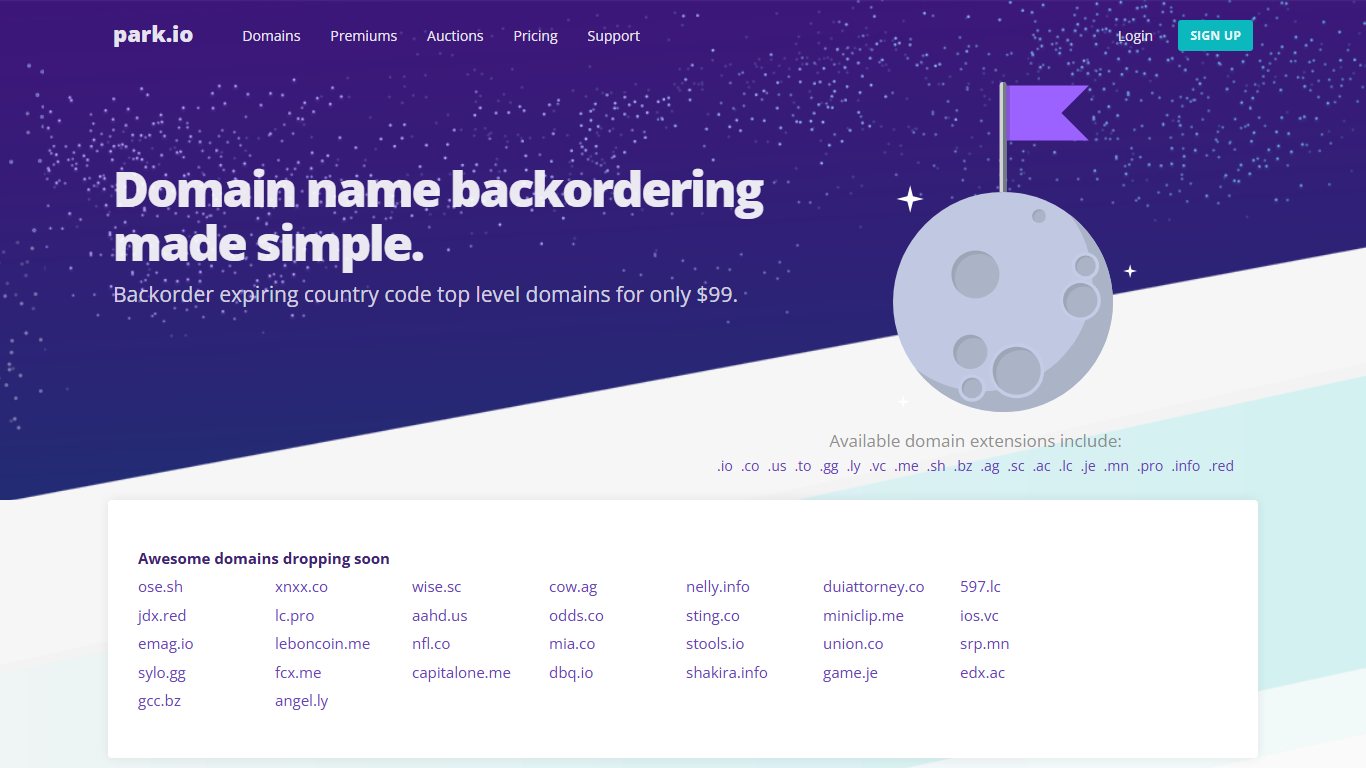
Park.io specialises in country-code names popular with startups, such as .io, .me and .co. An uncontested backorder costs a flat $99, which includes registration, and you pay only if it secures the name. When more than one person backorders, it opens an auction. Some premium names let you set a maximum backorder price instead.
GoDaddy expired auctions
Names that expire at GoDaddy go to GoDaddy Auctions before they ever drop. That makes it the first place to look for an expired GoDaddy name. You need the $4.99 membership, and the winning price adds a year of renewal.
How to avoid overpaying in a bidding war
Set a firm maximum before the auction starts and bid it once with a proxy bid. Many auctions extend the clock with each late bid, so last-second sniping rarely saves money. Check what similar names sold for on DNJournal’s weekly charts or NameBio. If you hit your limit, walk away. Another name will come along.
Set your ceiling first
Pick a firm maximum before joining any contested backorder or auction. Bidding wars on popular drops can run far past what you planned.
Aged and expired domains: worth it or a trap?
Aged domains are older names, often with existing backlinks. SEO buyers want them because authority supposedly carries over. Sellers like SEO.Domains pitch them as a ranking shortcut. Google’s spam policies say otherwise when the main purpose is manipulation.
What Google actually bans
In March 2024, Google added expired domain abuse to its search spam policies. It covers buying an expired domain and repurposing it mainly to manipulate rankings with low-value content. Google’s own example is casino content on a former school site. Enforcement is algorithmic and through manual actions.
Buying an old name is still allowed. Running a real business on one is fine. Building it into a link-juice farm unrelated to its past is what gets penalised.
How to check a domain’s past
A history check takes about five minutes:
- Look up the domain in the Wayback Machine and click through snapshots from several years.
- Watch for casino, pharma, adult, cracked-software or foreign-language spam content.
- Search Google for
site:domain.comto see whether anything is still indexed. - Check the backlink profile in a backlink tool for spammy anchors or link-farm sources.
- Check whether the name was ever used for phishing or malware. Email blocklists can follow a domain for years.
Run the Wayback Machine check
Look up any aged or expired name in the Wayback Machine before you buy. If it once hosted casino, pharma or spam content, walk away.
When an aged domain makes sense
An aged domain makes sense when you’ll build a genuine site on the same topic, or when the name itself is the brand you want. It doesn’t make sense as a way to buy rankings. A clean, short .com with a dull history is often worth more than one with flashy backlinks.
How to buy a domain someone else owns, step by step
To buy a taken name, check whether it’s listed, then negotiate. Pay only through a marketplace or a licensed escrow service. After the transfer, update DNS. The whole process usually takes a few days to two weeks.
Buy a taken domain
- Type the domain into your browser and look for a “for sale” landing page.
- Search Afternic, Sedo, Atom and Spaceship for the exact name.
- If it isn’t listed, check the WHOIS/RDAP record for a contact form or privacy-forwarding email.
- Make a specific, polite offer and set your maximum in advance.
- Pay through the marketplace checkout or Escrow.com, opened by typing the address yourself.
- Accept the transfer or push into your registrar account.
- Update nameservers or DNS, then set up email and your site.
The domain is parked and nobody answers. Many owners use privacy services, so WHOIS lookups show a forwarding address. Send two or three messages over a few weeks. If you hear nothing, hire a broker. Sedo and Atom both run brokerage services, priced on a quote-only basis. A broker can sometimes reach owners who ignore cold email.
How much should I offer?
Look at comparable sales first. DNJournal’s November 4, 2026 chart reported two seven-figure deals totalling $5.5 million and eight six-figure sales in a single week. Those are outliers. Most aftermarket .coms trade in the low four figures. Lowball offers of $100 on a name priced at $5,000 usually get ignored. Opening at 50% to 70% of a listed price is a reasonable start.
Lease-to-own and payment plans
Afternic, Spaceship and Atom offer lease-to-own. You pay monthly and the name transfers after the final payment. You can use it right away. Miss payments and you can lose the name and the money you paid. Spaceship keeps existing lease-to-own deals at 5% commission. Atom adds a surcharge on terms of 12 months or more.
Using a broker
Use a broker when the name is unlisted, the owner is unresponsive, or your budget is high enough that a bad negotiation costs real money. Brokers usually take a commission or a flat fee. Ask for the terms in writing before you start.
How long does the transfer take?
Fast Transfer names on Afternic often move within a day. A push between two accounts at the same registrar can be instant. A registrar-to-registrar transfer usually takes 5 to 7 days. Most registrars then block a further transfer for 60 days after a transfer or registrant change, so plan to keep the name where it lands for two months.
After it arrives, connect it to your site and set up email, for example Gmail for business on the new custom domain.
How to sell a domain and what you’ll really take home
To sell, list on one low-fee marketplace plus Afternic for exposure. Price realistically, and point nameservers to a platform’s lander when that lowers the commission. Your payout is the sale price minus commission and any payout fees.
Pricing your domain realistically
Look up comparable sales and price within that range. A common complaint goes, “I listed my domains everywhere for a year and nothing sold.” That usually means the prices were too high or the names too weak. Most investors sell only a small share of their portfolio each year. Renewal fees add up, so drop names that get no inquiries after two or three years.
Listing on several marketplaces without conflicts
Use the same price everywhere. If you set the name up for instant purchase, let only one network handle Fast Transfer, or you risk selling it twice. The landing page your nameservers point to decides which marketplace’s lander a buyer sees. Choose the one with the lowest fee that you trust.
Your Dan.com listings. Dan.com listings moved onto Afternic’s terms. Log in to your Afternic account, check that the names, prices and payout details are correct, and review your nameservers. Dan nameservers still count toward Afternic’s lower tier.
The payout math
The table shows what you keep from a $2,000 sale before payment-processing or withdrawal fees. Rates are as of November 2026.
| Platform | Commission rate used | Fee | Your payout | Condition |
|---|---|---|---|---|
| Sedo (low tier) | 10% | $200 | $1,800 | Sale type and TLD qualify for 10% |
| Spaceship SellerHub | 10% | $200 | $1,800 | New sale, seller pays full fee |
| Namecheap Market | 10% | $200 | $1,800 | Name in your Namecheap account |
| Dynadot Marketplace | 10% | $200 | $1,800 | Sold on Dynadot’s own marketplace |
| Afternic | 15% | $300 | $1,700 | Approved nameservers, Boost off |
| Atom (Plus) | 15% | $300 | $1,700 | Plus listing level |
| Afternic | 20% | $400 | $1,600 | Approved nameservers, Boost on |
| Sedo (high tier) | 20% | $400 | $1,600 | Sale type or TLD at the 20% cap |
| Afternic | 25% | $500 | $1,500 | Other nameservers, Boost off |
| Afternic | 30% | $600 | $1,400 | Other nameservers, Boost on |
The gap between the best and worst case on the same $2,000 sale is $400. That gap is why nameserver settings matter more than which logo is on the lander.
Domain marketplace scams and how to stay safe
The biggest risk in a private deal is fake escrow. That’s a site made to look like a real escrow service so you transfer the domain before any money exists. Escrow.com warns that these sites copy its branding. A real marketplace checkout or an escrow site you typed in yourself prevents nearly all of these scams.
Before you transfer anything
Never hand over a domain or auth code until your own login to the escrow site shows the funds as secured. A screenshot or email isn’t proof.
| Red flag | What the scammer wants | What to do instead |
|---|---|---|
| Buyer insists on “their” escrow site | Your domain, with no payment | Use Escrow.com or the marketplace, typed in by hand |
| Look-alike address, like escrow-secure.net | Your login or your transfer | Check the exact spelling before logging in |
| “Get an appraisal from our partner first” | A $50 to $200 appraisal fee | Ignore it. Real buyers don’t require paid appraisals |
| Pressure to finish today | Mistakes from rushing | Slow down. Real deals survive a day’s delay |
| Request to skip escrow and wire money | Money with no domain | Never wire outside escrow |
| Dashboard showing a “balance” awaiting your transfer | Domain first, money never | Log in to the escrow site yourself to confirm |
Fake escrow sites
The pattern is predictable. A buyer emails an offer, agrees fast, and suggests an escrow site you’ve never heard of. The site looks professional and shows funds “secured.” Once you transfer the domain, the site and the buyer vanish. If someone emails offering to buy your domain but wants you to use their escrow, treat it as a scam until proven otherwise.
“Pay for an appraisal first” scams
An enthusiastic offer comes in, conditional on a “certified appraisal” from a specific site. The appraisal fee is the whole scam. No buyer ever follows up.
Stolen domains being resold
Thieves who hijack registrar accounts sometimes list names cheaply, hoping for a quick sale. A premium name priced far below market, a seller who wants payment outside the marketplace, or a recent registrant change in WHOIS are all warnings. Stolen names can be clawed back, leaving you with neither the name nor your money.
Which marketplace should you use?
Match the platform to the type of domain and your goal. Use the backup as a second listing or second backorder.
| Your domain or goal | Best first choice | Backup | Why |
|---|---|---|---|
| Selling a generic .com under $10,000 | Afternic (approved nameservers) | Spaceship SellerHub | Registrar checkout reach, then a 10% low-fee home |
| Selling a brandable invented word | Atom | Afternic | Curated buyers who pay for brandables |
| Selling a European ccTLD (.de, .fr) | Sedo | Afternic | 17 languages and European buyers |
| Selling cheap hand-registered names | Namecheap Market | Dynadot | 10% and prices from $5 |
| Buying a taken name for your business | Check the landing page, then Afternic and Sedo | Broker | Escrow-backed checkout |
| Catching an expiring .com | DropCatch | NameJet | Strongest catch rate, pre-release auctions |
| Catching an expiring .io | Park.io | DropCatch | ccTLD specialist, $99 flat |
| Expired names from GoDaddy | GoDaddy Auctions | DropCatch | Names reach auction before they drop |
| Talking with other investors | NamePros forums | DNJournal sales charts | Community deals and price data |
Did you know?
Shop.com and AI.com alone make up about 83% of the more than $203 million in $1M+ domain sales publicly reported in 2026, according to Strategic Revenue. DNJournal lists AI.com at $70 million, sold in February.
A good next step is to pick one goal from the table above and use only the first-choice platform for it this week. Sellers should check their Afternic nameserver tier before anything else. Buyers should set a ceiling and type the escrow address by hand.
FAQ
What is the best domain marketplace?
For sellers, Afternic has the widest reach and Sedo or Spaceship have lower fees. Most sellers list on Afternic plus one low-fee site. For buyers, the best marketplace is whichever one already lists the name you want, as long as you pay through its escrow.
What is the best domain auction site?
GoDaddy Auctions has the biggest supply of expired names. DropCatch is strongest for names that actually drop. For .io and similar ccTLDs, Park.io is the specialist.
How much does Afternic charge to sell a domain?
Afternic charges 15% ($15 minimum) when your nameservers point to approved GoDaddy Aftermarket nameservers at the time of sale. Otherwise it charges 25%. Boost adds 5 points, making it 20% or 30%.
Is Sedo still safe to use now that it’s being sold?
Yes. Sedo keeps running normally while IONOS looks for a buyer, and escrow and payouts work as before. Watch for fee changes after any deal closes.
What happened to Dan.com?
GoDaddy shut Dan.com down and moved its listings onto Afternic’s terms instead of deleting them. Lease deals migrated in November 2024. Sellers now pay Afternic rates instead of Dan’s old 9%.
How do I buy a domain that is already taken?
Check the name in your browser for a “for sale” page, search the major marketplaces, then contact the owner or hire a broker. Pay only through a marketplace or Escrow.com.
Are aged domains worth buying for SEO?
Only when you’ll build a genuine site related to the name. Google has treated buying expired domains mainly to manipulate rankings as spam since March 2024. It enforces this through its algorithms and manual actions.
Is there a free domain marketplace?
Listing is free almost everywhere. Selling isn’t. Expect a commission of 10% to 30% when a name sells.
How does Namecheap domain auction work?
You bid or buy on Namecheap Market, and the name moves into your Namecheap account after payment. The seller pays a flat 10%.
Do I need a GoDaddy Auctions membership to bid?
Yes, to bid on auctions and expired names. It costs $4.99 a year. Making an offer doesn’t require it.
How long does a domain transfer take after buying from a marketplace?
Fast Transfer and same-registrar pushes can take minutes to a day. Registrar-to-registrar transfers usually take 5 to 7 days. Expect a 60-day lock on moving the name again afterward.