

As of November 2026, Blender (version 5.3, released 10 November 2026) is the strongest free choice for 3D animation, and its Grease Pencil tools also handle 2D. For free hand-drawn 2D work, start with Pencil2D or OpenToonz. Autodesk Maya is still the paid standard in film and games. Quick marketing videos are faster to make in browser tools like Animaker, Renderforest or Powtoon. Adobe Animate is still sold, but Adobe moved it into maintenance mode in February 2026, so it gets fixes and no new features.
Animation software is one of the easiest ways to make short animated videos. If you need marketing videos, explainers or video tutorials that look professional without a steep learning curve, it is the right kind of tool.
This guide covers a range of animation tools for different skill levels and budgets. Before the list, here is how to work out which kind of tool fits you.
Your first choice is between 2D and 3D animation. 2D is the traditional style, drawn on a flat plane. 3D is more realistic and handles detailed scenes, but it takes more time to learn.
Three other things to check:
- Usability: How quickly can you get started and finish your first project? Do you need prior knowledge?
- Functions: Does it have everything you need? Can you add voiceovers and sound effects? Can you post straight to social media?
- Cost: Is it free, a one-off purchase or a subscription? Is there a free plan or trial so you can try it before you pay?
The 12 best animation tools compared
The table below compares all 12 tools on type, platforms, price and the kind of user each one suits best. Prices are US list prices as of November 2026. Subscription prices change often, so confirm on the vendor’s own pricing page before you pay.
| Tool | Type | Runs on | Price (Nov 2026) | Best for |
|---|---|---|---|---|
| Adobe Animate | 2D vector, interactive | Windows, macOS | Creative Cloud subscription only | Existing Animate users, HTML5 Canvas and AIR projects |
| Autodesk Maya | 3D | Windows, macOS, Linux | About $255/month or about $2,010/year; cheaper Indie licence for small earners | Film, TV and game studios |
| Renderforest | Online templates | Web browser | Free with watermark; paid plans from under $10/month billed yearly | Logo reveals, intros, quick promos |
| Pencil2D | 2D frame-by-frame | Windows, macOS, Linux | Free, open source | Beginners and hand-drawn animation |
| Animaker | Online 2D and explainer | Web browser | Free with watermark; paid from about $15/month billed yearly | Small business explainers |
| OpenToonz | 2D production | Windows, macOS, Linux | Free, open source | Serious 2D and studio pipelines |
| Synfig | 2D vector, tweening, bones | Windows, macOS, Linux | Free, open source | Cut-out animation without drawing every frame |
| KeyShot | 3D rendering and product animation | Windows, macOS | Professional about $1,299/year | Product designers and engineers |
| K-3D | 3D modelling | Older builds only | Free, no longer maintained | Historical interest only |
| Blender | 3D plus 2D (Grease Pencil) | Windows, macOS, Linux | Free, open source | Almost everyone, beginner to pro |
| PowToon | Online presentation animation | Web browser | Free with watermark; paid from about $15/month billed yearly | Presentations, training and sales videos |
| Animation Paper | 2D hand-drawn, pencil-test style | Windows, macOS, Linux | Development builds offered free; check current terms | Traditional animators |
The list was put together from vendor documentation, release notes and current pricing. Each tool was judged on four things, in this order: how reliable and actively maintained it is, how well it does its main job, what it really costs over a year, and how easy it is to learn. Maintenance comes first because an unmaintained tool can stop working after one operating system update. That is why K-3D sits on the list with a clear warning, and why Adobe Animate’s 2026 status gets a full explanation below.
What animation tools are and how they work
Animation tools turn a series of images, shapes or 3D models into moving pictures. You then export the result as a video, GIF or web file to share online. Any of them can be learned with the right tool and some patience, even though animation looks hard from the outside.
Animation software combines visual elements such as shapes, colour, text, drawings, photos and 3D models into animated scenes and films. You can watch the result online, put it on a website or share it on social media.
There are two main types of animation software: two-dimensional (2D) and three-dimensional (3D).
2D animation software
2D software works on a flat plane, the same way a drawing on paper does. Some tools are bitmap-based, which means they paint with pixels, like Pencil2D’s bitmap layers. Others are vector-based, which means they store shapes as maths and can scale to any size without going blurry, like Synfig or Adobe Animate. Some artists still draw on paper and scan the drawings in. Most now draw straight into the software with a pen tablet.
2D tools are usually simpler and cheaper than 3D packages, and many of the best ones are free. The trade-off is labour. In traditional frame-by-frame animation you draw every frame, so a short clip can mean hundreds of drawings. Vector tools with tweening (where the software draws the frames between your key poses) and bone rigs reduce this a lot.
3D animation software
3D animation builds characters, objects and environments as digital models in a virtual space, so they look three-dimensional on screen. 2D imagery has no real depth. Once a 3D model is built and rigged (given a digital skeleton), you can pose it, move the camera anywhere and render as many frames as you like, without redrawing anything.
That is why 3D tools let designers make lifelike people, objects and places much faster than drawing them by hand once the assets exist. The cost is a steeper learning curve and more demanding hardware. Rendering in particular needs a capable graphics card.
Online template tools
Animaker, Renderforest and PowToon are a third category. They run in a web browser and give you ready-made scenes, characters and templates. You arrange and edit them instead of animating from scratch. They are the fastest route to a marketing or explainer video, but you have far less creative control.
How to choose the best animation software
The best tool is the one that matches what you want to make, your budget and how much time you can spend learning. A teacher making a two-minute explainer and a student aiming for a studio job need very different tools.
Animation is easier to get into than ever. Many applications let you make your own animated videos without spending years learning every feature first. For a beginner, the right tool gets you to a finished first video. For an experienced animator, it removes repetitive work and fits into a production pipeline.
Look for these things when you compare tools.
An interface that is easy to use
Someone with no experience should be able to find the main tools and finish a short project in a day. You should be able to move between menus, tools and settings without getting lost. Browser tools like Animaker and PowToon are the easiest here. Blender and Maya pack in far more power and take weeks to feel comfortable.
Accessibility and where your files live
You may want to work from different computers or places. Cloud tools such as Renderforest, Animaker and PowToon keep projects online, so any browser can open them, but you need an internet connection and an active account. Desktop tools such as Blender, Pencil2D and OpenToonz keep files on your own drive. That works offline, and your files stay usable even if a company changes its plans. Back them up either way.
Export formats and sharing
Check that the tool exports what you need. That might be MP4 for YouTube, GIF for chat apps, image sequences for editing, or HTML5 for websites. If your export lands in the wrong format, a good video converter software package can change it into another container or resolution without re-rendering the animation.
Audio support
Lip-sync and timing depend on sound. Most desktop tools let you import an audio track and scrub through it. Online tools usually include stock music, sound effects and sometimes AI voiceovers.
Total cost over a year
A monthly price can hide the real cost. Maya at roughly $2,010 a year and Blender at $0 can both make a professional animated short. Online tools often limit exports, resolution or commercial rights on cheaper plans, so check exactly what each tier includes.
How actively it is maintained
Software that no longer gets updates can break after a Windows or macOS update and may carry unpatched security bugs. Look for recent release notes before you invest time in learning a tool.
1. Adobe Animate
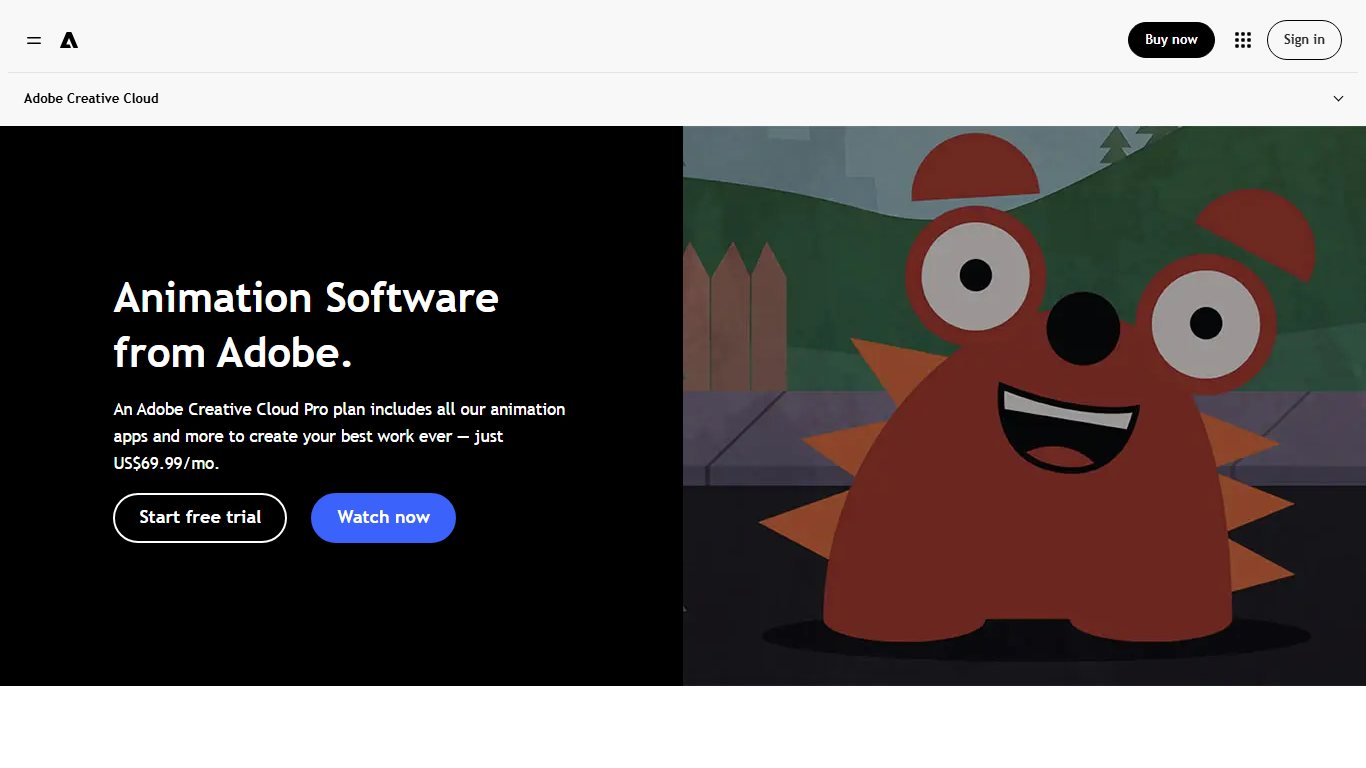
Adobe Animate is Adobe’s vector animation and interactive media app. It is used to make vector graphics and animation for TV series, online video, websites, web apps and games. In February 2026 Adobe put Animate into maintenance mode. It is still sold and still gets security and bug fixes, but it gets no new features.
Adobe Animate in 2026: maintenance mode explained
Early in February 2026, Adobe sent customers an email suggesting Animate would be shut down. After a strong backlash from animators, including a petition against a March 2026 shutdown, Adobe reversed course within days. Its community team admitted the earlier email “did not meet our standards” and caused confusion.
Under maintenance mode, the app stays available to new and existing users and keeps getting security and bug fixes, with no new features. Adobe’s own Animate FAQ, updated 9 June 2026, says there are no plans to discontinue it. Some websites later claimed a September 2026 shutdown date. Adobe’s documentation does not support that claim.
In practice, Animate is a safe tool to keep using for current projects. It is a riskier one to build a new career skill set around, because it will not gain new features while competitors keep moving.
Where Adobe Animate came from
Animate’s history goes back to FutureSplash Animator, a vector graphics and animation app released in May 1996. It was made by FutureWave Software, a small company whose first product, SmartSketch, was a vector drawing app for pen-based computers.
FutureSplash Animator made 2D vector animations and supported shape tweening (morphing), gradients, simple text and alpha transparency on top of basic movement tweens. Macromedia bought FutureWave in December 1996 and renamed the product Flash. Adobe bought Macromedia in 2005, and in 2016 Flash Professional was renamed Adobe Animate. The new name reflected its shift towards HTML5 Canvas and other web standards.
Adobe ended support for the Flash Player browser plug-in on 31 December 2020. Animate kept the Flash-era timeline, symbols and ActionScript 3.0 for Adobe AIR projects, but most new web output now uses HTML5 Canvas instead.
Features
Animate is a multimedia authoring and animation app. Its main features:
- Interactive animation for many platforms: Make native HTML5 Canvas content, publish to Adobe AIR for desktop and mobile apps, and export video for broadcast and social media.
- Advanced drawing tools: Pressure- and tilt-sensitive vector brushes, plus brush management and stroke smoothing that make tablet drawing feel natural.
- Interactive vector animation: Build animations for games, mobile apps and the web with the same timeline and symbol system.
- Motion graphics: Animate titles, explainer graphics and character scenes for video and websites.
- Many publishing targets: Publish to HTML5 Canvas, WebGL, Adobe AIR and custom platforms, reaching desktop browsers, mobile devices and TV workflows.
- Familiar Adobe interface: The layout follows other Adobe apps such as Photoshop and Illustrator, so switching is easier if you already use them.
You can draw your own artwork or start from templates and assets. Finished work can be saved as GIF, MP4 video, HTML5 Canvas, WebGL output or SVG.
Pros
- Cross-platform output: Publishing as an HTML5 Canvas document avoids the old Flash Player and browser compatibility problems, because Canvas runs in every modern browser.
- One project, many devices: Animate can produce files for desktop and mobile. Set the target values in the publish settings before you export.
- Code Snippets panel: If you have used Flash Professional, you will know this one. It inserts ready-made code for common tasks such as stage events and timeline control.
- Industry history: Plenty of TV animation and web game work has been made in Flash and Animate, so there are many tutorials and experienced artists around.
Pricing
Animate is only sold through Adobe Creative Cloud. You can buy it as a single-app subscription or get it in Adobe’s all-apps plan, which is called Creative Cloud Pro in the US. There is no free version and no one-off purchase. Adobe usually offers a short free trial. Check Adobe’s plans page for the current price in your country, because Adobe prices by region.
One fair criticism: with no new features coming, you keep paying a full subscription for software that is frozen. Many users have pointed this out since the February 2026 announcement.
Who it suits
Animate suits animators and studios that already have Animate projects, rigs and libraries, and developers maintaining HTML5 Canvas or AIR content. New learners who want a long-term 2D tool should look hard at OpenToonz, Toon Boom Harmony (a paid industry standard for TV) or Blender’s Grease Pencil before they commit.
2. Autodesk Maya
Autodesk Maya is a high-end 3D animation, modelling, simulation and rendering package. It is used across feature films, TV visual effects and AAA games. Maya 2027, the current version, shipped in March 2026.
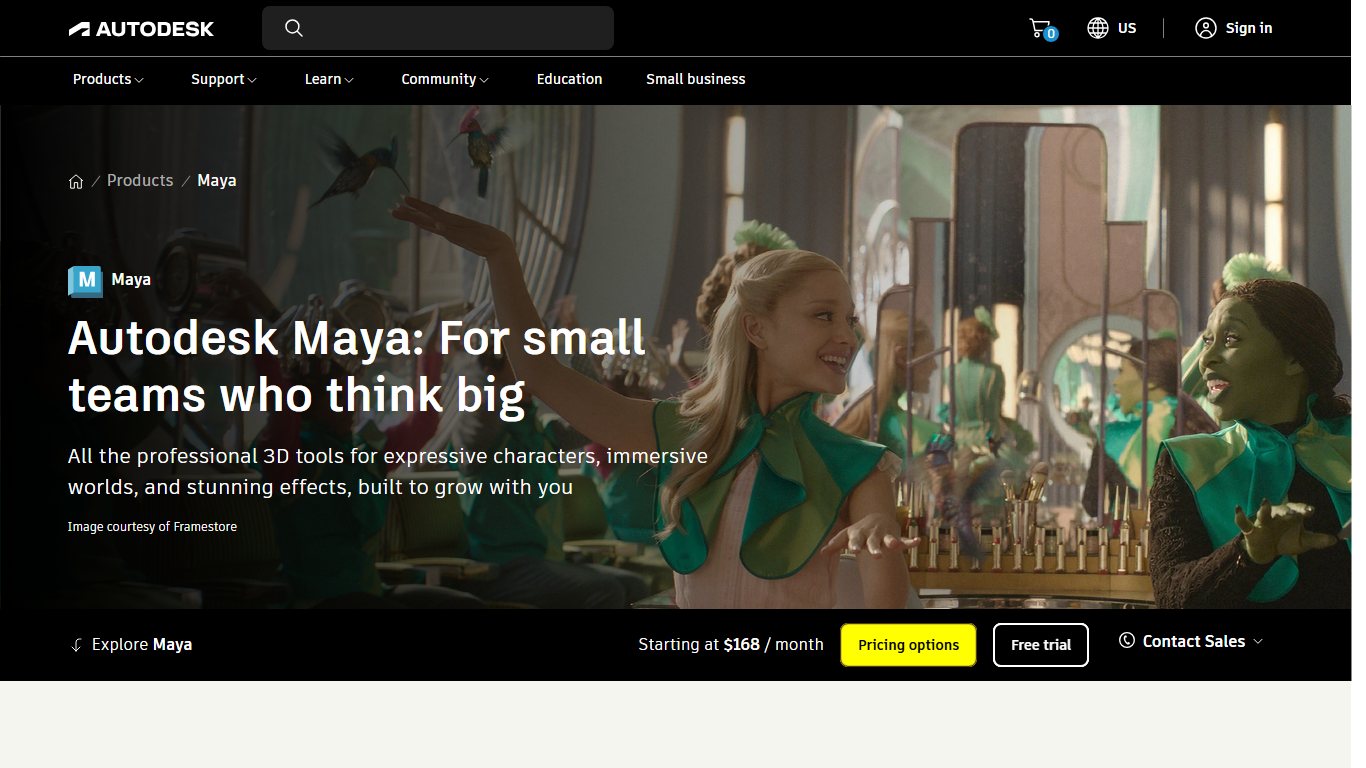
Maya started at Alias|Wavefront in 1998. Autodesk took it over when it bought Alias in 2006. Studios value it most for character animation and rigging, and for how far it can be customised with Python and MEL scripting to fit a production pipeline.
Features
Maya covers the whole 3D pipeline, but its modelling and animation tools are what most people buy it for:
- Quad Draw: Part of the Modeling Toolkit. It lets you draw new polygons straight onto the surface of another model, which is the standard way to retopologise (rebuild clean geometry over) a sculpt.
- Component mode: Select and edit individual vertices, edges or faces. Working on one part at a time makes it easier to see what you are doing and gives more accurate models.
- Soft Selection: Move a group of vertices with a smooth falloff, so changes blend gradually into the surrounding geometry instead of creating hard creases.
- Symmetry modelling: Mirror edits across an axis, so a change on one side of a face or vehicle is copied to the other.
- Shape Editor: Manage blend shapes, the sculpted target shapes used for facial expressions and corrective deformations.
- Animation tools: Graph Editor, Time Editor, motion trails and a mature rigging toolset for building character skeletons and controls.
- Bifrost and Arnold: Bifrost handles procedural effects such as fluids and particles. Arnold, Autodesk’s production renderer, comes with Maya.
Pros
Maya is complex, but it is built to be learned in stages. You can make good-looking models and animations without knowing every tool, then pick up new techniques as projects need them.
The interface is customisable. You can rearrange panels, build shelves of your favourite tools and change hotkeys to suit how you work. If you have used another 3D package, the basic viewport navigation will feel familiar quickly.
Its biggest advantage is the job market. Many film, VFX and game studios run Maya pipelines, so Maya skills are directly employable. In-house tools are often written for Maya, and job ads list it constantly.
The honest downside is that Maya is not easy for complete beginners. Many artists find Blender quicker to get going in, and Maya’s price is hard to justify for hobby work.
Pricing
Maya is subscription-only. US list prices reported for Maya 2027 are about $255 a month or about $2,010 a year, with three-year terms also available. Autodesk’s own pages have shown slightly different figures in some regions, so check the buy page for your country.
Two cheaper routes:
- Maya Indie: A reduced-price licence of a few hundred dollars a year for freelancers and small studios earning under $100,000 a year, available in selected countries.
- Education licence: Free for students and educators for non-commercial learning.
Autodesk also sells Flex tokens for occasional pay-per-day use.
Who it suits
Maya suits students heading for studio jobs, working animators in film, TV and games, and teams with established Maya pipelines. If you are learning 3D for fun or freelancing on a tight budget, start with Blender and move to Maya when a job or client requires it.
3. Renderforest
Renderforest is a cloud-based video maker for intro videos, explainer animations, kinetic typography, promo videos, music visualisations, slideshows, app promos, invitations, presentations, infographics and logo animations. It runs in a web browser and is built around templates, so you need no animation skills.
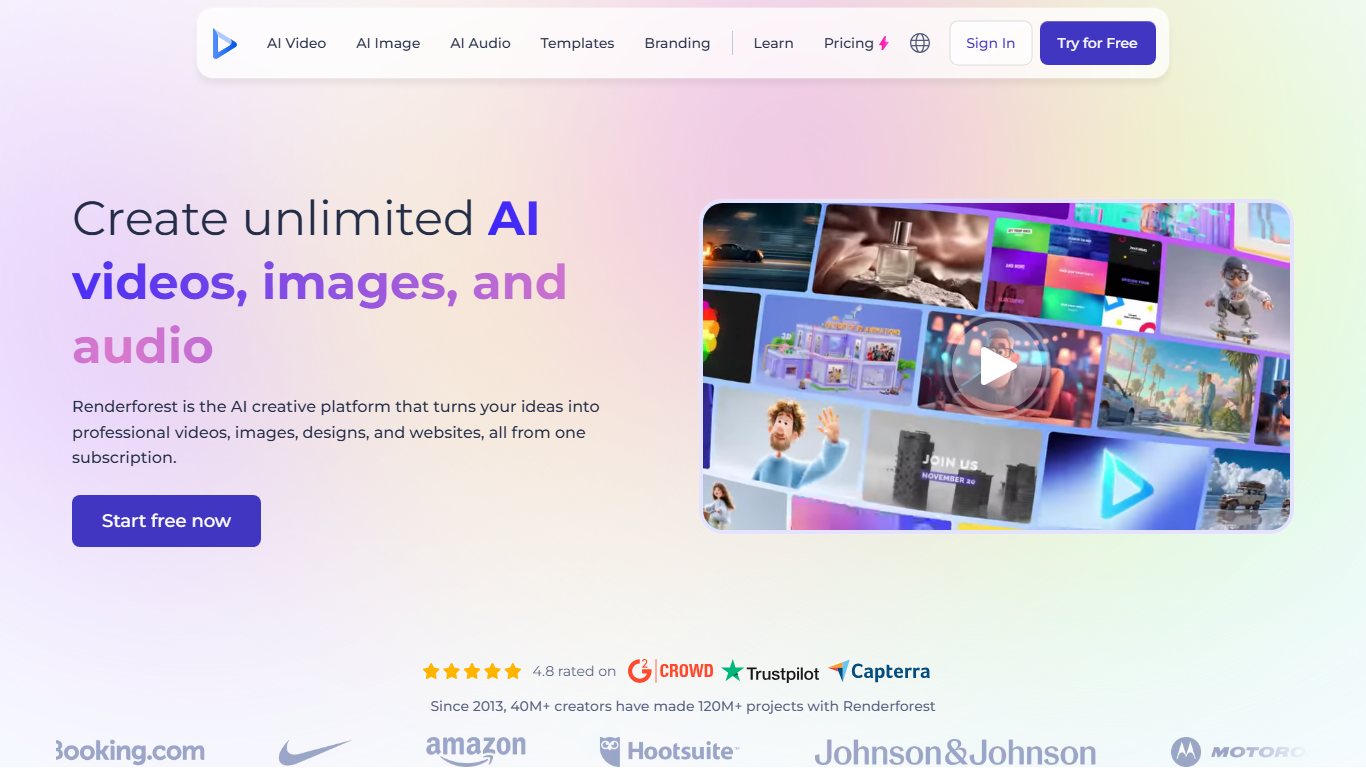
The service was founded in 2013 and is built on a simple idea: everyone has a story to tell, and short videos are an effective way to tell it at work, online or to clients. Renderforest aims to turn that story into a finished, professional-looking video in minutes instead of days.
Features
Renderforest works like a guided video builder:
- Template library: Pick a template for an intro, explainer, promo, slideshow or presentation, then swap in your own text, colours and media.
- Logo animation: Upload a logo and get an animated reveal. This is one of the service’s most popular features.
- Media upload: Add your own photos and video clips, or use stock footage.
- Music library: Choose a soundtrack from the built-in library, or upload your own audio.
- Beyond video: The same account includes tools for logos, mockups and simple websites, which helps small businesses keep branding consistent.
Businesses use the animations for promo videos, company presentations, teasers, intros and logo reveals.
Pros
- No technical knowledge is needed; you can finish a first video in minutes.
- Runs in any modern browser, so you can edit on almost any computer.
- Large template library covering most common marketing formats.
- Logo animation and branding tools in the same place.
The trade-off is control. You can only change what the template allows, and popular templates can look familiar to people who watch a lot of marketing video.
Pricing
Renderforest has a free plan, but free exports carry a Renderforest watermark and are limited to low resolution. The paid plans are Lite, Pro and Business. Pricing reported in late 2026 puts annual billing at under $10 a month for Lite, rising to around $39 a month for Business, with monthly billing costing more. Higher tiers unlock 1080p and 4K exports and more downloads. Renderforest runs frequent promotions and different prices in its mobile apps, so check the live pricing page before you buy.
Who it suits
Renderforest suits small business owners, marketers and YouTubers who need a polished intro, logo reveal or promo quickly and do not want to learn animation. It is a poor fit if you want to make original character animation.
4. Pencil2D
Pencil2D is a free, open-source app for traditional hand-drawn (frame-by-frame) 2D animation. It runs on Windows, macOS and Linux and uses both bitmap and vector layers. The current version is Pencil2D 0.7.2, released in March 2026, which focused on bug fixes and quality-of-life improvements.
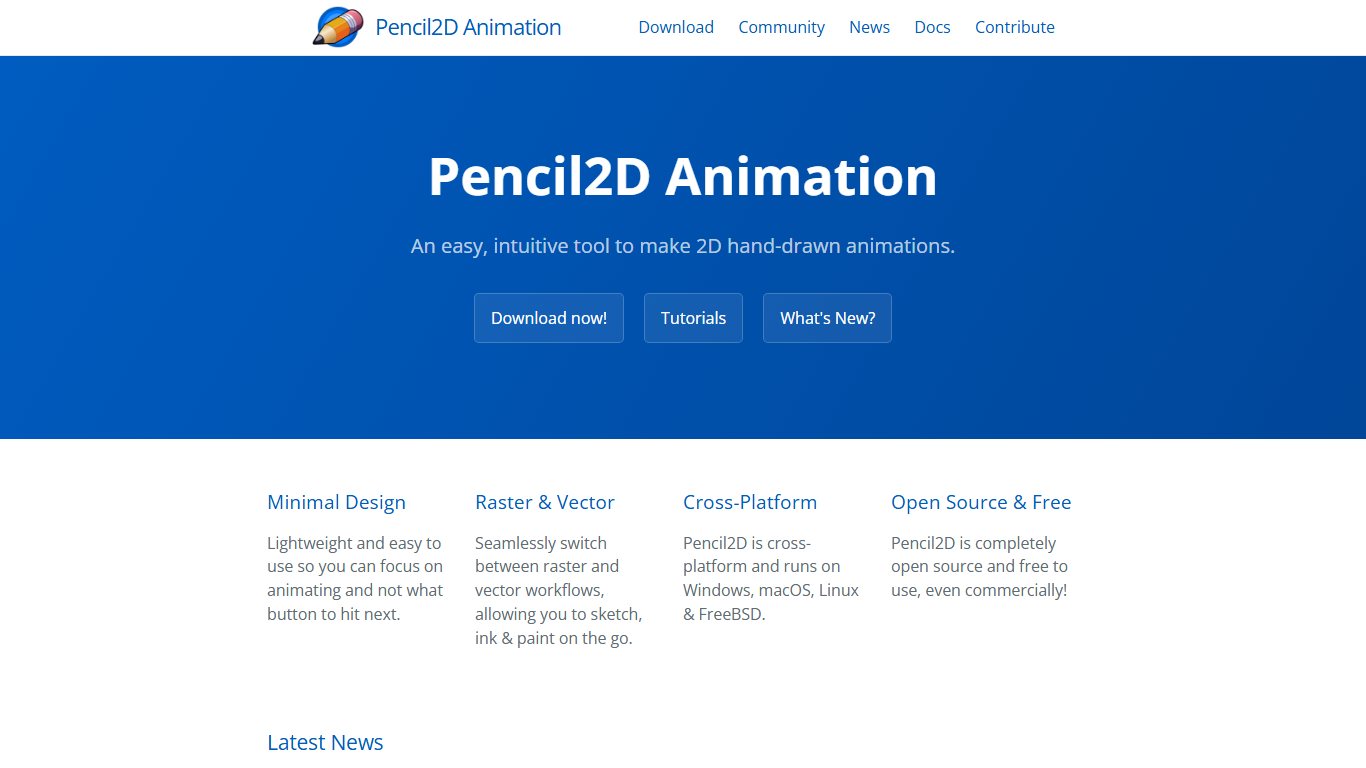
Pencil2D is not a complicated product. If you need lots of advanced features, it may not be the most useful option. Its simple design is exactly why it works for beginners, and experienced artists use it for quick roughs and pencil tests.
Features
- Bitmap and vector layers: Draw loose, painterly frames on bitmap layers or clean, scalable lines on vector layers.
- Timeline and frame management: Add, duplicate, move and retime drawings on a simple timeline.
- Onion skinning: See faint versions of the previous and next frames while you draw, so motion stays smooth.
- Camera layers: Add simple camera moves such as pans and zooms.
- Sound layers: Import an audio track to time your animation and lip-sync.
- Import and export: Bring in your own images. Export to video (MP4, AVI and others), animated GIF or numbered image sequences.
Pros
- Easy to learn, with a clean, uncluttered interface.
- Free and open source, with no account, subscription or watermark.
- Runs on Windows, macOS and Linux, so everyone in a class or club can use the same tool on whatever computer they have.
- Supports layers, onion skinning and transparency.
- Exports frames for GIFs or image sequences quickly.
- Small download and light on memory, so it runs on older laptops.
Pricing
Pencil2D is completely free, including for commercial work. It is released under the GNU GPL licence. Download it only from the official Pencil2D website or its GitHub page.
Who it suits
Pencil2D suits beginners learning the basics of frame-by-frame animation, students, teachers and anyone who wants to make a quick hand-drawn animation without paying. Once you need effects, compositing or complex rigs, move up to OpenToonz or Blender.
5. Animaker
Animaker is a browser-based animated video maker built for people with no animation background. It was launched in 2014 and aims to be the go-to tool for small and medium businesses, entrepreneurs, educators and students who need animated videos without hiring a studio.
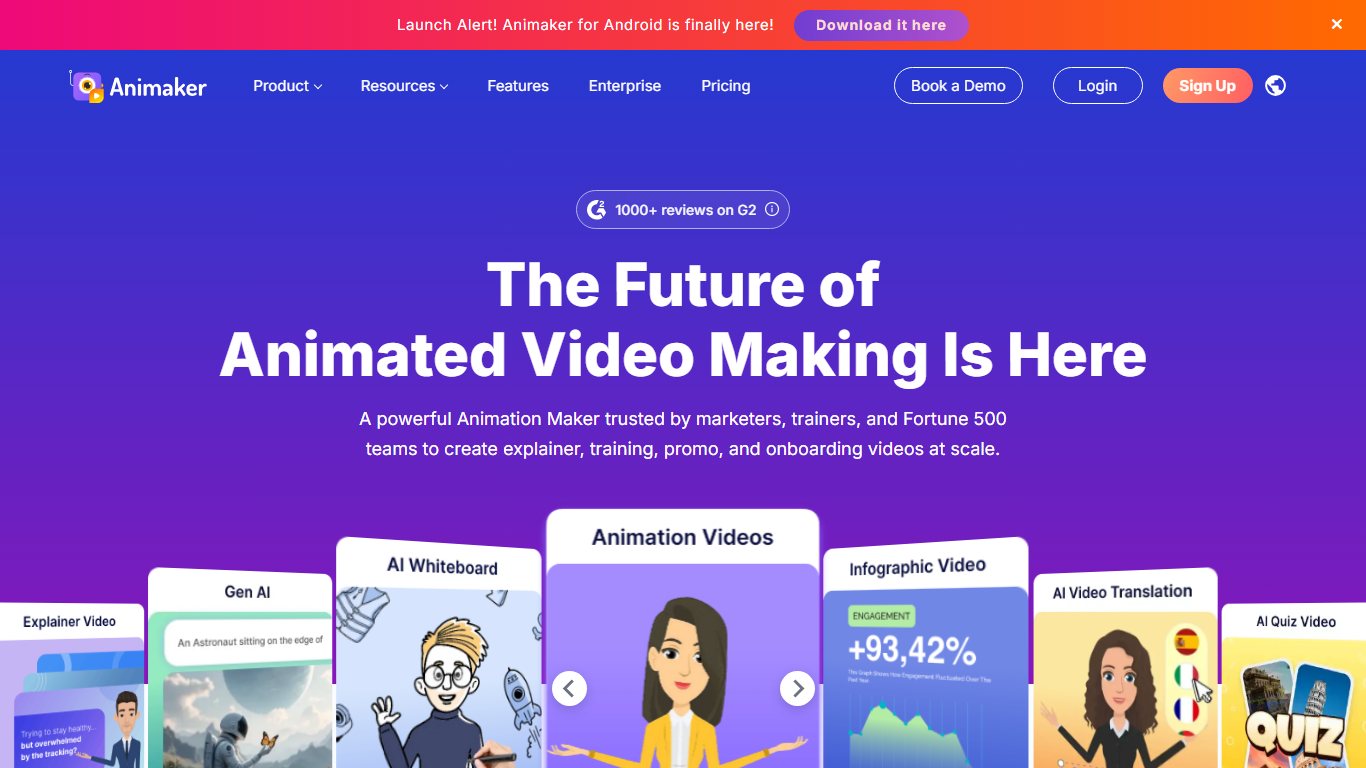
The idea is to combine animation building blocks with smart templates and characters you can customise for your needs. Businesses can make professional-looking videos without technical skills and without spending a fortune.
Features
Animaker runs in the cloud and is easy to use. Main features:
- Many video styles: Marketing videos, explainers, whiteboard animations, infographics, 2D character animation and more.
- Character builder: Create custom characters and give them expressions and actions.
- Templates and assets: Large libraries of scenes, props, icons, music and stock media.
- Voiceovers: Record your own voice, upload audio or use text-to-speech voices.
- Sizes for every platform: Horizontal, vertical and square formats for YouTube, Instagram, TikTok and websites.
- Direct publishing: Publish to YouTube or embed on a website.
Short videos made in Animaker work well with social media marketing software that schedules posts and tracks engagement across platforms.
Pros
- Easy to use, even on day one.
- Lots of layouts, characters, music tracks and voiceover options.
- Good-quality output that suits marketing.
- Videos can go straight to YouTube.
Pricing
Animaker has a free plan, but free exports carry a watermark and you get only a few downloads a month. Pricing reported through 2026 puts paid plans at about $15 a month for Basic, $25 for Starter and $43 for Pro when billed yearly. Monthly billing costs more. Commercial rights and higher resolutions are reserved for the upper tiers, with Pro clearly covering commercial use, so check the plan details before using a video for a client. Extra exports beyond a plan’s monthly limit cost extra. Enterprise plans are quoted on request.
Who it suits
Animaker suits small businesses, marketers, teachers and solo creators who need explainer and social videos quickly. If you want to learn real animation skills, it will not teach you much, because the software does most of the movement for you.
6. Open Toonz
Open Toonz (officially written OpenToonz) is a free, open-source 2D animation production suite based on Toonz, the professional software that Studio Ghibli customised for its films. Dwango released it as open source in March 2016, working with the Italian developer Digital Video. It runs on Windows, macOS and Linux.
OpenToonz is far more capable than a beginner sketching app. It covers drawing, scanning and cleaning up paper drawings, ink and paint, compositing, effects and a node-based workflow. Many independent studios use it, and development continues on GitHub, with nightly builds still being published in 2026.
Features
- Xsheet and timeline: OpenToonz uses an exposure sheet (Xsheet) the way traditional studios do, and also offers a horizontal timeline view.
- Raster, vector and Toonz Raster levels: Draw in different modes. Toonz Raster suits scanned pencil drawings that need clean-up and colouring.
- Scanning and clean-up: Bring in paper drawings, then clean the lines and prepare them for colour. This is the GTS-style scanning workflow Toonz is known for.
- Ink and paint: Fast fill tools and palettes built for colouring hundreds of frames.
- Effects and compositing: A node-based FX schematic with blurs, lighting, particles and more.
- Plastic tool and skeletons: Deform and animate drawings with bones, which is useful for cut-out style work.
- Plug-ins: Effects can be extended with plug-ins, including some made by Japanese researchers for anime-style effects.
Pros
- Free and open source, including for commercial work, with no watermark or account.
- Professional-grade features with a production pedigree.
- Suits both paperless drawing and traditional paper-and-scan workflows.
- Strong community, particularly in Japan, plus many tutorials and forks.
The downside is a steep learning curve. The interface and terminology come from studio production, and a complete beginner will feel lost at first. Plan to follow a structured tutorial series instead of clicking around.
Pricing
OpenToonz is free. Download it from the official OpenToonz website or the project’s GitHub page. Avoid third-party download sites that bundle extra installers.
Who it suits
OpenToonz suits ambitious 2D animators, students aiming for anime or TV-style production, and small studios that need a free alternative to Toon Boom Harmony. Absolute beginners usually do better starting in Pencil2D and moving to OpenToonz later.
7. Synfig
Synfig (Synfig Studio) is a free, open-source 2D vector animation app released under the GNU GPL v3 licence. Robert Quattlebaum originally developed it as an in-house production tool, and it became open source in 2005. It runs on Windows, macOS and Linux, and recent releases in the 1.5 series continued into 2026, with version 1.5.4 published in January.
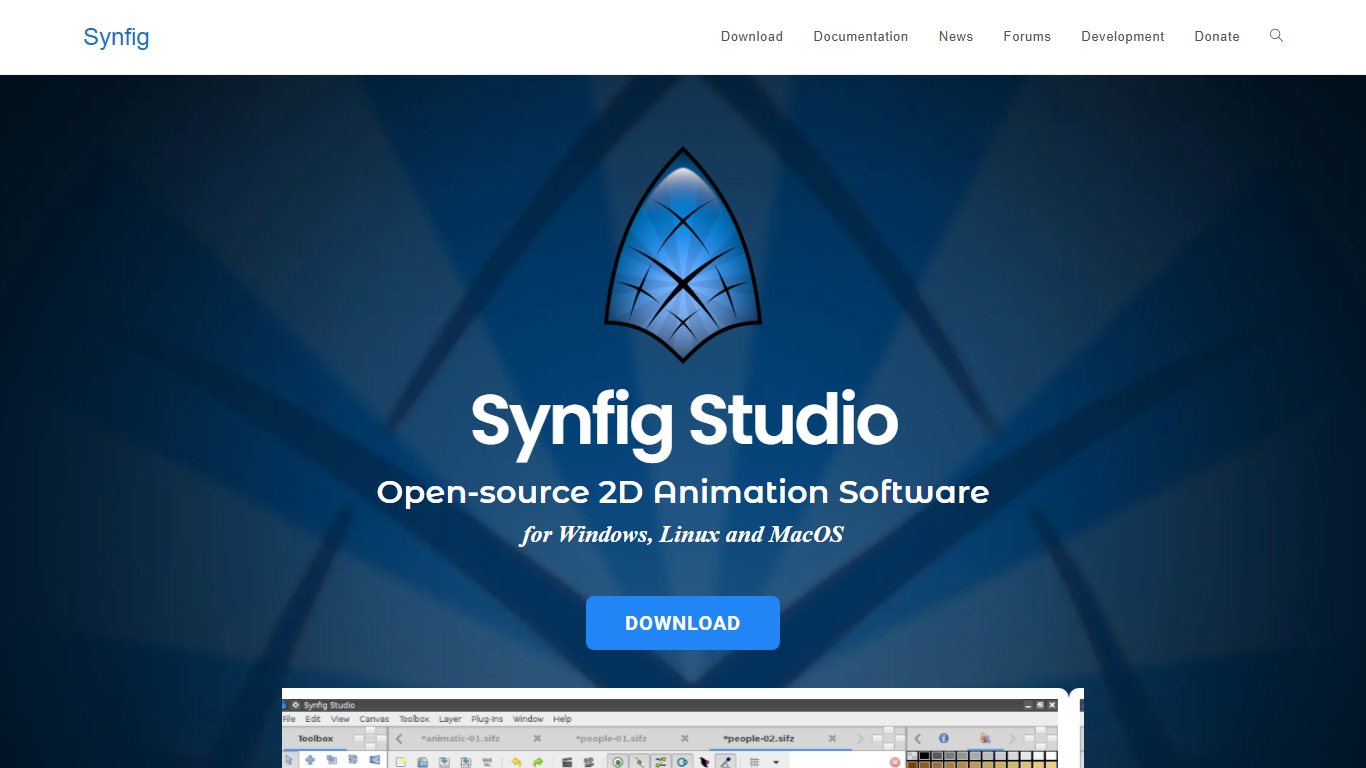
Synfig was built to produce high-quality 2D animation with fewer people and less time. It does this mainly through tweening: you set key positions and the software generates the frames in between, so you do not draw every frame by hand.
Features
Synfig supports geometric, gradient, filter, transformation, fractal and other layer types. Its main features:
- Vector artwork: Every object stays editable and scales without losing quality.
- Vector tweening (morphing): Move, scale, rotate or reshape objects between keyframes automatically.
- Gradients on any parameter: Apply and animate gradients flexibly.
- High dynamic range imaging (HDRI): Better handling of bright light and colour.
- Transformation layers: Distort and warp the image in many ways.
- Bones and skeleton deformation: Turn vector shapes or bitmap images into rigs, with weighting, for cut-out animation.
- Pressure sensitivity: The interface works with a graphics tablet and pen as well as a mouse and keyboard shortcuts.
- Onion skinning: See surrounding frames while you work.
Pros
- It is free and open source.
- Many of its features match those in paid apps.
- Once you understand its parameter-based workflow, common tasks are quick.
- Its bone system can turn any vector shape into a rig with weighting and inverse kinematics.
- It renders high-resolution vector and raster animation for film, TV, the web and other media.
The trade-off is that Synfig works differently from most animation apps. It is built around parameters and layers, not drawing, which can confuse new users. It is not designed for frame-by-frame drawing at all.
Pricing
Synfig is free. The project accepts optional donations to fund development, and the official website sometimes offers donor-supported builds. The software is fully usable without paying.
Who it suits
Synfig suits people who want smooth, tweened cut-out animation (characters made of separate parts that move on joints) without drawing every frame. It is a good free alternative for explainer-style character work and simple motion graphics.
8. KeyShot
KeyShot is a 3D rendering and animation app for making photorealistic images and animations of products from CAD models. The developer, formerly Luxion, now trades as KeyShot, and the main desktop app is called KeyShot Studio. The current release is KeyShot 2026.2, released in June 2026.
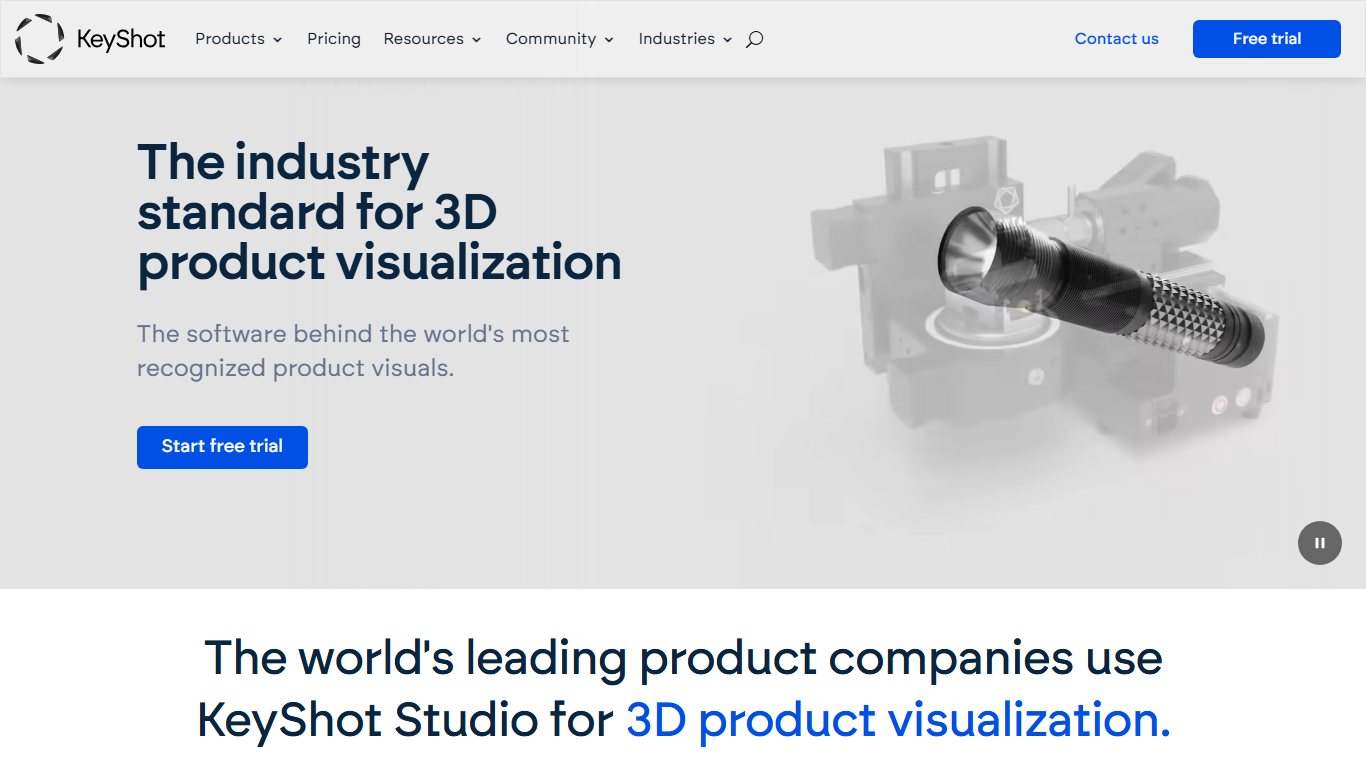
Designers, engineers and CG professionals use KeyShot to make product shots, marketing images and interactive content quickly. It reads files from CAD tools such as SOLIDWORKS, and its plug-ins keep your model linked so design changes carry through to the render.
KeyShot’s scientifically accurate materials, lighting and camera settings make photorealistic images of CAD models straightforward. It is known as one of the friendliest renderers to learn, because you drag materials and lighting environments onto the model and see the result update live.
Features
KeyShot has keyframe animation built into the renderer, so you can animate models, parts, cameras, lighting and materials:
- Keyframe animation: Full control over lighting, material and camera properties over time.
- Timeline control: Add keyframes to the timeline with automatic interpolation or manual control, for exact control over every frame.
- Part animations: Translate, rotate and fade parts for exploded views and assembly sequences.
- LiveLinking: Changes to the CAD model update in KeyShot, so animations keep up with design changes.
- GPU rendering: KeyShot 2026.2 added GPU rendering on Apple Silicon Macs (still in beta), alongside existing CPU and NVIDIA GPU rendering.
- KeyShot Cloud: A pay-as-you-go cloud rendering service added in 2026.2 that uses KeyShot Credits.
- VR and web output: Add-ons let you publish interactive web content and VR experiences of your models.
Animations export as video files or image sequences for editing.
Pros
- Real-time ray tracing and global illumination show results in seconds on CPU or GPU.
- Realistic materials and smart lighting make professional product shots easy, even for non-specialists.
- Plug-ins for major CAD tools keep design and visualisation linked.
- Widely used by product design teams and marketing departments.
KeyShot is not a character animation tool. You cannot rig and animate people the way you can in Maya or Blender. It is built for products, parts and camera moves.
Pricing
KeyShot is subscription-based. Reported 2026 pricing puts KeyShot Studio Professional at about $1,299 a year and Business at about $1,599 a year, with Enterprise quoted on request. Network Rendering is limited to Business and Enterprise. Students can get an education licence from about $95 a year for non-commercial learning. Add-ons such as VR and web output cost extra. KeyShot’s own pricing page now leans on custom quotes, so ask for one before budgeting.
Who it suits
KeyShot suits industrial and product designers, engineers and marketing teams who need photorealistic product images and turntable or exploded-view animations from CAD data. It is the wrong choice for cartoon or character animation.
9. K-3D
K-3D is a free, open-source 3D modelling and animation app released under the GNU General Public License. It was built around a plug-in-based procedural engine, which made it flexible. Development has effectively stopped, though. The project has not had a new stable release in many years and its official website is no longer reliable, so treat it as a historical option, not a working recommendation.
K-3D included basic tools for polygon modelling, NURBS, patches, curves and animation. Its interface could be customised so artists could set up their own workflow. It also offered an interactive tutorial system that walked new users through the basics.
Features
- Procedural, plug-in-based engine: Every action was a node in a pipeline, so you could go back and change earlier steps.
- Modelling tools: Polygons, NURBS, patches and curves.
- RenderMan compatibility: Built to drive RenderMan-compliant render engines for film-quality output. Third-party plug-ins added support for renderers such as BMRT 2.6 and RIB Box.
- Game engine export: Early support for exporting assets to game engines.
- Free software licence: You may share and modify K-3D under the GNU GPL version 2 or any later version.
Pros
- Free and open source, with no licence cost or project limits.
- A clean interface without unnecessary clutter.
- Its procedural design was ahead of its time and influenced how people thought about node-based 3D.
These pros come with a serious caveat in 2026. With no maintenance, you will struggle to run it on current Windows and macOS versions, there is no active community to help, and there are no security fixes. Download it only from its original project repository if you want to study it, and never from bundled download sites.
Pricing
K-3D is free.
Who it suits
Today K-3D suits only people curious about open-source 3D history or procedural modelling ideas. For any real project, Blender does everything K-3D did and far more, is actively maintained and is also free.
10. Blender
Blender is a free, open-source 3D creation suite for animated films, visual effects, art, 3D-printed models, motion graphics, interactive 3D and game assets. It is the most capable free animation tool available. Blender 5.3 came out on 10 November 2026, and Blender 5.2 LTS (released 14 July 2026) gets long-term support updates until July 2028.
Blender covers 3D modelling, UV unwrapping, texturing, sculpting, rigging and skinning, fluid and smoke simulation, particle and soft body simulation, animation, motion tracking, rendering, compositing and video editing. Its Grease Pencil system adds full 2D animation inside 3D space.
Where Blender came from
Blender started as an in-house tool at the Dutch animation studio NeoGeo, written by Ton Roosendaal. The first source files date from 1994. It was later developed by Not a Number Technologies (NaN) and given away as freeware. After NaN ceased operations in 2002, the community raised money in a “Free Blender” campaign to acquire the rights and source code from NaN’s investors, and on 13 October 2002 Blender was released under the GNU GPL. The non-profit Blender Foundation in Amsterdam has steered it ever since.
Features
- Render engines: Cycles is a physically based path tracer for photorealistic results. EEVEE is a real-time engine for fast previews and stylised work. Workbench is for quick viewport looks. The old Blender Internal renderer and the built-in game engine were removed in Blender 2.80 in 2019.
- Real-time viewport: Materials, lighting, transparency and ambient occlusion preview live as you work.
- Node-based materials and compositing: Build shaders and post-processing with node graphs. Geometry Nodes add procedural modelling and effects.
- Character animation: Armatures (skeletons), inverse kinematics, shape keys, the Graph Editor, the Dope Sheet and the NLA editor for blending actions.
- Grease Pencil: Draw and animate 2D strokes frame by frame inside a 3D scene. Studios use it for 2D and hybrid 2D/3D productions.
- Simulation: Cloth, fluids, smoke and fire, rigid and soft bodies, and particles.
- Motion tracking and video editing: Track real camera footage to add 3D elements, then edit and finish in the built-in Video Sequencer.
- Wide format support: Import and export images (PNG, JPEG, TIFF, OpenEXR), video, and 3D formats such as FBX, OBJ, glTF and USD.
Pros
- Completely free, including for commercial work, with no watermark, subscription or feature limits.
- A feature set that competes with expensive 3D packages.
- Very effective once you know it, from quick motion graphics to feature-length films.
- A huge, active community and thousands of free tutorials.
- Handles many kinds of animation, including 3D characters, 2D Grease Pencil and stop-motion-style work.
- Regular releases, with an LTS line for studios that need stability.
The main counter-argument is the learning curve. Blender is big, and beginners can feel overwhelmed. Learn one area at a time, for example modelling a simple object, then a basic bouncing ball, before trying a full character.
Pricing
Blender is free under the GNU GPL. Download it only from blender.org or official stores such as Steam and the Microsoft Store. Paid add-ons and assets are sold by third parties but are optional. The Blender Development Fund accepts voluntary donations.
Who it suits
Blender suits almost everyone: beginners who want to learn 3D without paying, freelancers, indie game developers, YouTubers making motion graphics, and small studios. Pick Maya instead only when a studio job or pipeline requires it.
11. PowToon
PowToon (officially Powtoon) is an online tool for making animated videos and presentations. It runs in a web browser and uses a drag-and-drop editor, so you need no design or animation skills. The company was founded in 2012 and is based in Israel.
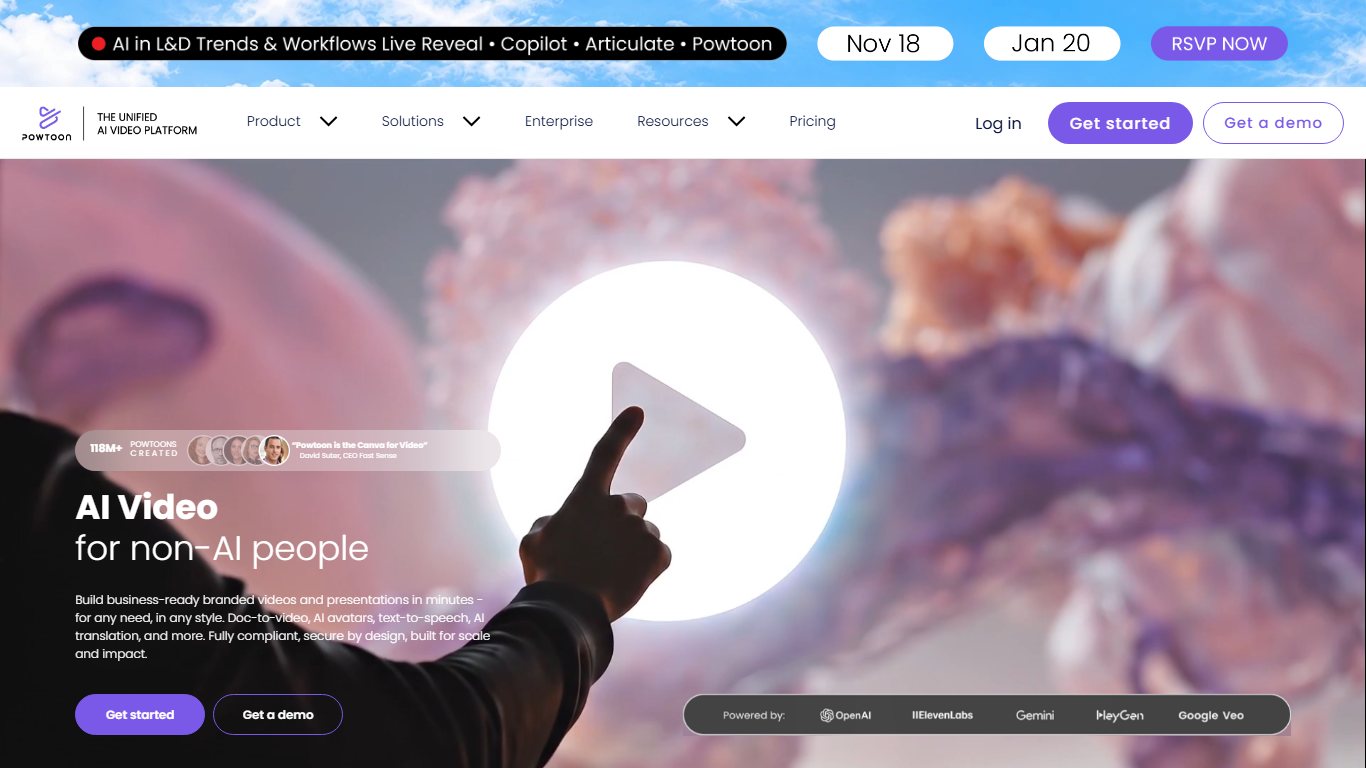
Users can add their own images and sounds, or pick from a large stock library of royalty-free images, music and sound effects. The drag-and-drop interface makes high-quality videos and presentations possible without special software.
PowToon publishes a large library of tutorials and webinars to help new users get started, and it offers support and learning resources for teams and educators.
Features
PowToon is web-based animation software for animated presentations and explainer videos. You can make animated ads, explainers, presentations, training videos and sales videos. Main features:
- Templates: A large library of ready-made templates for marketing, HR, training and education.
- Characters: Many animated characters in different styles and poses, with lip-synced talking characters on higher plans.
- Full HD video: Export at up to 1080p on paid plans.
- Social sharing: Publish to YouTube and other platforms or download as MP4.
- Music and audio: Use PowToon’s music library or upload your own tracks and voiceovers.
- Presentation mode: Present directly or export slides, so it can replace a static slide deck.
- AI tools: Newer plans include AI credits for script and video generation.
Pros
PowToon is one of the best-known online video creation tools. It is made for animated videos, presentations and other multimedia, and it is easy to use even for people with no training. That ease of use is the main reason it is popular in schools and corporate training.
- A simple, user-friendly interface.
- A royalty-free media library.
- HD export and direct publishing to YouTube from inside the tool.
- Export as a video or as a presentation.
The trade-off is that many PowToon videos share the same look, and fine animation control is limited compared with desktop software.
Pricing
PowToon has a free plan with a watermark, limited features and restrictions on business use. The paid plans are Lite, Professional and Business (shown on some pages as Advanced). Pricing reported in 2026 starts at about $15 a month for Lite billed yearly and goes up to about $125 a month for Business billed yearly. Monthly billing costs much more, with figures of $49 to $199 a month reported. Education and enterprise plans are priced separately. Check PowToon’s premium page for current rates, because promotions change often.
Who it suits
PowToon suits teachers, trainers, HR and sales teams, and anyone who wants to replace a slide presentation with something more engaging. If you are building a content marketing plan around these videos, pair them with sensible SEO software tools so the pages that host them can actually be found in search.
12. Animation Paper
Animation Paper is a 2D animation app for Windows, macOS and Linux, designed around the traditional paper-and-pencil workflow. It focuses on fast, responsive drawing and pencil tests, the rough animation stage where animators work out timing and motion before cleaning up.
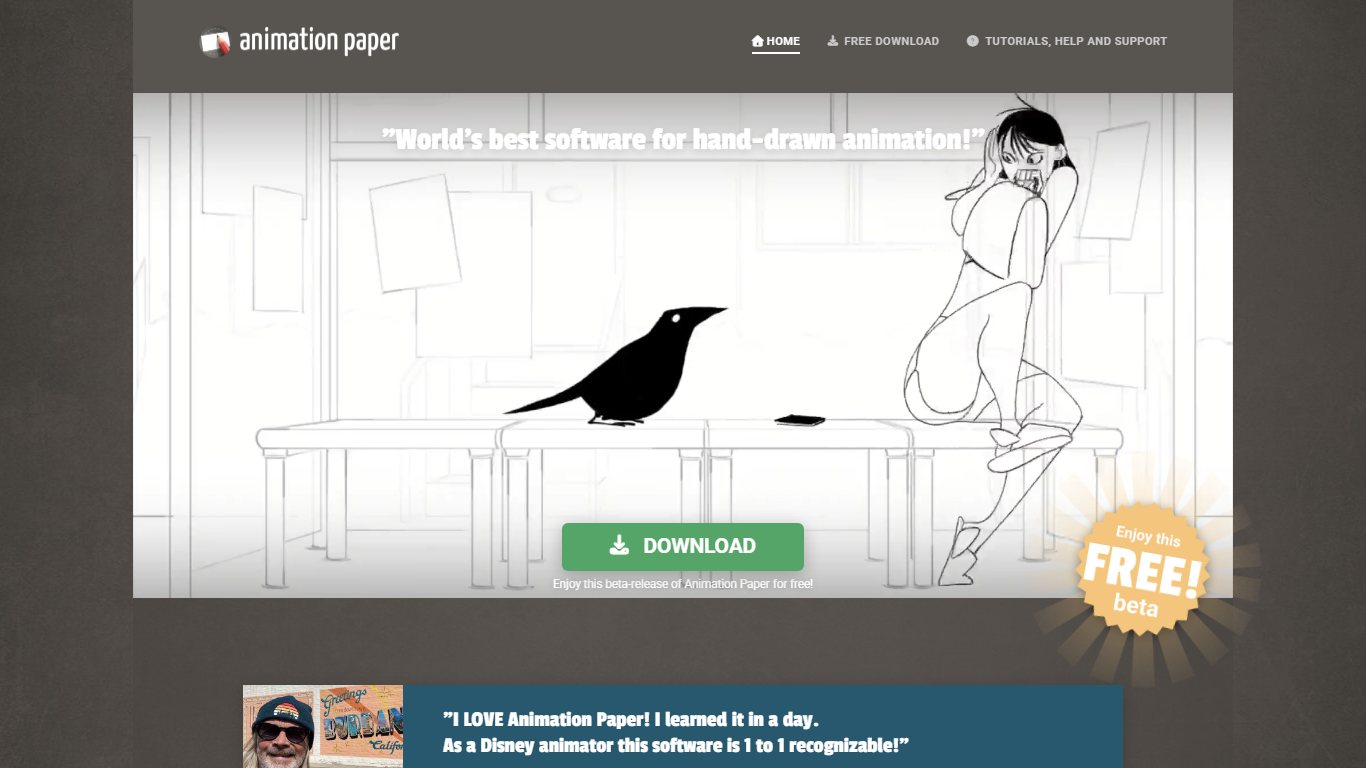
Its tools are deliberately simple. You draw frames, flip through them, draw over earlier frames and play back the motion, much as an animator would at a light table. It is low cost and attractive to use, and suits people who want the feel of hand-drawn animation without a complex production suite.
Features
The developer describes the feature list as a work in progress that will grow during development. Current highlights include:
- Simple interface: Pencil, brush, eraser, smudge and other drawing tools.
- Pressure-sensitive drawing: Adjust brush size and use tablet pressure on supported devices.
- Keyframe animation: Onion skinning and automatic tweening.
- Tween curve editor: A simple linear curve editor for adjusting in-betweens.
- Image import: Import standard formats such as PNG and JPG to trace or reference.
- Copy and paste: Between frames and between projects.
- Colour palettes: Unlimited colours, plus import and export of Photoshop swatch (ACO) files.
- Audio tracks: Sample preview and audio scrubbing while the animation plays.
Pros
Animation Paper makes creating and animating your own cartoons straightforward, and it suits both experienced and new animators.
- Easy to start: The basic interface means beginners can get going quickly, with no prior experience of other animation or drawing apps needed.
- Responsive drawing tools: All the drawing tools are simple to use and built for fast sketching.
- Layers: Build up complex drawings in layers, which also makes later changes easier.
- Focused workflow: No 3D, effects or compositing clutter, only drawing and timing.
The trade-off is maturity. Animation Paper has been in long-running development, so it has fewer features than OpenToonz and a smaller community. Keep regular backups of your projects.
Pricing
The developer has offered Animation Paper development builds free of charge. Check the official Animation Paper website for the current licence and any paid version before relying on it for commercial work.
Who it suits
Animation Paper suits traditionally trained animators, students practising the principles of animation, and anyone who wants a distraction-free digital light table for rough animation and pencil tests.
Frequently asked questions about animation software
These answers cover the questions people most often ask when choosing their first or next animation tool.
Which free animation software is the best?
Blender is the best free animation software overall, because it covers 3D, 2D (with Grease Pencil), simulation, rendering and editing at no cost. For 2D only, OpenToonz is the most powerful free option and Pencil2D is the easiest.
Each program has its own style and suits different jobs. Some offer limited features that make learning easier, while others pack in tools for professional animators. Spend some time understanding the types of software before you choose, so you know which features will actually help your work and career.
What is the best way to use animation software?
Plan first, then animate in passes. Start with key poses (the main start and end points of each movement), then add in-between frames, then refine timing and detail.
A worked example: at 24 frames per second, animating “on twos” means each drawing is held for two frames, so you need 12 drawings for each second. A 10-second shot therefore needs 120 drawings. Tweening tools such as Synfig, Blender or KeyShot generate the in-betweens for you, which is why they are so much faster for simple motion.
You can bring other media into a project, such as video clips, audio, photos, and drawings made on paper and scanned in. Many animators draw straight into the software with a pen tablet or stylus, which removes the scanning step entirely.
What is the best animation software?
There is no single best tool. The right one depends on what you want to make. Blender, Maya and 3ds Max are the three main 3D animation packages, and each has its own strengths.
If you mainly want to make games, especially independent games, a good starting combination is Blender for modelling and animation and a game engine such as Unity or Unreal Engine. Unity has a free Personal plan for individuals and small teams, runs on all major operating systems, has many tutorials, and can build games that play in a web browser through WebGL.
If you want to work on films or TV shows, learn Maya. It is widely used in studios because its rigging and deformation tools handle complex characters well.
If you mainly want to do character design or concept art, learn a sculpting tool such as ZBrush alongside Photoshop and Illustrator. These let you sculpt characters like digital clay and paint them with realistic textures.
What is the best free animation software for beginners?
You do not need expensive software as a new animator. It usually makes sense to stay with free tools until you are comfortable with the animation process and know what a paid app would add.
Good free picks for beginners:
- Pencil2D: Open source and simple, for Windows, macOS and Linux. It is a good choice for groups and classes, because everyone can install it for free on any computer.
- Synfig Studio: Free on Windows, macOS and Linux. It is powerful, but its parameter-based workflow can feel intimidating at first.
- Scratch: A free, browser-based tool from the MIT Media Lab, aimed at children and beginners. You can try it without an account, but you need a free account to save and share projects online.
Scratch is great for beginners because you build animations by snapping together simple coding blocks that are easy to understand. It also teaches logic and timing that carry over when you later move to more advanced software.
Is Adobe Animate free?
No. Adobe Animate is only available through a paid Creative Cloud subscription, as a single app or in Adobe’s all-apps plan, usually with a short free trial.
Animate is used for interactive animation in games, TV shows, websites and other media. It is built on the Flash Professional codebase, so you can think of it as the successor to Flash. Its roots go back to FutureSplash Animator, released by FutureWave Software in 1996 and renamed Flash after Macromedia bought it that year. Adobe acquired Macromedia in 2005 and renamed Flash Professional to Adobe Animate in 2016.
Animate still supports ActionScript 3.0 for Adobe AIR projects alongside JavaScript for HTML5 Canvas. Since February 2026 it has been in maintenance mode, so it gets security and bug fixes but no new features.
Final thoughts on the best animation software
The easiest way to find out what works for you is to try a free tool or free trial before you pay for anything.
Some programs are designed for beginners and others for seasoned professionals. Between them, they cover everything from simple 2D cartoons to complex 3D renders. Many of the best options are free or reasonably priced, so you can start animating today whatever your budget.
“Best” is still subjective. People prefer one program over another because of ease of use, interface or price, and the final decision is yours.
If you are just starting out and do not want to invest much time or money, an online maker like Animaker is the quickest way to a finished video. It is simple to use and comes with plenty of templates and resources. If you want to learn animation as a skill that grows with you, download Blender or Pencil2D tonight, animate a bouncing ball, and build from there.
FAQ
Is Adobe Animate being discontinued?
No. In February 2026 Adobe briefly suggested it would shut Animate down, then reversed the decision within days and put the app into maintenance mode. Adobe’s FAQ, updated in June 2026, says there are no plans to discontinue it. It still gets security and bug fixes but no new features.
Can I use Blender for commercial work?
Yes. Blender is released under the GNU GPL, and anything you create with it belongs to you, including work for paying clients. You pay nothing and there is no watermark. Download it only from blender.org or official stores.
Do I need a drawing tablet to animate?
For frame-by-frame 2D animation in Pencil2D, OpenToonz or Animation Paper, a pressure-sensitive pen tablet makes a big difference, and an entry-level one is enough. For 3D animation in Blender or Maya, or template tools like Animaker and PowToon, a mouse and keyboard work fine.
Which animation tool is best for YouTube explainer videos?
If you have no animation skills, Animaker or PowToon will get you a finished explainer fastest, with templates, characters and voiceovers built in. For a unique style, use Synfig or Blender and accept a longer learning curve. On the online tools, check that your plan removes the watermark and includes commercial rights before you publish.
Is K-3D still safe to download?
K-3D is no longer actively maintained, so it gets no security or compatibility fixes and may not run on current systems. If you are curious, get it only from its original open-source repository, never from bundled download sites. For real 3D work, Blender is the maintained, free alternative.
What is the difference between Blender 5.2 LTS and Blender 5.3?
Blender 5.3 (November 2026) is the newest regular release, with the latest features. Blender 5.2 LTS (July 2026) is a long-term support version that gets bug-fix updates until July 2028. Studios and anyone in the middle of a long project usually stay on the LTS version for stability.
Sources
- Adobe Animate common questions (Adobe Help Center)
- Update on the status of Adobe Animate (Adobe Community)
- Blender 5.3 release page
- Blender 5.2 LTS release page
- Autodesk Maya product overview
- KeyShot Studio pricing
- KeyShot 2026 release announcement
- Pencil2D official website
- OpenToonz releases on GitHub













